The walls
Cut stone framed in red brick.
Marmontel — CC BY 2.0 · Psittacuso — CC BY-SA 4.0 · Nicolas Vollmer from Paris [France] — CC BY 2.0 · Wolfgang Sauber — CC BY-SA 4.0 · Christian1311 — CC BY-SA 4.0
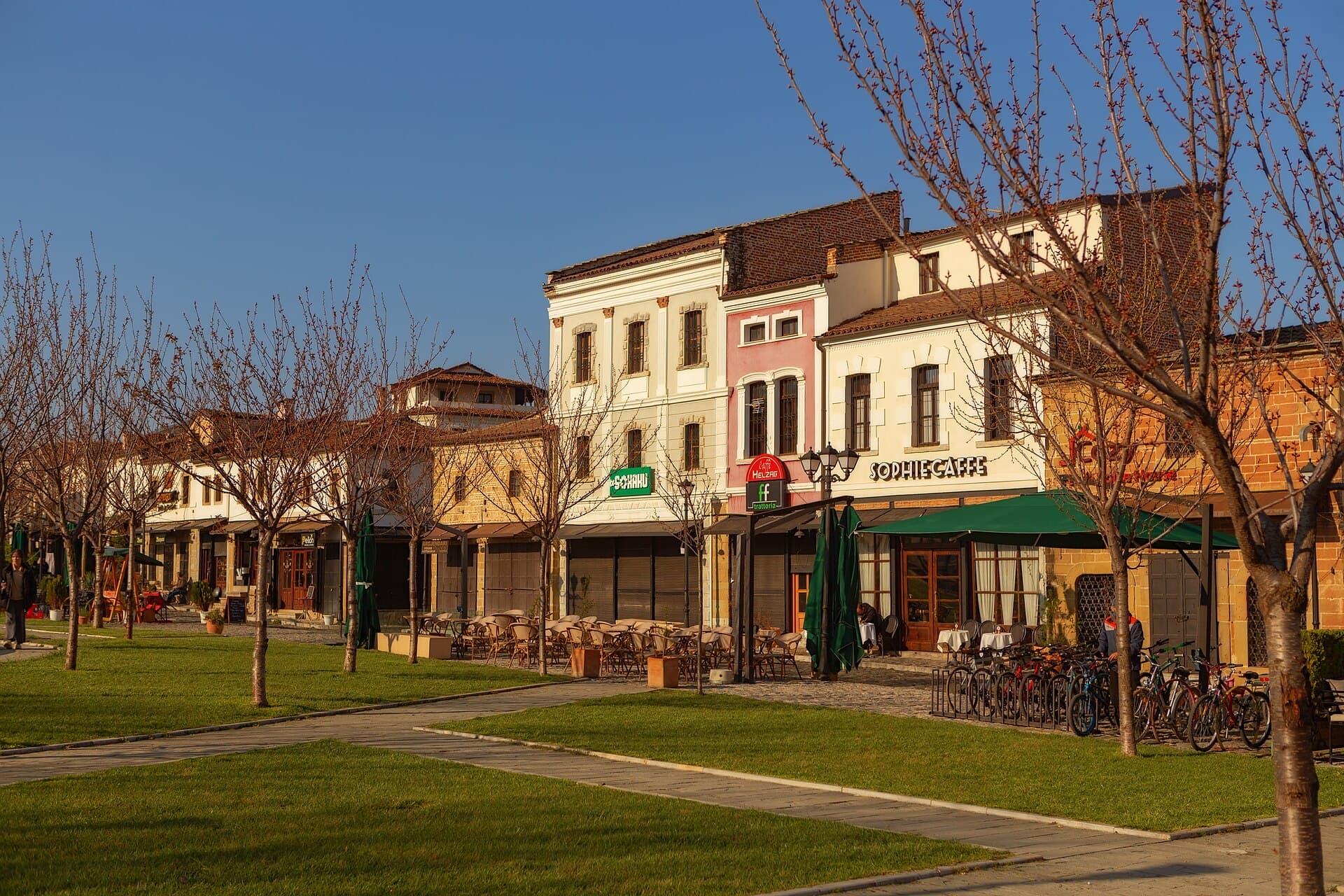
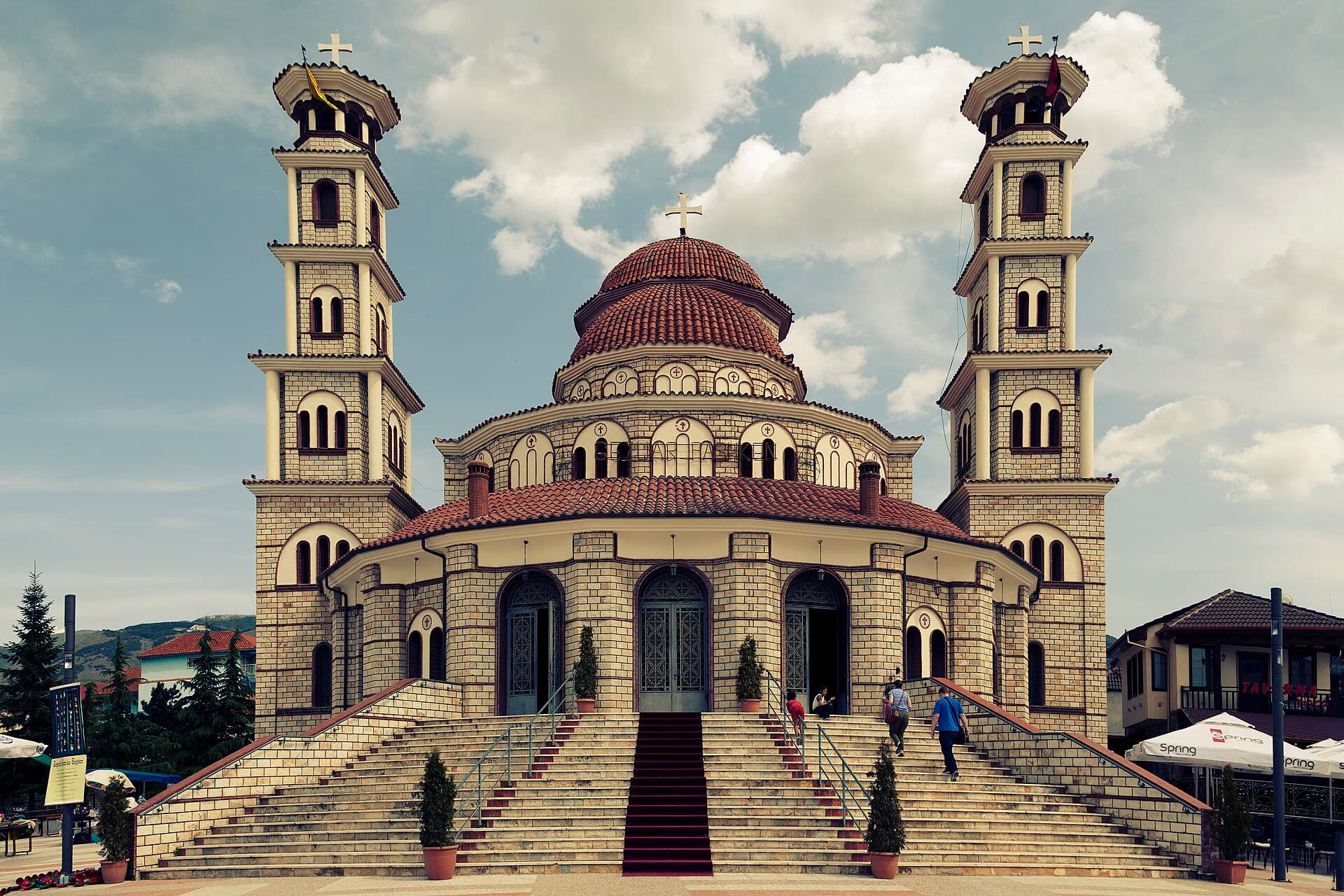
The Iljaz Mirahori Mosque, around which Korçë grew, is one of the oldest surviving mosques in Albania: a square prayer hall under a single dome, almost 12 metres a side outside, with a porch roofed by three small domes. An inscription of 1872 over the door dates it to the Hijri year 901, or 1495–96, though many sources give 1494. Its founder, Iljaz Bey Mirahori, an Albanian from the Korçë area, was master of the stables to Sultan Bayezid II and is remembered as the town's founder. Ottoman law counted people as townsfolk, not peasants, only where a Friday mosque and a market stood, so he built the mosque with a soup kitchen, a school and a bathhouse, endowed with the revenues of five villages. The mosque lost its minaret in the 1960 earthquake, served as a museum after a 1977–78 restoration, returned to worship in 1991 and was restored again from 2013 by Turkey's aid agency, TIKA. The walls are cut stone framed in red brick, typical of early Ottoman building, and round windows pierce each face of the eight-sided drum below the dome. Inside, the dome rests on corner squinches filled with muqarnas, and the white walls carry painted views of Mecca and Medina. The minaret has been rebuilt, and boards at the mosque tell its story. It stands beside a rebuilt clock tower at the southern edge of the Old Bazaar, whose centre is about 200 metres north; the Resurrection Cathedral is some 450 metres east as the crow flies. Allow 20 to 40 minutes.
Cut stone framed in red brick.
Three small domes over pointed arches.
Views of Mecca and Medina inside.
Southern edge of the Old Bazaar, beside the clock tower, Korçë
It comes from mirahor, the Ottoman title of the master of the sultan's stables, which joins mir, a Persian form of the Arabic emir, with ahur, Persian for stable. Iljaz Bey held the post under Bayezid II, and in Istanbul he turned the church of the Stoudios monastery into a mosque still called the İmrahor Mosque.
No. The 17-metre tower was rebuilt in 2015–16 on the model of the 18th-century clock tower that stood in the mosque's courtyard until the 1960 earthquake left it in ruins.