Blue whales
The largest animal ever known.
TatianaPashko — CC BY 4.0 · DammikaD — CC BY-SA 4.0 · Peter van der Sluijs — CC BY-SA 3.0 · Malindu Rathnayaka — CC BY-SA 4.0 · Dan Lundberg — CC BY-SA 2.0
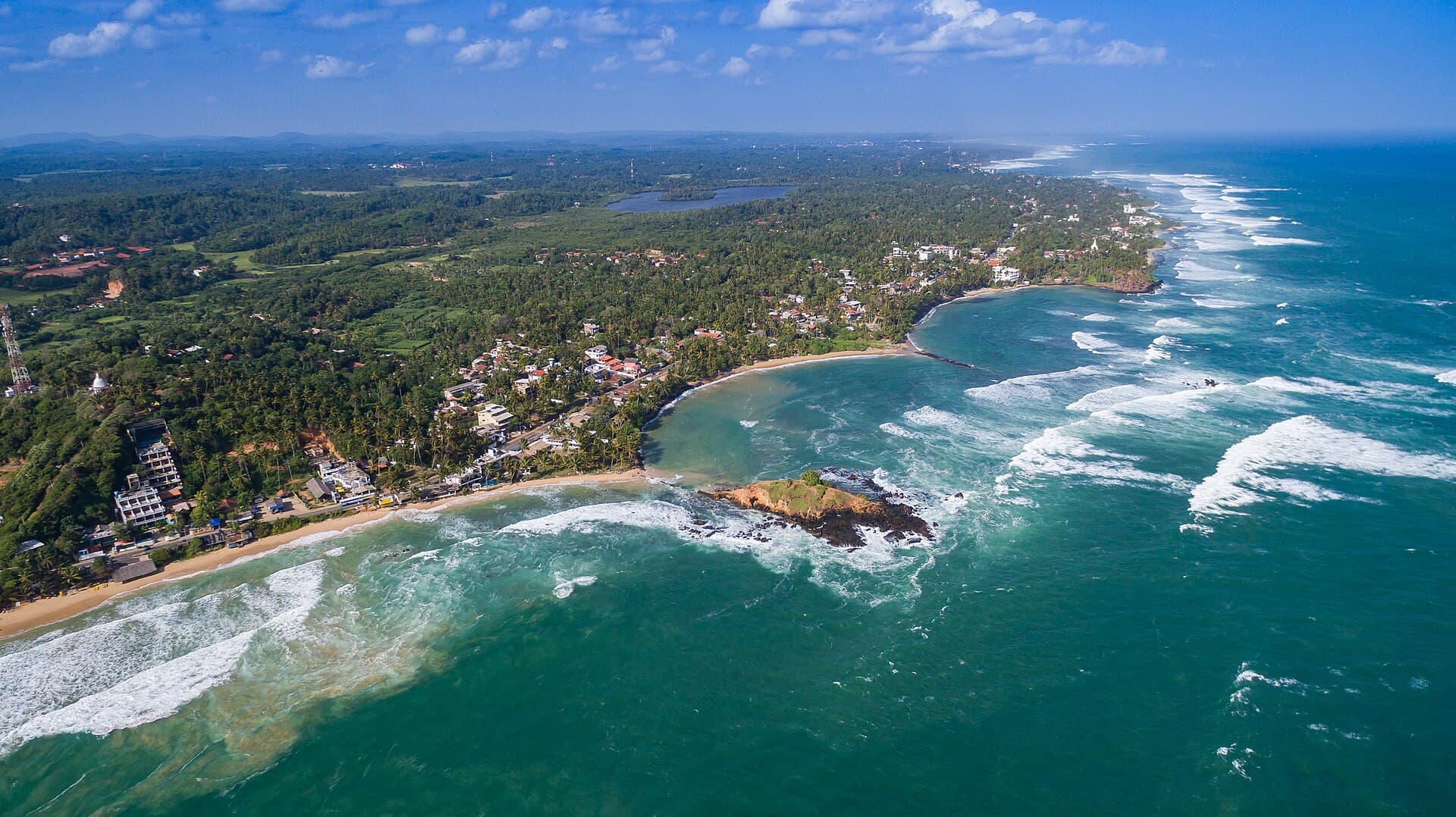
Whale-watching boats leave Mirissa Fisheries Harbour on Sri Lanka's south coast for the deep water off the island's southern tip, one of the country's main places to see the blue whale, the largest animal ever known. The season runs from November to April, per Sri Lanka Tourism. Local fishermen knew the whales, but the trips date from 18 April 2007, when the biologist Charles Anderson, testing whether blue whales passed here, spotted a blow from Dondra Head, about 15 km east of Mirissa, within 12 minutes. His chartered boat was the only one watching whales in 2007 and 2008; then the trade boomed. The seabed explains why: the continental shelf ends 7 to 8 km south of Mirissa, and the Sri Lankan biologist Asha de Vos found blue whales that stay near the island all year. Boats leave at about 06:30 to 07:00 for three to four hours at sea, sometimes longer. Also look for sperm whales in groups and spinner dolphins, the most numerous; Bryde's whales and orcas appear occasionally. Watch for a blue whale arching its back and lifting its tail before a dive of about 11 minutes. One of the world's busiest shipping lanes crosses these waters about 15 km offshore. The harbour lies about 1 km west of Mirissa Beach, and most boats are back by midday. Sri Lankan rules keep boats at least 100 m from whales, so choose a licensed operator that does not chase them. Many trips include a light breakfast, per visitor guides. Sightings are never guaranteed. Bring a hat and sunscreen.
The largest animal ever known.
Groups over the deep slope.
Often with tuna and seabirds.
Mirissa Fisheries Harbour, Matara District, south coast
No. Swimming or diving with whales needs prior approval from the Department of Wildlife Conservation, which calls the swim tours advertised in Mirissa illegal, so book a licensed watching boat instead.
Some boats still go out, but in the south-west monsoon, roughly May to October, Mirissa lies open to the wind and the sea gets rough. Visitor guides point instead to Trincomalee on the east coast, where the season runs from about May to September.