
Hachiman-zaka
Down to the harbour.
663highland — CC BY-SA 4.0 · MaedaAkihiko — CC0 · 663highland — CC BY 2.5 · Alexander Klink — CC BY 4.0 · くろふね — CC BY 4.0 · 663highland — CC BY 2.5 · 肖红军 — CC BY-SA 3.0 · 663highland — CC BY 2.5
A district on the slopes of Mount Hakodate where foreigners settled early after Hakodate's port opened to foreign trade in 1859, so Western buildings, churches and traditional Japanese buildings stand side by side on streets running down to the harbour. Its best-known slope is Hachiman-zaka, a straight, tree-lined, stone-paved street running straight down to the harbour with the sea at its foot, one of the city's most photographed views, especially in winter when its trees are lit. The district holds the Hakodate Orthodox Church with its green domes, on the site where the Russian consulate chapel, the first Orthodox church built in Japan, was consecrated in 1860, and nearby the Motomachi Catholic Church. Above Motomachi Park stands the blue-and-yellow Old Public Hall of Hakodate Ward. Walking around is free, and some buildings charge small fees. Take the tram to Suehiro-chō and walk uphill; it pairs easily with the Mount Hakodate ropeway and the red-brick warehouses on the harbour.
Down to the harbour.
The Orthodox church.
Blue and yellow.
Motomachi, on the slopes of Mount Hakodate
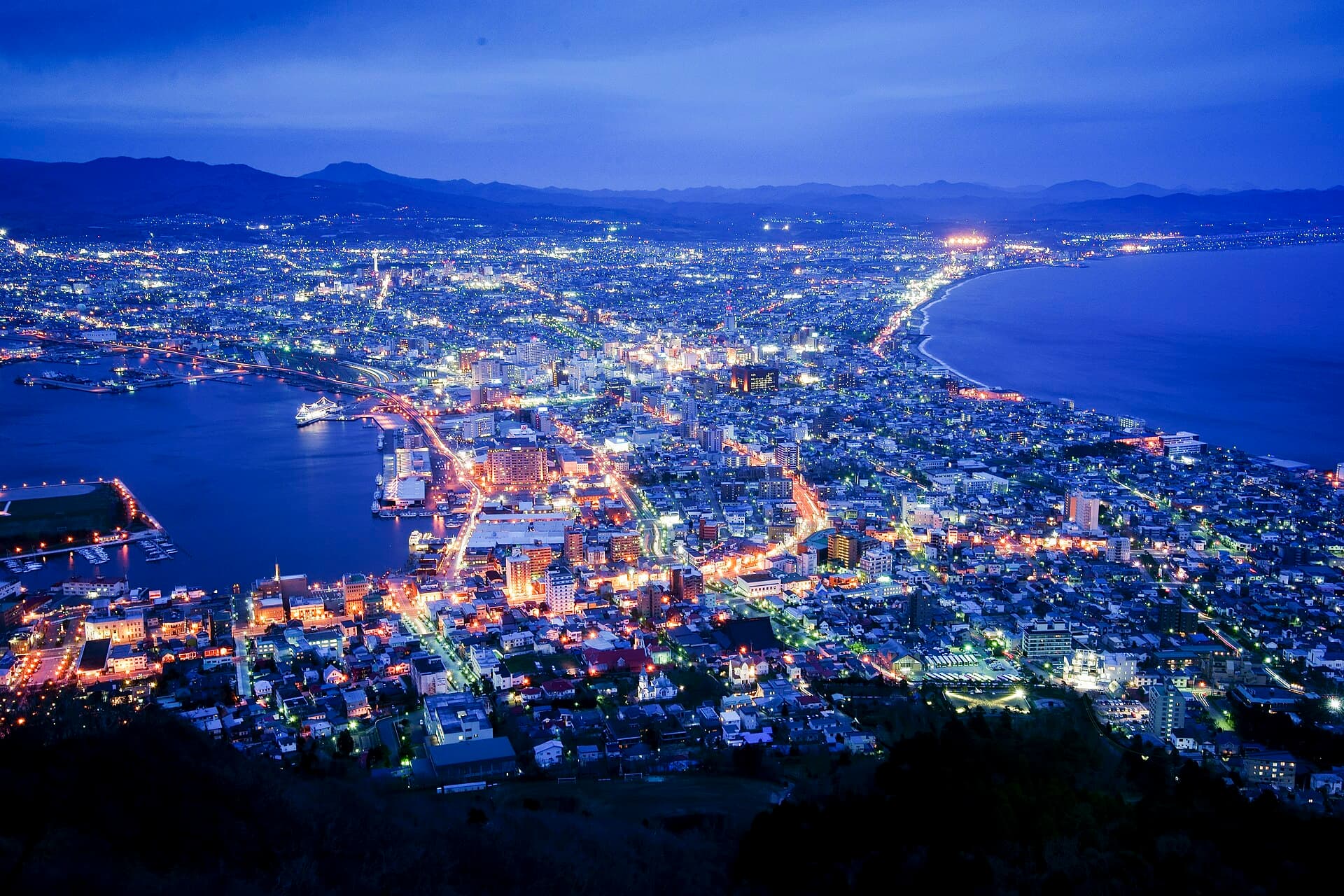 Mount Hakodate and its night viewA dormant volcano in the city of Hakodate, famous for its view over the city and5 minutes walk
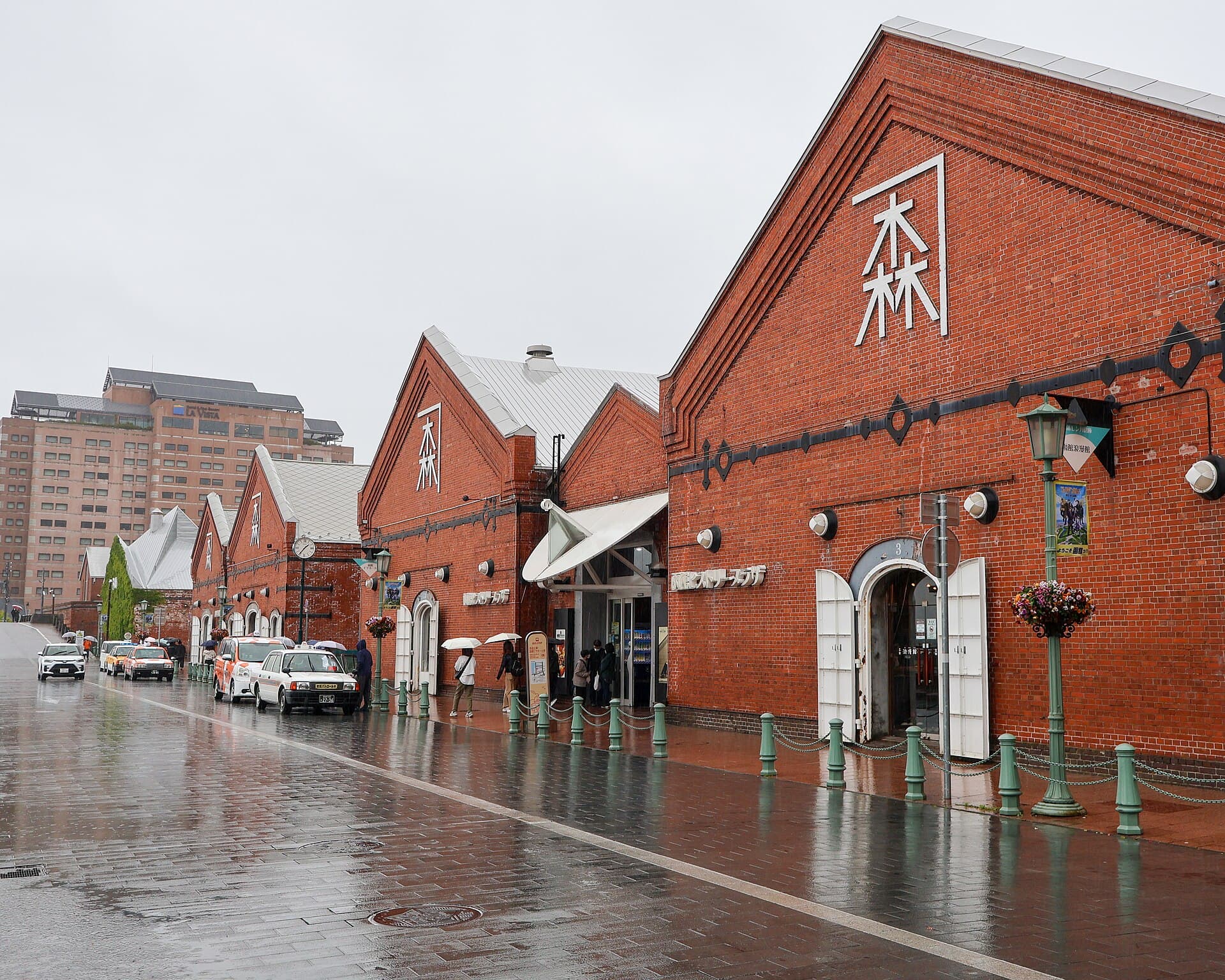 Kanemori Red Brick WarehousesA group of historic red-brick warehouses on Hakodate's harbour, tracing back to 6 minutes walk4.1
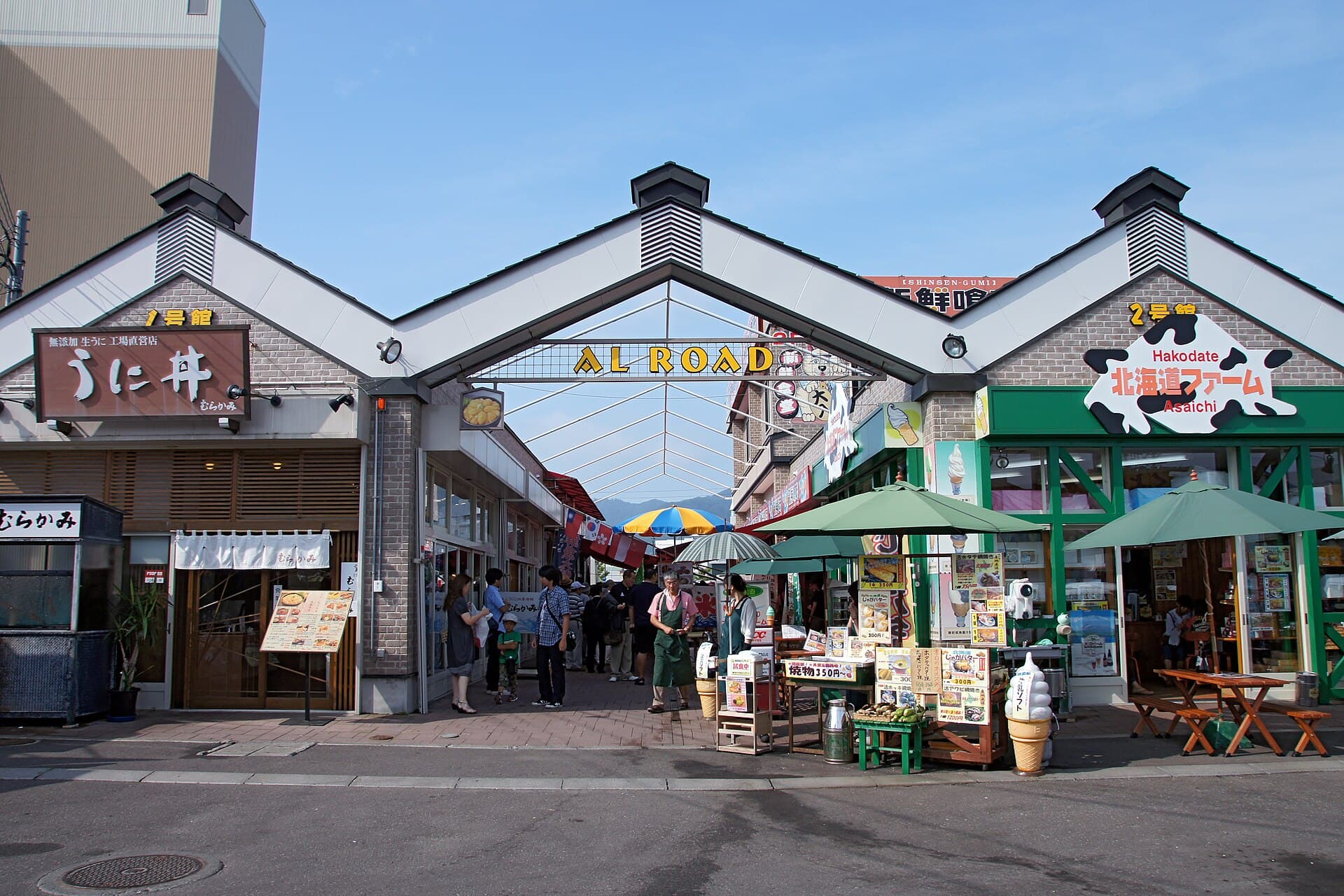 Hakodate Morning MarketA market for seafood and local produce beside Hakodate Station. It began in 194519 minutes walk4.0
The Hachiman-zaka slope down to the harbour, the green-domed Orthodox church and the Old Public Hall of Hakodate Ward.