The octagonal base
Two rows of niches.
Osama Shukir Muhammed Amin FRCP(Glasg) — CC BY-SA 4.0 · Osama Shukir Muhammed Amin FRCP(Glasg) — CC BY-SA 4.0 · Sarmad Yaseen — CC BY-SA 4.0 · Osama Shukir Muhammed Amin FRCP(Glasg) — CC BY-SA 4.0 · Osama Shukir Muhammed Amin FRCP(Glasg) — CC BY-SA 4.0
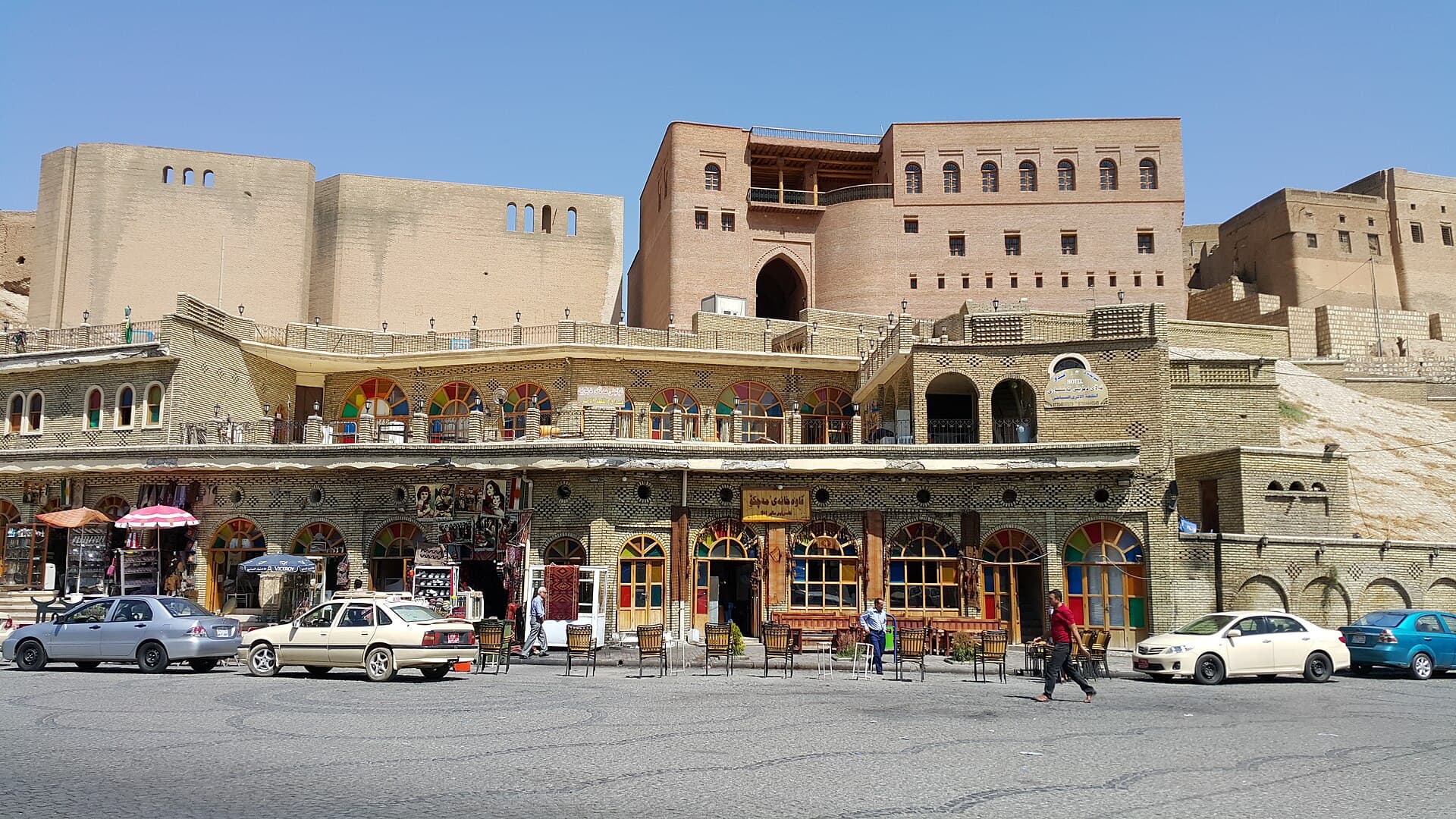
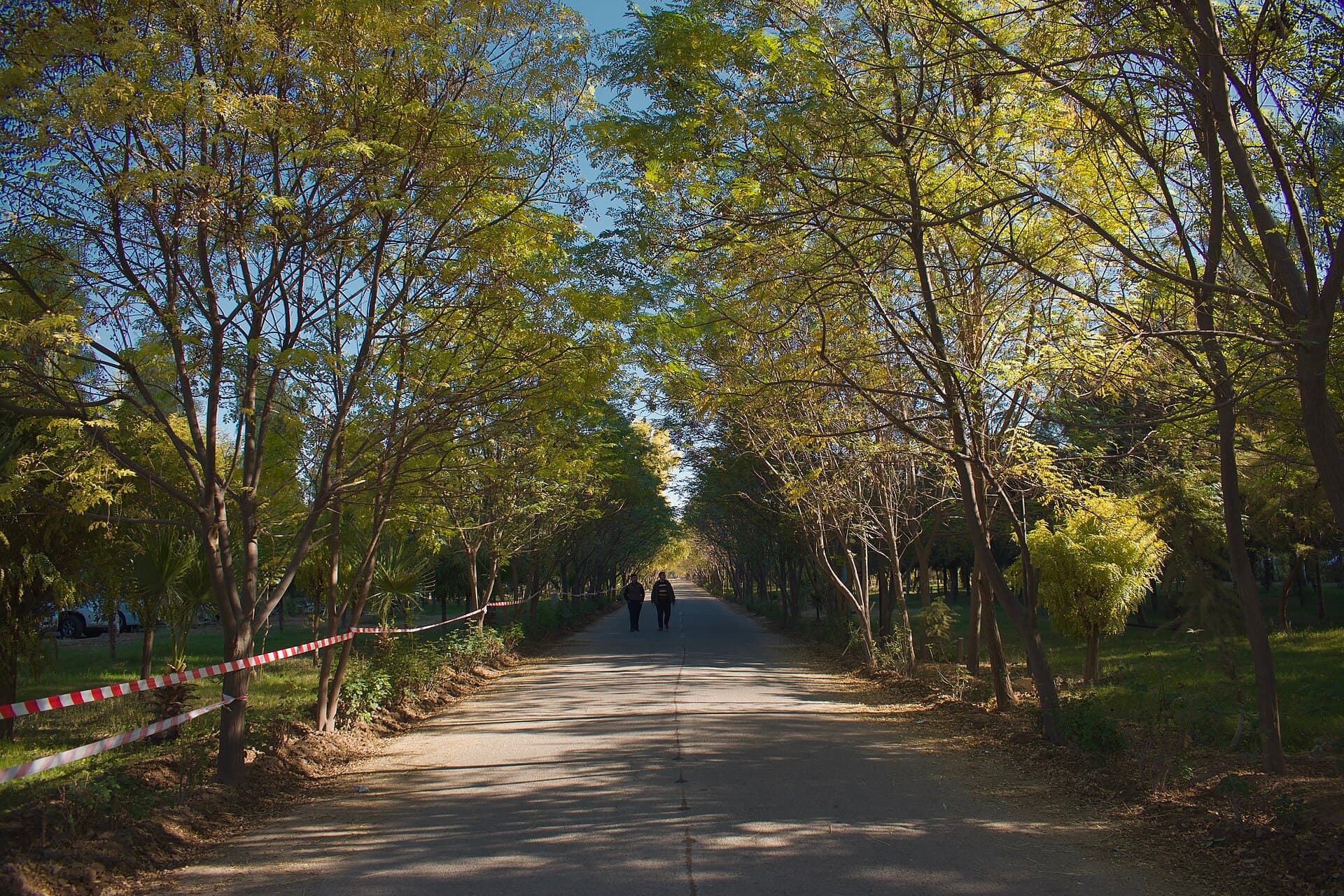
The Mudhafaria Minaret is a historic brick minaret in Minaret Park, west of central Erbil, which local people call the Choli Minaret in Kurdish. After the citadel it is one of the oldest surviving landmarks in Erbil, and it stands alone in the middle of the park. It was built roughly between 1190 and 1233, in the reign of Muzaffar al-Din Gökböri, ruler of Erbil, who allied with Saladin and married his sister Rabia Khatun, and the minaret takes its name from him. It is believed to be all that remains of a great mosque now gone, and its design is typical of mosques of the Ayyubid period. It rises 36 metres, with a tall octagonal base and a long cylindrical shaft, and a balcony between them. Two rows of niches with pointed arches decorate the base, while the shaft is covered in brick patterns of interlocking diamonds, clearest in morning or late afternoon light. Paths, trees and busts of poets and writers surround it. Erbil Citadel is about 1 km away in a straight line, and Sami Abdul Rahman Park about 1.6 km. The UK Foreign Office currently advises against all but essential travel to this area, so check official guidance before planning.
Two rows of niches.
Interlocking patterns.
Paths and busts.
Minaret Park, west of central Erbil, Kurdistan Region, Iraq
Climbing is not usually allowed; you see it from the park.
Half an hour, with a walk in the park.