The Monet rooms
Haystacks and works from Giverny.
Mehman Ibragimov — CC BY-SA 4.0 · Raimond Spekking — CC BY-SA 4.0 · Hilmer Sattler Architekten — CC BY-SA 4.0 · Raimond Spekking — CC BY-SA 4.0
The Museum Barberini in Potsdam is an unusual reconstruction story: the original was an eighteenth-century palace Frederick the Great ordered built in imitation of the Palazzo Barberini in Rome, destroyed completely in a 1945 raid, its ground left empty for half a century. It was rebuilt from nothing behind its original facade and opened as a museum in 2017. The collection's strength is impressionism: the museum holds one of the largest groups of Claude Monet outside France — over thirty paintings, including works from the haystack series and from the garden at Giverny — alongside Renoir, Sisley, Pissarro and Cezanne. The collection was founded on a gift from the German businessman Hasso Plattner. A second wing is devoted to East German art: works gathered from artists of the German Democratic Republic, an important holding because that art remained marginalised in western museums after reunification. It stands on the Alter Markt in the heart of Potsdam and combines naturally with Sanssouci in a single day.
Haystacks and works from Giverny.
A rare holding marginalised after reunification.
Alter Markt, Humboldtstrasse 5-6, 14467 Potsdam
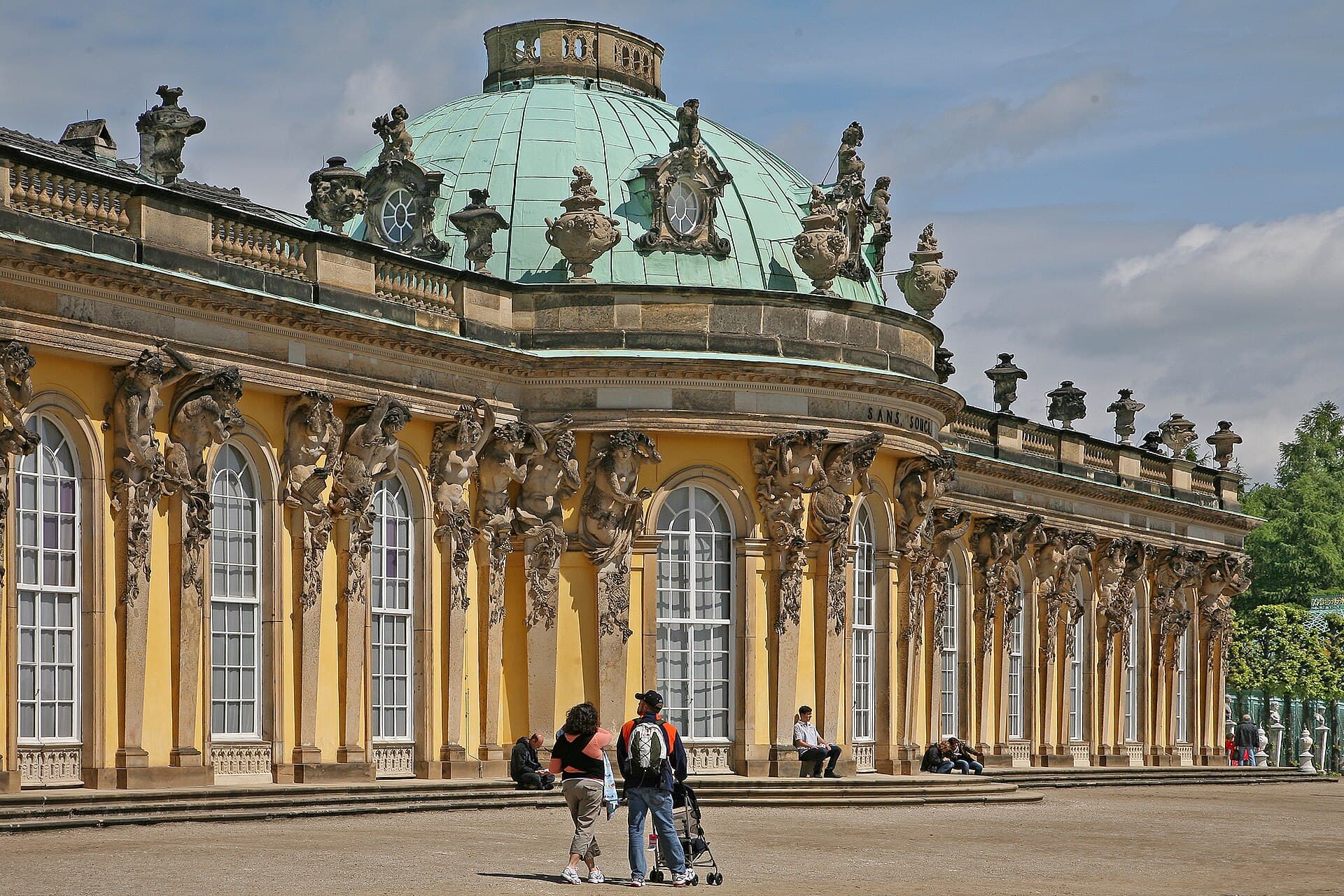
It depends what you want: Sanssouci is a broad outdoor experience — palaces, gardens and a lot of walking, best in good weather. The Barberini is a concentrated indoor visit of about two hours and the smarter choice in rain or cold. If you insist on both, start at the Barberini in the morning and move on to Sanssouci, since the park stays open after the museums close.