Souq al-Dhalam
Timber-roofed lanes.
patano — CC BY-SA 3.0 · Georg Karl Ell — CC BY-SA 4.0 · Paasikivi — CC BY-SA 3.0 · Ji-Elle — CC BY-SA 3.0 · Paasikivi — CC BY-SA 3.0 · Luca Nebuloni — CC BY 2.0 · yeowatzup — CC BY 2.0 · Paasikivi — CC BY-SA 3.0
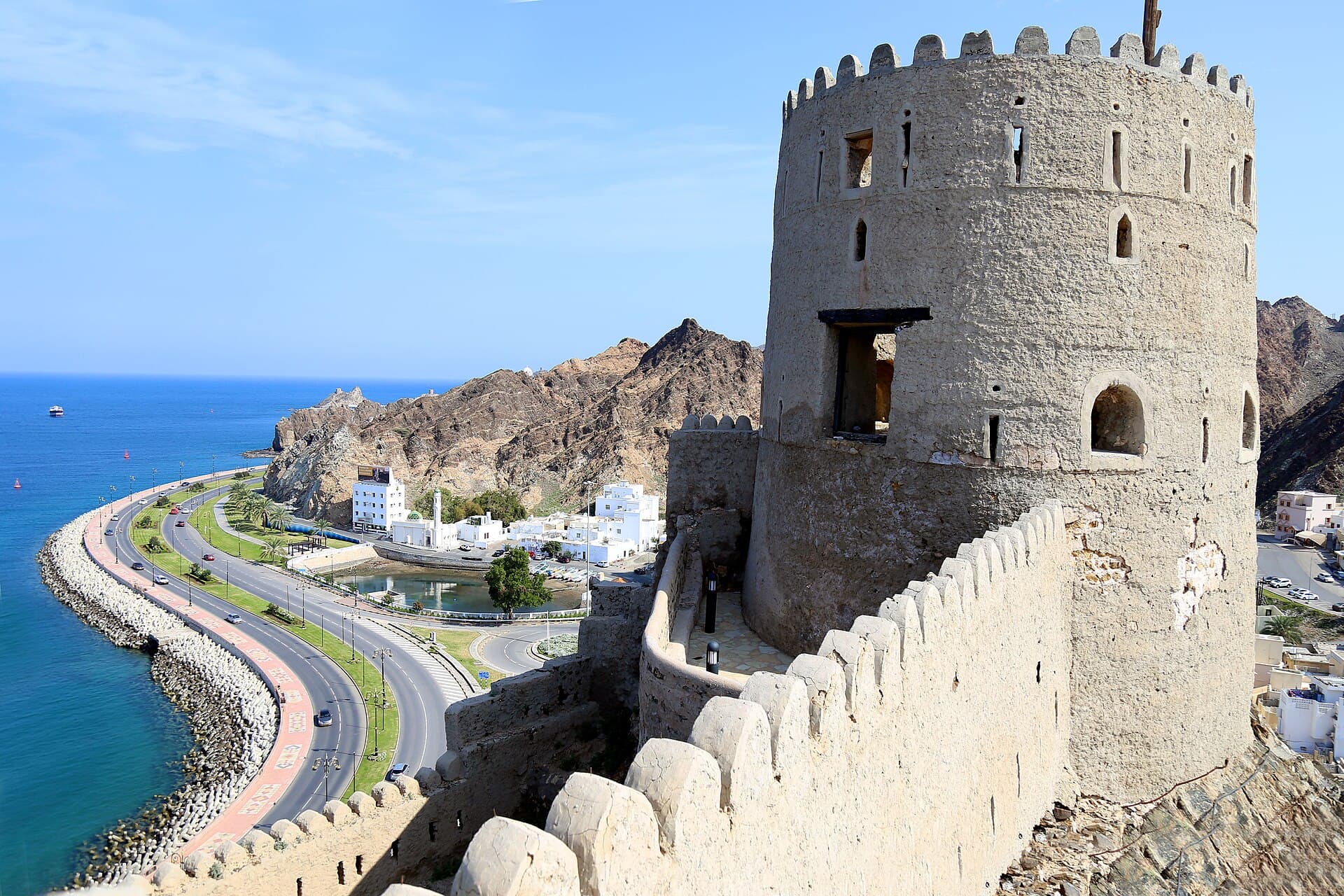
One of Oman's oldest markets, in Mutrah, which was the country's centre of trade before oil was discovered; the souq is about two centuries old. It cannot be seen from outside: it runs deep into the town, from a gate facing the sea and the Mutrah Corniche to another gate on the old town. Its narrow, winding lanes are roofed with timber, and one section is known as Souq al-Dhalam, «the dark souq», because the many alleys blocked out the sun so thoroughly that walkers once needed a lamp. The lanes smell of frankincense, incense and Arabian perfume, and the shops sell silverwork, Omani khanjar daggers, traditional fabrics, copper and clay pots, spices and Omani halwa. Haggling is part of buying in many shops. Wandering is free. Shops usually open in the morning and evening, with some closing at midday; evenings are best, when the heat eases and the corniche fills up. The souq pairs easily with Mutrah Fort and a walk along the corniche.
Timber-roofed lanes.
The scent of the souq.
Omani crafts.
Mutrah Corniche, Muscat
Frankincense and incense, silverwork and Omani khanjars, traditional fabrics, copper and clay pots and Omani halwa; haggling is common.