Nelson's Trafalgar coat
The coat Nelson was shot in at Trafalgar, the musket-ball hole still visible in its left shoulder.
Katie Chan — CC BY-SA 3.0 · Katie Chan — CC BY-SA 3.0 · DiscoA340 — CC BY-SA 4.0 · DiscoA340 — CC BY-SA 4.0
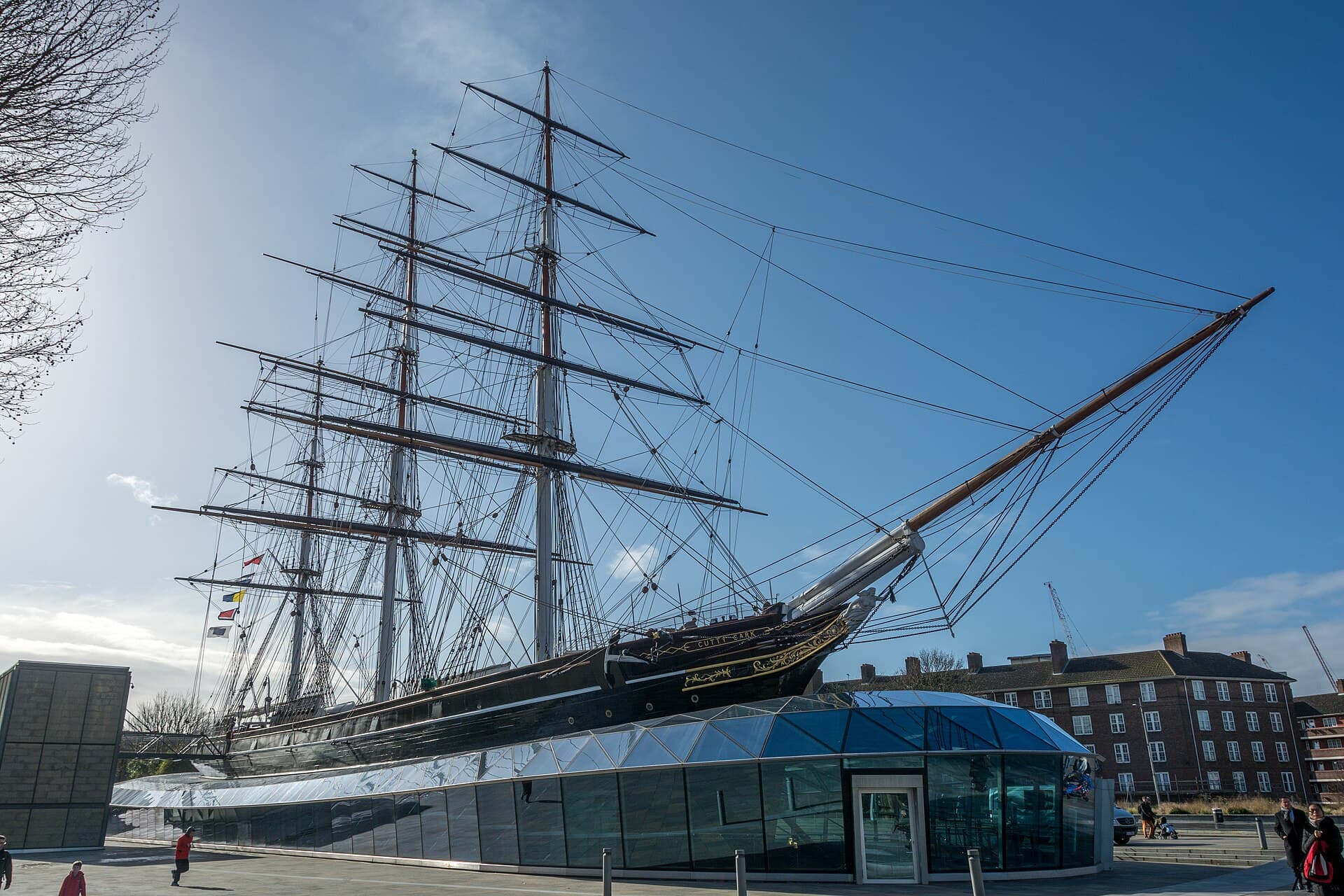
On the second floor, behind dimmed glass, hangs a dark blue coat with a small hole in the left shoulder: the one Admiral Nelson was wearing when a musket ball hit him at Trafalgar in 1805. A good part of the British national story orbits around that hole. This is, by its own description, the largest maritime museum in the world, entry is entirely free, and yet it draws a fraction of the crowds that pack the British Museum or the Natural History Museum, which in a London summer is a virtue all by itself. The museum opened in 1937 in buildings that had been a school for the sons of seafarers on the edge of Greenwich Park, and it now forms part of the Maritime Greenwich UNESCO site alongside the Queen's House, the Royal Observatory and the Old Royal Naval College. Inside are galleries on exploration, the East India Company and its Asian trade, and the Atlantic slave trade, told plainly and without softening, plus intricate ship models, colossal figureheads that once rode the bows of warships, and the giant Ocean Map on the floor of Ocean Court, where children leap from ocean to ocean. The museum is honest about its subject: the sea here is not only adventure but empire, with everything it earned and everything it did. For families this is genuinely one of London's best museums. AHOY!, the gallery for under-sevens, is built for role play around a miniature ship and quayside and runs in pre-booked 45-minute sessions: free on term-time weekdays, £5 per child at weekends and in school holidays, which is precisely when most Gulf families arrive in July and August, so book the slot before you set out. Lifts reach every floor, and there are two cafés, one at ground level on the park side and one on the first floor beside the Ocean Map. No prayer room is listed among the facilities; the park next door is a reasonable stand-in on a dry day. From central London take the DLR to Cutty Sark and walk seven minutes, or a train to Greenwich or Maze Hill; the nicest approach is the Uber Boat river service to Greenwich Pier when the rain holds off. The museum itself deserves two hours, but the right plan is to make it part of a full Greenwich day: the neighbouring Queen's House is also free and holds the Armada Portrait of Elizabeth I, then climb the hill to the Observatory and the original Meridian line (paid, £24) and visit the Cutty Sark clipper by the river (£22). In winter, make the museum your last stop rather than your first: the Observatory and the park need daylight, and that is gone before four.
The coat Nelson was shot in at Trafalgar, the musket-ball hole still visible in its left shoulder.
A role-play gallery for under-sevens in booked 45-minute sessions, among the best things London offers small children, free on term-time weekdays.
A giant floor map that puts the oceans at the centre, where children leap from sea to sea, and a collection of colossal figureheads that once led warships into battle.
Romney Road, Greenwich, London SE10 9NF
It is, provided you make it a whole day rather than a quick stop; the journey from the centre takes around 40 minutes. In summer the Maritime Museum is calmer and more child-friendly than the Natural History Museum, AHOY! and the Ocean Map keep small children happily busy, and with the park and the Cutty Sark the day fills itself. If you only have two days in London, though, the central museums come first and Greenwich can wait for the next trip.
The museum and the Queen's House are free and make a satisfying half day on their own. The Observatory earns its price if standing on the Meridian line means something to you, and the view from the hill is free regardless. The Cutty Sark is lovely but the smallest and priciest for the time it takes, so drop it first if the budget is tight; if you do visit both paid sites, the £38 Day Pass saves £8 per adult.