Silla gold crowns
Gold of the 5th-6th centuries.
Jinah78 — CC BY-SA 3.0 · Korea.net / Korean Culture and Information Service — CC BY-SA 2.0 · Jocelyndurrey — CC BY-SA 4.0 · SJ Yang — CC BY-SA 2.0
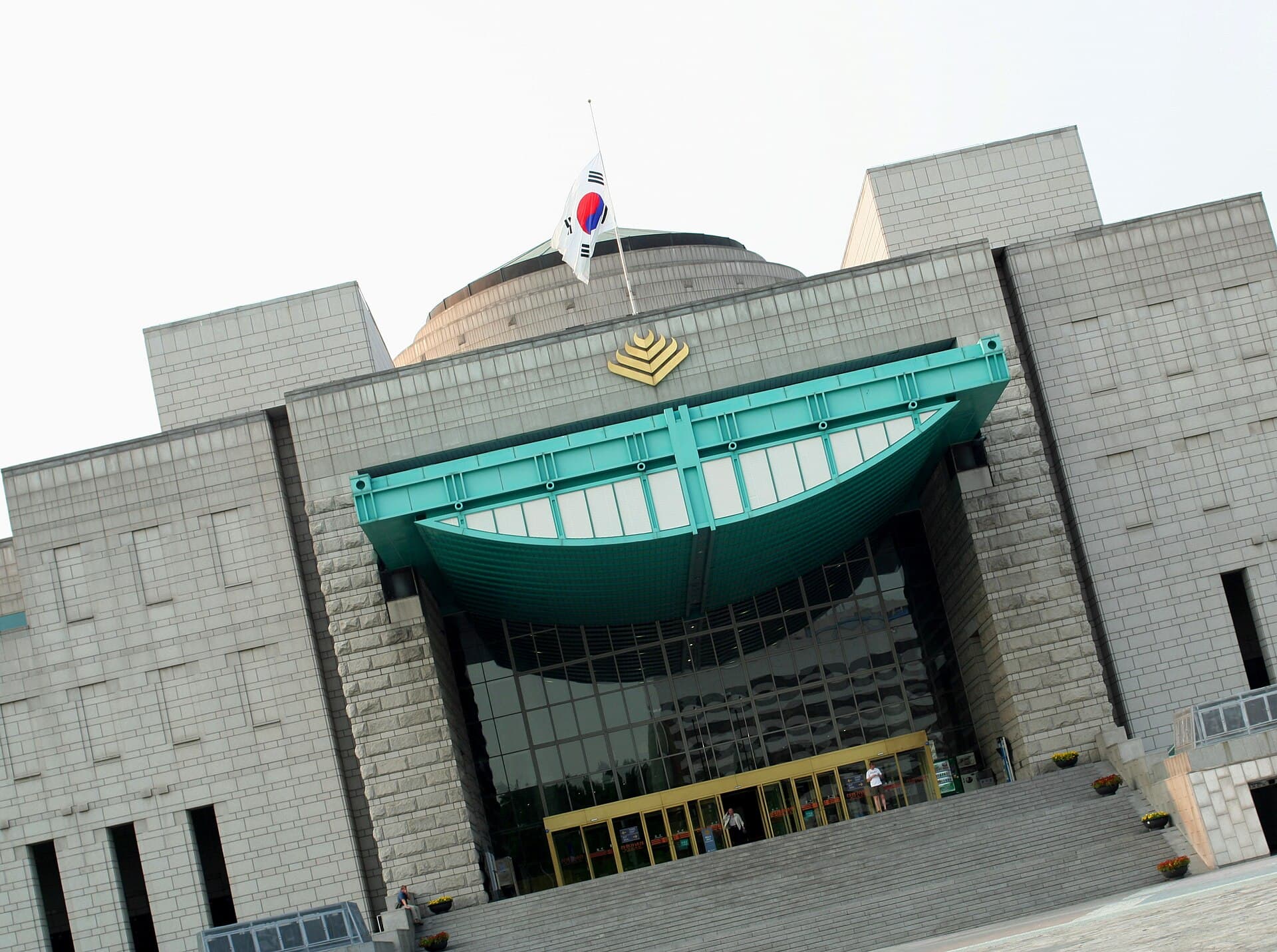
The flagship museum of Korean history and art, and one of the largest museums in Asia. Founded in 1945, it moved in 2005 to its present building in the Yongsan district, set in a large park with a pond, pavilions and stone monuments. Its galleries tell the story of the Korean peninsula from prehistory to the Joseon dynasty. In the main concourse stands the ten-storey marble pagoda of Gyeongcheonsa, from the fourteenth century. Among the best-known exhibits are the gold crowns and belts of the Silla kingdom, green celadon from the Goryeo period, and the white porcelain «moon jars» of Joseon. The upper floors hold the calligraphy and painting galleries and rooms for immersive digital displays. Children have their own museum inside the building, with hands-on activities; it usually needs booking in advance. Audio guides and English-language tours are available. The permanent exhibition is free for now; the government plans to introduce an admission fee from 2027, at a price not yet announced. The museum is large, so pick one or two floors and give them two to three hours.
Gold of the 5th-6th centuries.
Ten storeys of marble.
The famous Goryeo green.
137 Seobinggo-ro, Yongsan-gu; Ichon Station (Line 4), exit 2
Yes, the permanent exhibition is free for now, while special exhibitions are ticketed. The government plans to introduce an admission fee from 2027, at a price not yet announced.
09:30 to 17:30, extended to 21:00 on Wednesdays and Saturdays. Last entry is 30 minutes before closing.