
The Kollwitz sculpture
A mother holding her dead son in a bare hall.
Ansgar Koreng — CC BY 3.0 de · Photograph by Mike Peel (www.mikepeel.net). — CC BY-SA 4.0 · Ansgar Koreng — CC BY 3.0 de · Ansgar Koreng — CC BY 3.0 de
The Neue Wache, the new guardhouse, is a small building on Unter den Linden built by Karl Friedrich Schinkel in 1818 as the royal palace guard post, fronted like a Greek temple with six columns. It is modest in size but among the purest examples of neoclassicism in Germany. Across two centuries it became a mirror of every regime that governed Germany: a memorial to the dead of the First World War under the Weimar Republic, then a monument of the Nazi state, then East Germany's memorial to the victims of fascism and militarism with an honour guard performing the goose step, and finally, since 1993, the Federal Republic's central memorial to the victims of war and tyranny. The interior today is entirely empty but for one thing: an enlarged version of Kathe Kollwitz's sculpture Mother with her Dead Son, in the centre of a bare stone hall beneath a circular opening cut in the roof with no glass — so rain, snow and cold fall directly onto it, as they fall on soldiers in the field. Entry is free and takes minutes, but it is among the most powerful things in Berlin.
A mother holding her dead son in a bare hall.
Rain and snow fall onto the sculpture.
Unter den Linden 4, 10117 Berlin
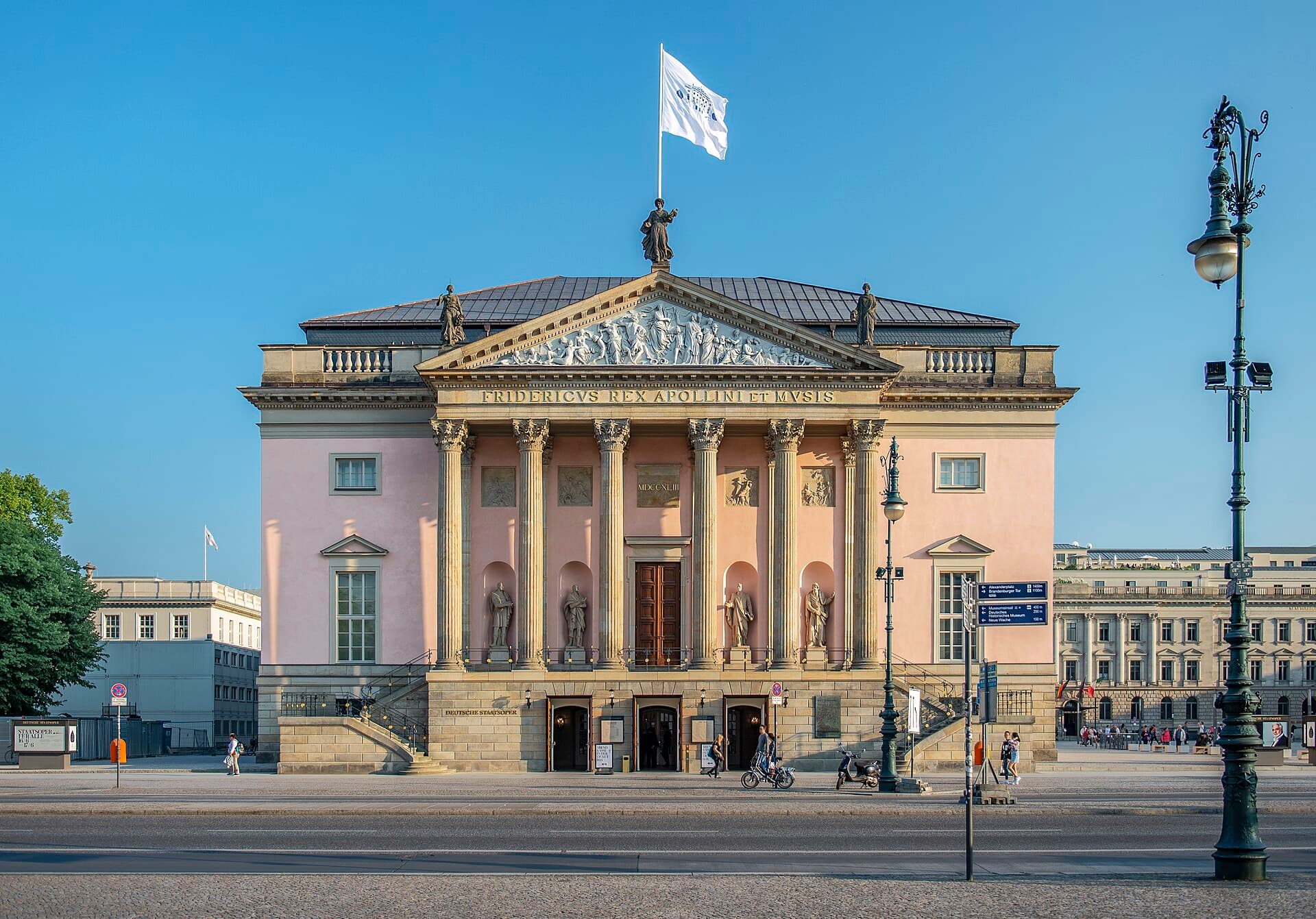 Berlin State OperaThe Staatsoper is Berlin's oldest opera house, built in 1742 on the orders of Fr1 minute walk4.8
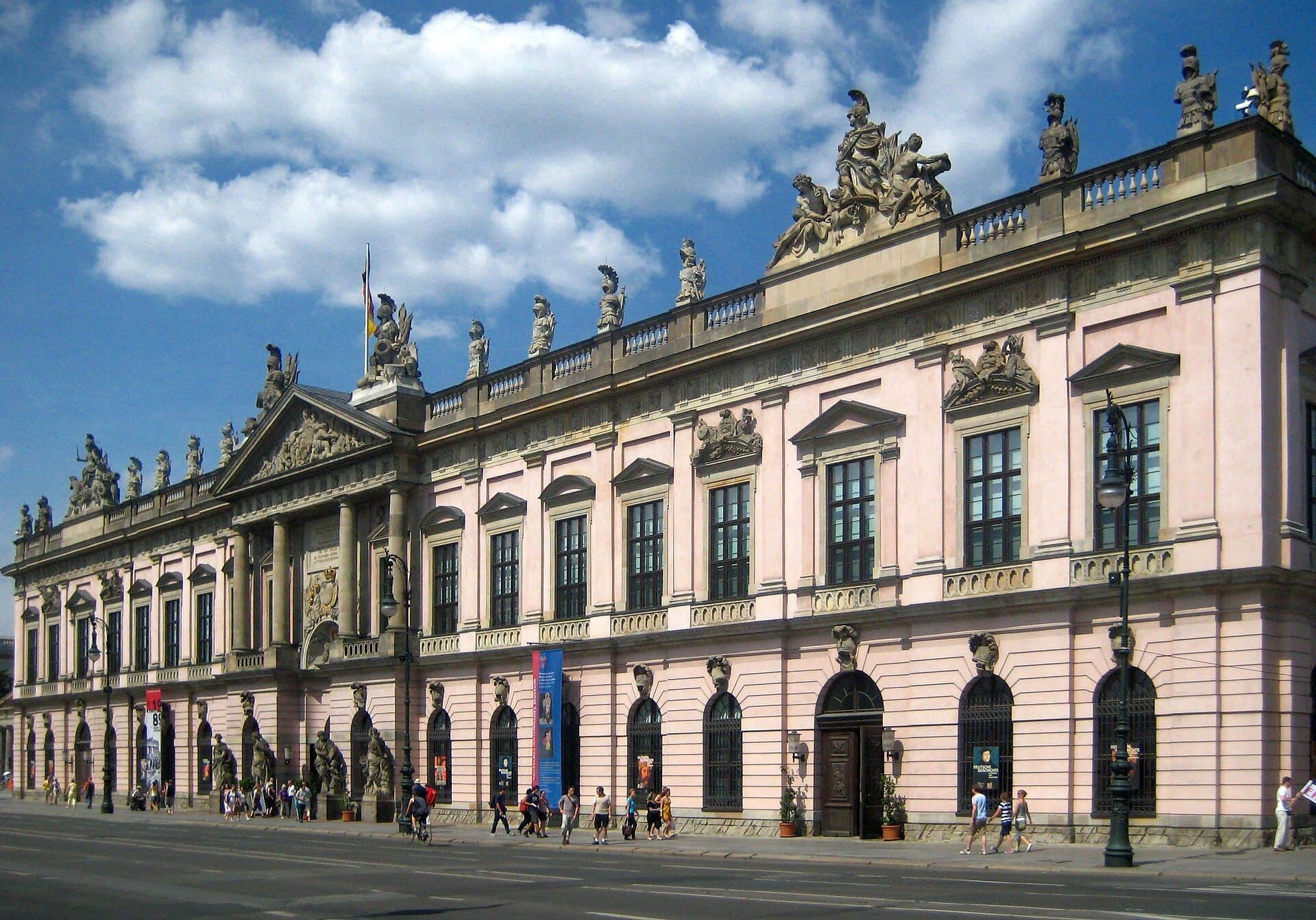 German Historical MuseumThe German Historical Museum occupies the Zeughaus, the oldest building on Unter1 minute walk4.5
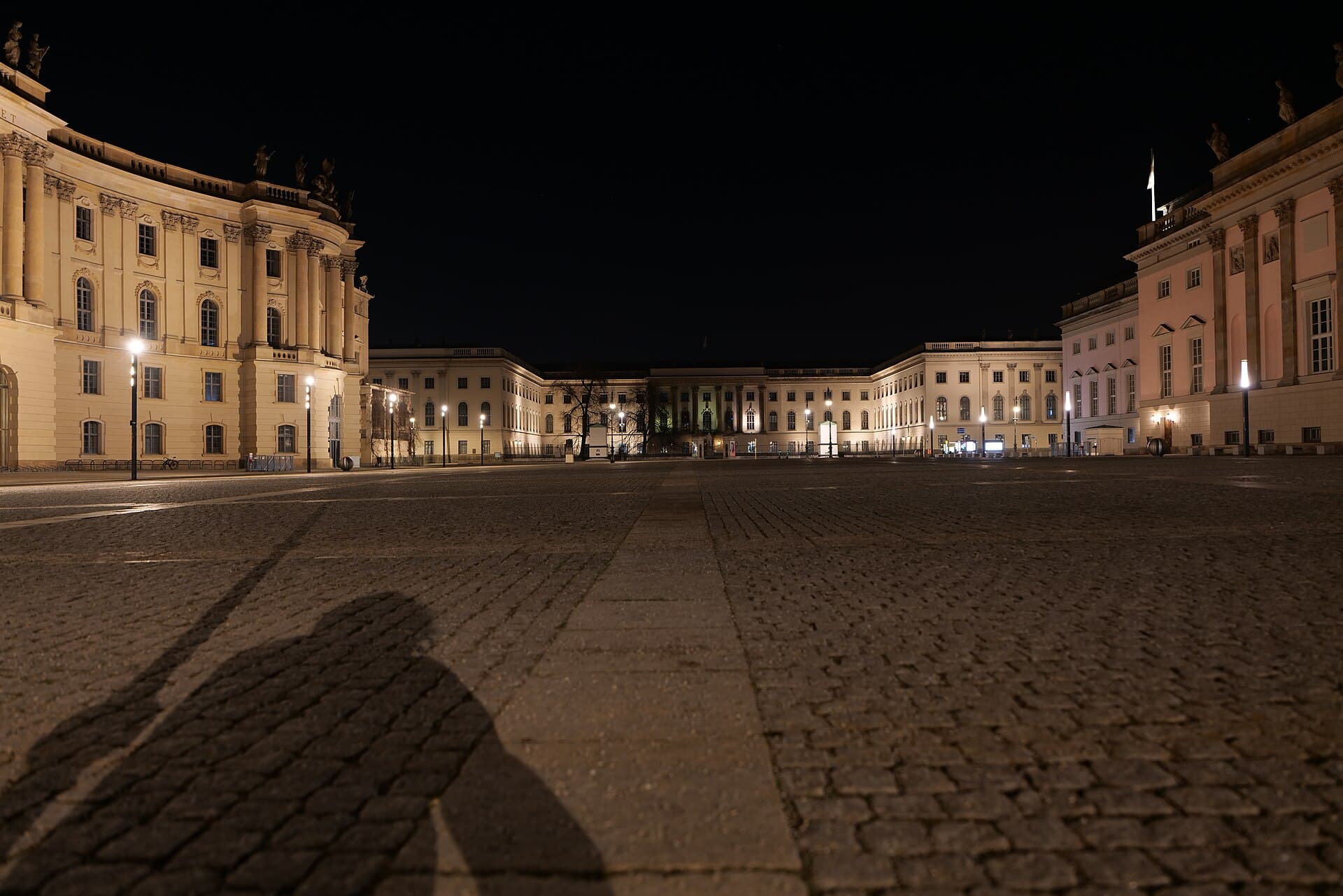 BebelplatzBebelplatz is a rectangular square opening off Unter den Linden, framed by three2 minutes walk4.7
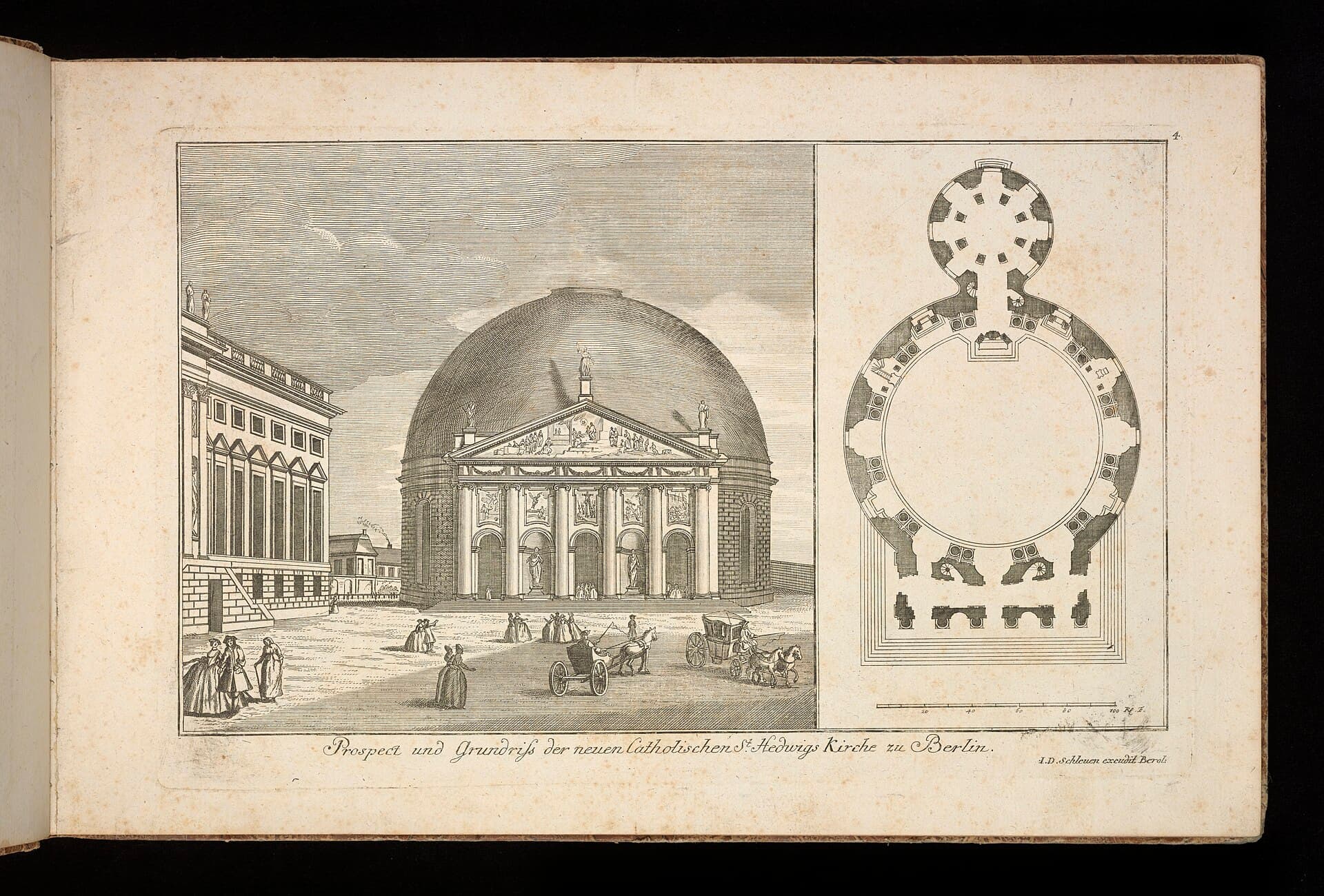 St Hedwig's CathedralSt Hedwig's is Berlin's mother Catholic church, and the story of its constructio2 minutes walk4.2
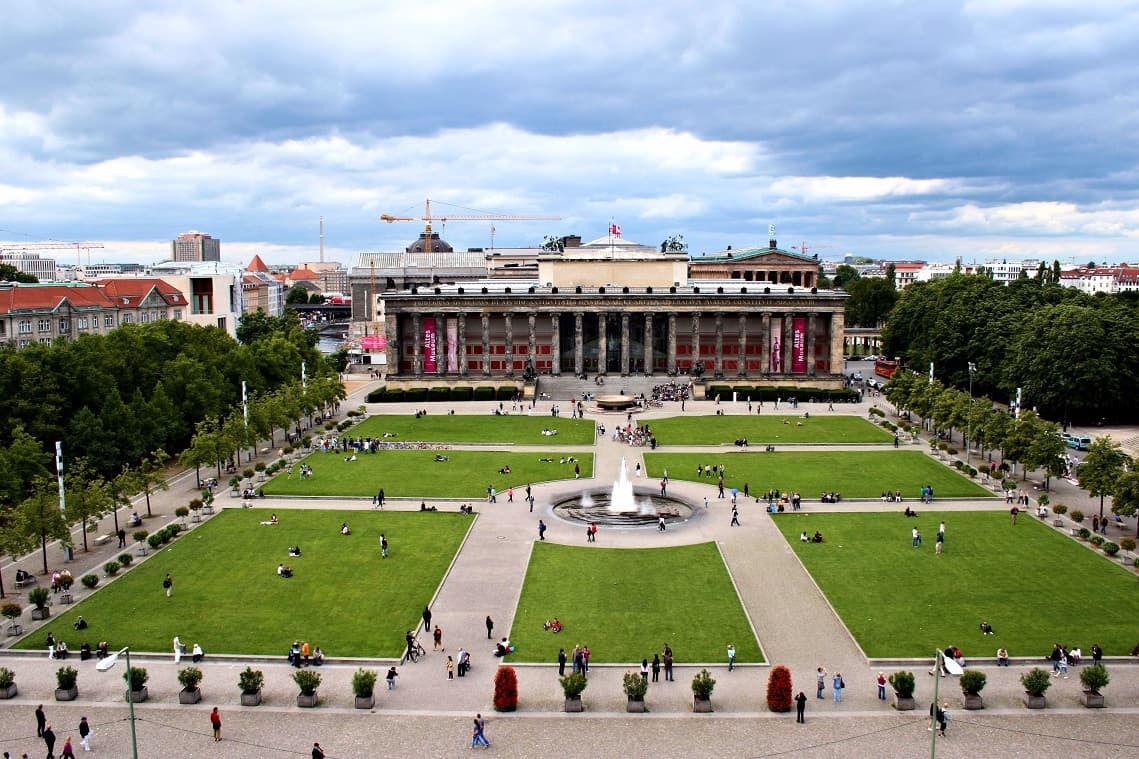 LustgartenThe Lustgarten is a square of grass in the middle of Berlin's Museum Island. Ber4 minutes walk4.5
The decision is entirely deliberate: the sculpture is exposed to what those it commemorates were exposed to — rain, snow, cold and heat. The effect changes with the weather, so you find the mother soaked on a wet day and covered in snow in January. It turns the memorial from a fixed statue into something that lives through the seasons with the city.