Yōmeimon gate
Hundreds of carvings.
Fg2 — Public domain · Adam Jones from Kelowna, BC, Canada — CC BY-SA 2.0 · Andrea Schaffer from Sydney, Australia — CC BY 2.0 · Zairon — CC BY-SA 4.0 · Zairon — CC BY-SA 4.0 · Zairon — CC BY-SA 4.0 · KimonBerlin — CC BY-SA 2.0 · kanegen — CC BY 2.0
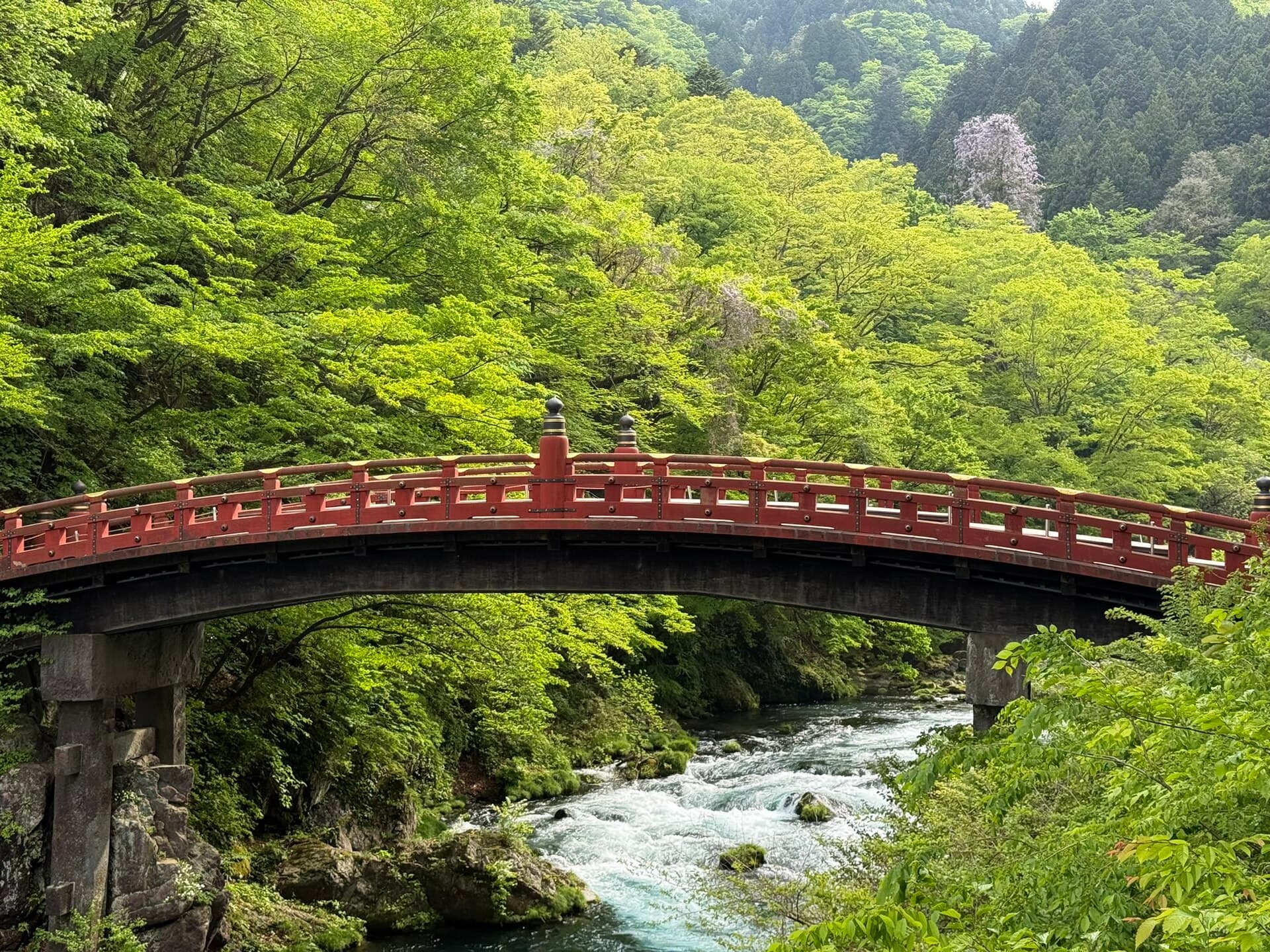
A Shinto shrine in a dense cedar forest in Nikko, dedicated to Tokugawa Ieyasu, founder of the Tokugawa shogunate, whose remains lie here. It was first built in 1617 and enlarged by his grandson, the shōgun Iemitsu. With Futarasan Shrine and Rinnō-ji it forms the «Shrines and Temples of Nikkō» World Heritage Site, and five of its buildings are National Treasures. It is famous for lavish decoration in bright colours and gold, a striking contrast with the simplicity of many Japanese shrines. Its best-known building is the Yōmeimon gate, covered in hundreds of painted carvings; it is said you could gaze at it until sundown without tiring. Among its famous carvings are the three wise monkeys who see, hear and speak no evil, on the stable of the sacred horses, and the sleeping cat, Nemuri-neko, attributed to the carver Hidari Jingorō. A red five-storey pagoda rises among the cedars in the precinct. Tickets are about 1,600 yen, and it opens 9:00-17:00 from April to October and to 16:00 from November to March (last entry half an hour before closing), per visitor guides. It is about a 10-minute walk from the Shinkyō bridge.
Hundreds of carvings.
See, hear, speak no evil.
Among the cedars.
Sannai, Nikko, Tochigi Prefecture
The three wise monkeys on the sacred horses' stable, the sleeping cat carving, and the Yōmeimon gate with its hundreds of painted carvings.