Five tiers
Stepped roofs.
Göran Höglund (Kartläsarn) — CC BY 2.0 · Nrik kiran — CC BY-SA 4.0 · Jen Bati — CC BY-SA 4.0 · Janak Bhatta — CC BY-SA 4.0
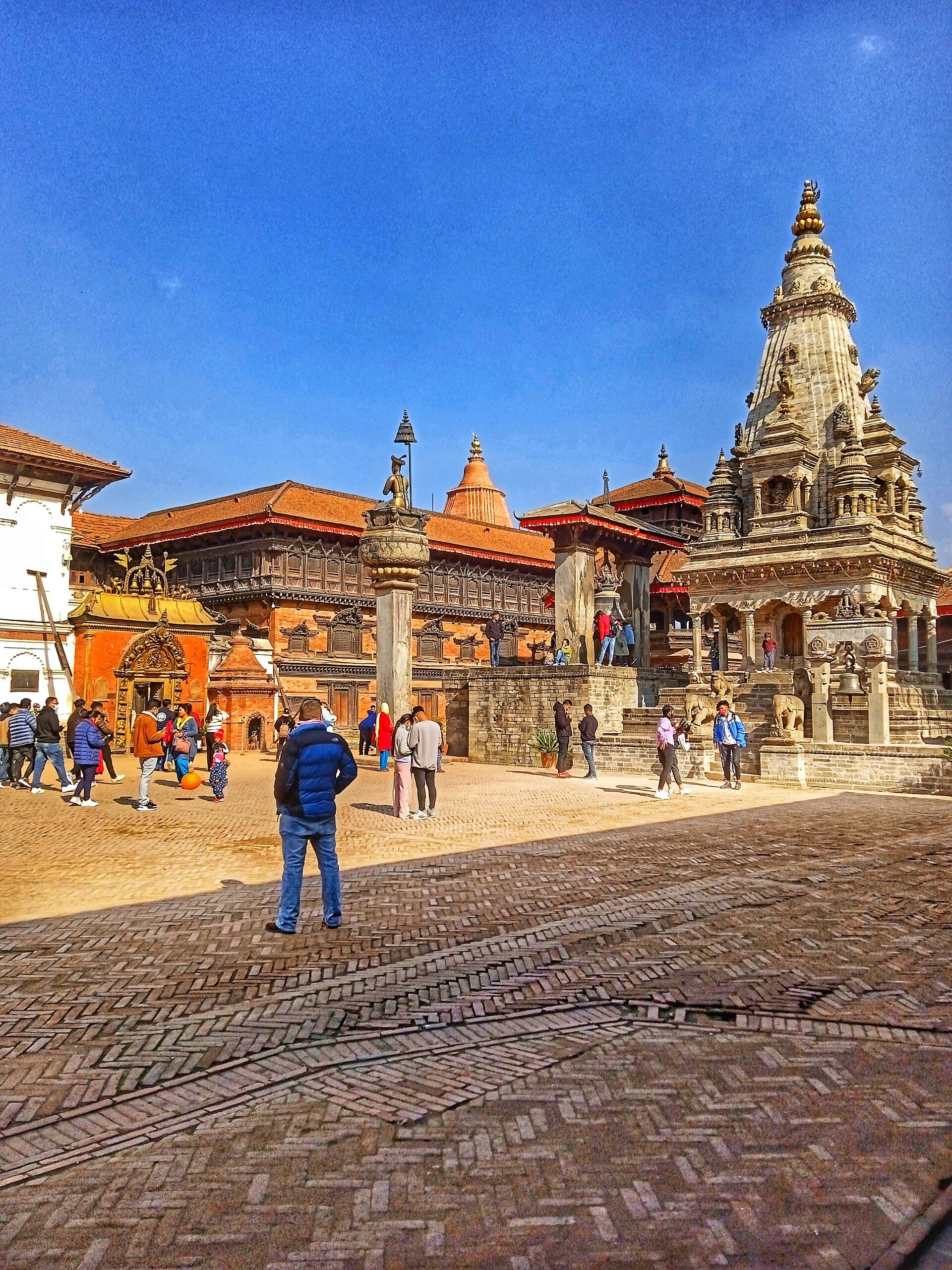
Nepal's tallest temple and the tallest building in old Bhaktapur, a temple of five tiered roofs whose Newar name means five-storeyed. King Bhupatindra Malla ordered it built, and it took just six months, from December 1701 to July 1702. It stands on a base of five stepped stone plinths, climbed by a stone stairway flanked by pairs of guardian statues, each pair said to be ten times stronger than the one below. Small bells hang from its wooden roofs, which rest on carved struts. The temple survived four great earthquakes, including 1934 and the devastating 2015 quake that brought down many buildings around it, making it a symbol of its builders' skill. Its steps look over Taumadhi Square and the houses and cafés facing it. It is covered by the Bhaktapur old-city ticket, and its inner chamber is closed to visitors. Temples and stupas are living places of worship: dress modestly, walk clockwise around Buddhist stupas, remove shoes where asked, and note that some Hindu shrines admit Hindus only.
Stepped roofs.
Paired statues.
Overlooking cafés.
Taumadhi Square, Bhaktapur
Thanks to its broad stepped stone base and flexible timber frame, it came through four great quakes, including 2015.