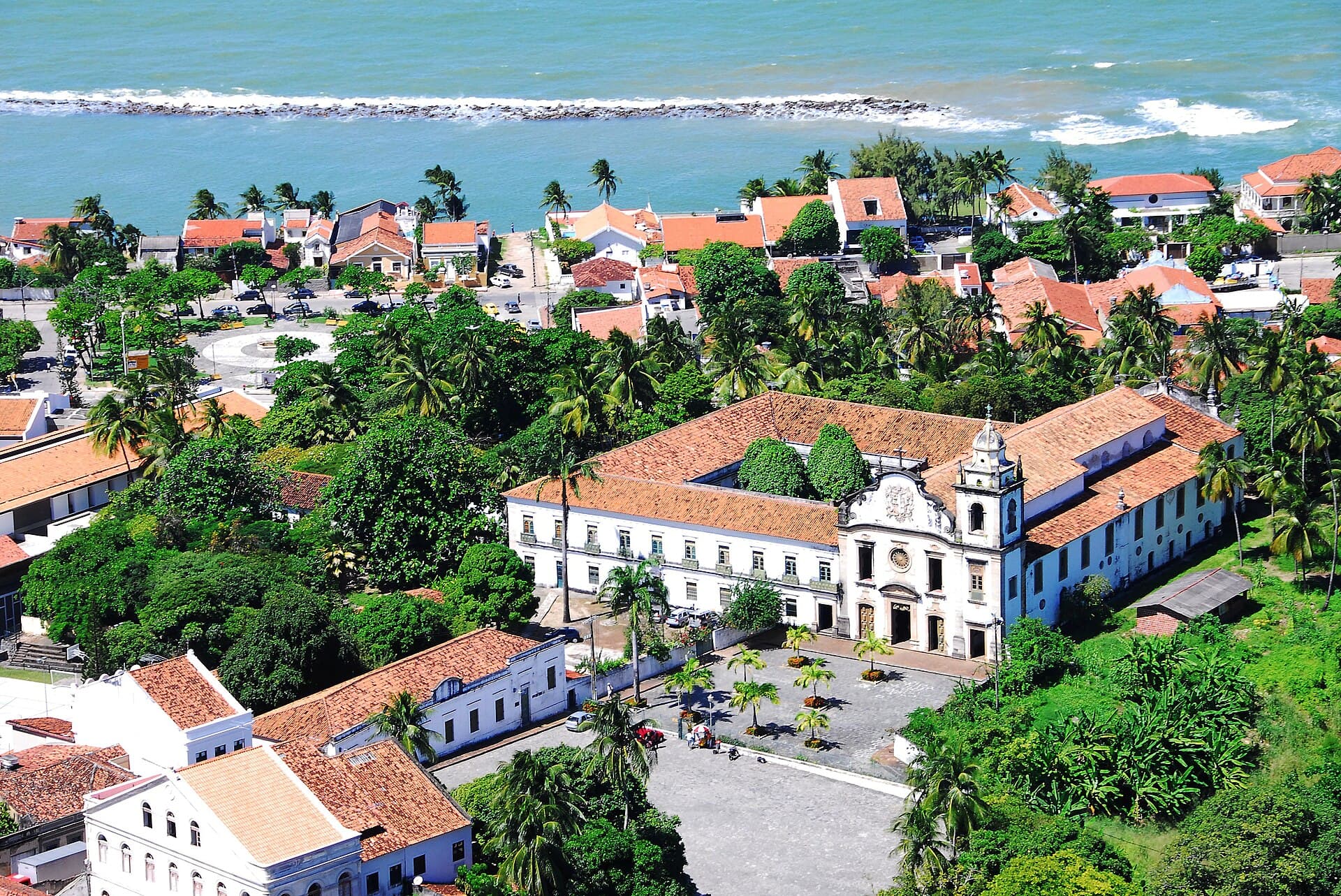
Alto da Sé
Views of the coast and Recife.
Prefeitura de Olinda — CC BY 2.0 · Adam Jones, Ph.D. — CC BY-SA 3.0 · Lais Castro — CC BY-SA 4.0 · Lyssuel Calvet from São Luis, Brasil — CC BY 2.0 · Lyssuel Calvet from São Luis, Brasil — CC BY 2.0
Olinda is one of the best-preserved colonial towns in Brazil, on hills overlooking the ocean north of Recife. The Portuguese Duarte Coelho founded it in 1535; it became a town in 1537 and the capital of Pernambuco, rich in sugarcane, until the Dutch burned it when they invaded the region in 1631. In 1982 UNESCO added it to the World Heritage List. The town was built on hills because they were easier to defend, so its stone streets climb and dip between houses painted yellow, blue and green, with white churches and monasteries crowning each hill. Its highest point is Alto da Sé, the square in front of the cathedral, from which the whole coast and the towers of Recife on the horizon come into view, with stalls of local food and crafts. Olinda is famous for its free street carnival, to the rhythms of frevo and maracatu, with no stands or barriers. It is extremely crowded, so come outside carnival if you want calm. The slopes are steep, so wear comfortable shoes.
Views of the coast and Recife.
On the hills.
Crowning each hill.
Old Olinda and Alto da Sé, north of Recife
Olinda lies just north of Recife, within its metropolitan area; from Alto da Sé you can see Recife's whole skyline.