Two buildings in one
Wagner's architecture under Fuchs's layer of colour — a double reading.
C.Stadler/Bwag — CC BY-SA 4.0 · Otto Wagner (1841 - 1918) — Public domain · Otto Wagner (1841—1918) — Public domain · Otto Wagner (1841 - 1918) — Public domain
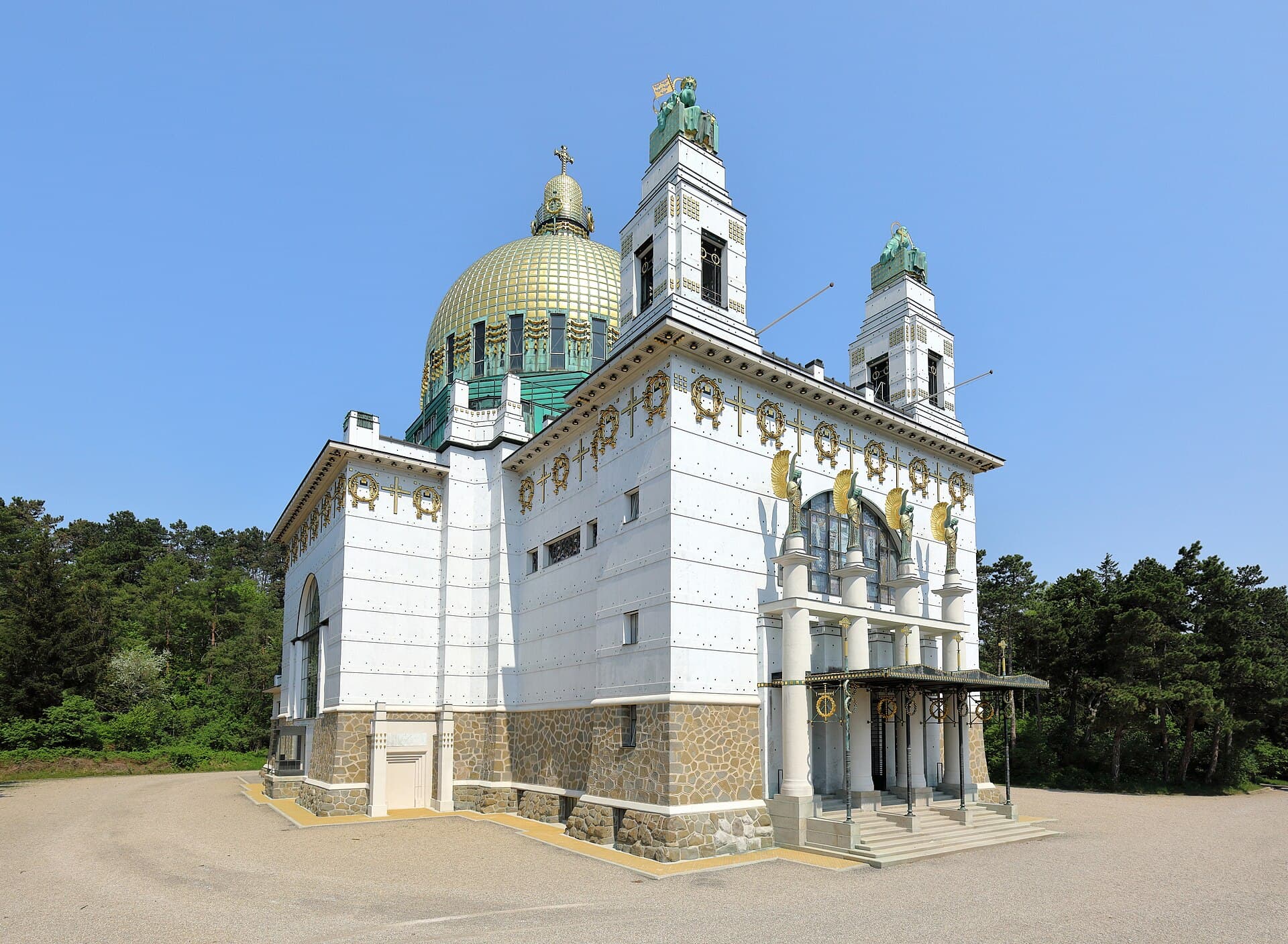
A summer villa the architect Otto Wagner built for himself in the late 1880s in Hütteldorf, west of Vienna, today a museum of the painter Ernst Fuchs's work. Wagner is the architect who carried Vienna from historicism into modernism, and this villa comes from his early phase: still classical in its columns and symmetry, before he moved towards the plain lines he became known for at the Majolica House, the metro stations and the Steinhof church. Seeing it alongside his later work shows the whole arc of his change. The second layer was added by Fuchs, the Austrian painter who founded the Fantastic Realism school, who bought the villa in the 1970s and reworked it with his colours, ornament and stained glass. The result is Wagner's building under a layer of Fuchs — which irritates some lovers of architecture and delights others. Practical points: Hütteldorf is well out from the centre and needs the metro and then a walk. Hours are limited and seasonal — check before going. Combine it with the Steinhof church, relatively nearby and also by Wagner.
Wagner's architecture under Fuchs's layer of colour — a double reading.
Fuchs founded the school, and the villa is the widest permanent showing of his work.
Wagner's late church is relatively near and shows the other end of his arc.
Hütteldorf, western Vienna
Know which interests you before going. Anyone coming for pure Wagner architecture may be disappointed: the interior was entirely reworked in Fuchs's colours and ornament. Anyone coming for Fuchs will find the widest permanent showing of his work. Anyone who accepts both will find the building stranger and more enjoyable than it looks.
The U4 metro to Hütteldorf then a walk, or a bus. The distance from the centre makes it a half day rather than a stop, which is why combining it with the Steinhof church on the same side of the city is advised.