
The arched void
Rock arches that make it look like a flooded church.
Holger Uwe Schmitt — CC BY-SA 4.0 · Bernard Gagnon — CC BY 4.0 · Holger Uwe Schmitt — CC BY-SA 4.0 · Gorup de Besanez — CC BY-SA 4.0
**An enormous rock-cut water cistern beneath the main square — a "cathedral of water" fifteen metres deep** — under the feet of Matera's passers-by. ⚠ **It was not discovered until the 1990s**: **people had walked over it for generations without knowing** its true size — **until restoration of the square revealed it**. ✅ **Its scale astonishes**: **it holds some five million litres**, **its walls cut into the rock and rendered waterproof**, **with supporting arches** that make it look like a flooded church. ⚠ **And it is not one cistern but a network**: **all Matera sits above a rainwater-harvesting system** of cisterns and channels — **which is what made life possible in a region of scarce rain**. ✅ **Visits are a short guided walk along a gangway.**
Rock arches that make it look like a flooded church.
Lines on the walls showing old water levels.
A suspended walkway above the cistern floor.
Piazza Vittorio Veneto, 75100 Matera, Italy
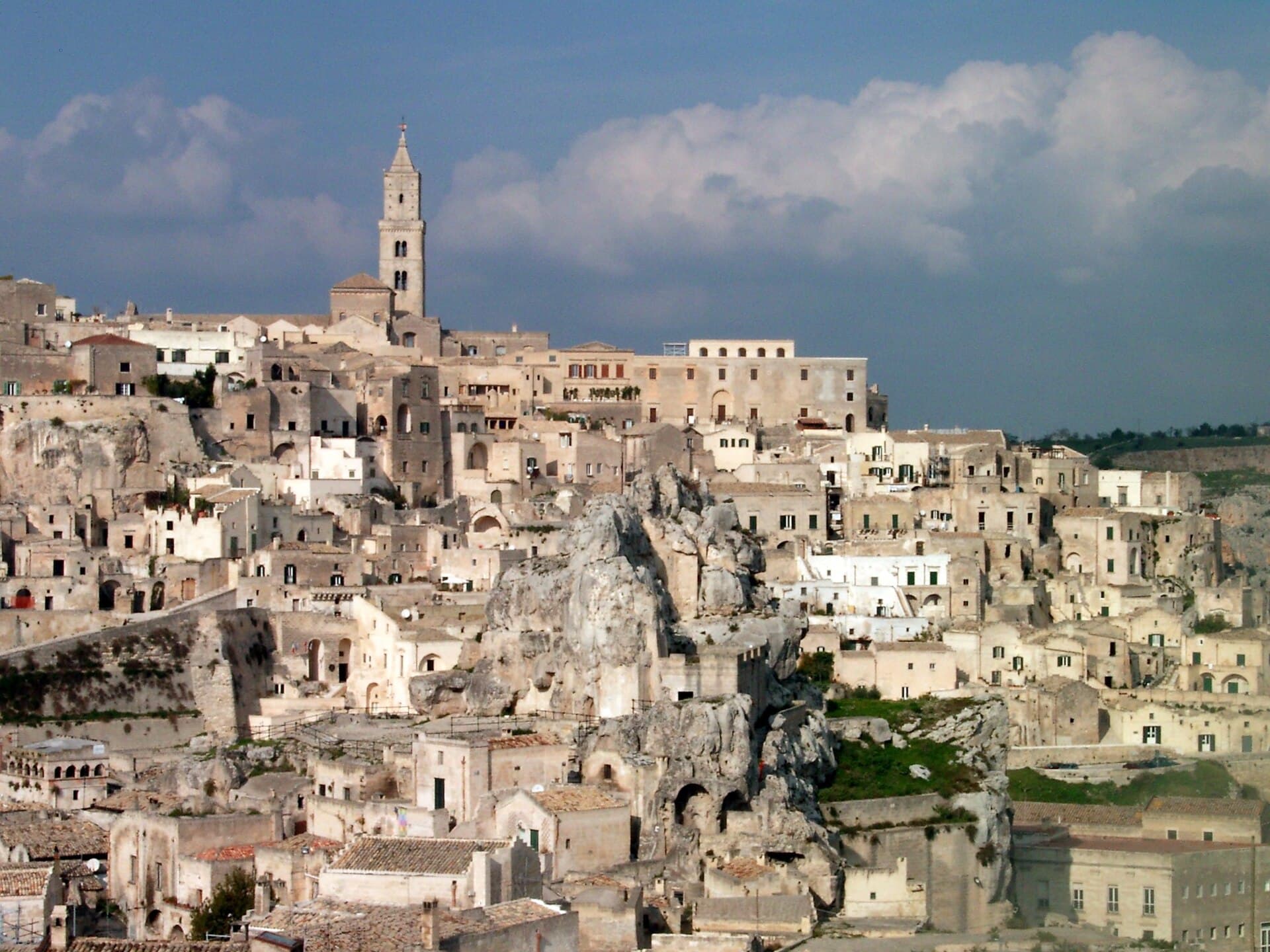 The Sassi**An entire town carved into a rock face, inhabited for thousands of years — and2 minutes walk4.9
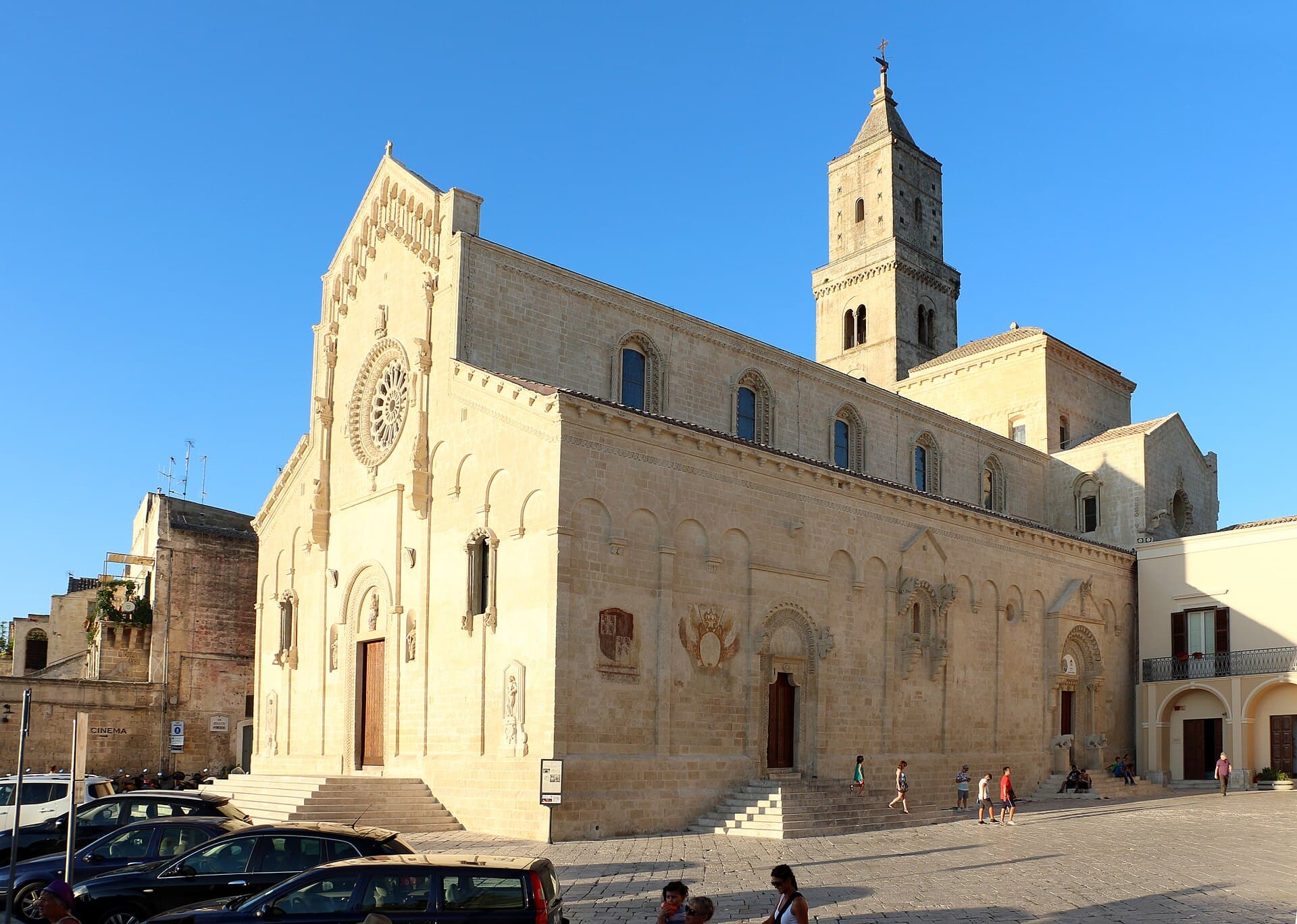 Matera Cathedral**A cathedral on the city's highest point between the two quarters, austere outs5 minutes walk4.5
 The Cave House**One cave house refurnished exactly as it was on the day of the 1952 clearance 8 minutes walk4.5
**By a rock-cut rainwater harvesting system — the cleverest thing about the city and the least visible.** ✅ **The problem**: **the Murgia plateau is dry limestone with scarce rain and no permanent rivers** — ⚠ **and the groundwater lies deep, hard to reach with pre-modern technology**. **So how did a city live here for thousands of years?** ✅ **The answer — collection, not extraction**: **an entire system was cut beneath the city** of **cisterns, channels and conduits** ⚠ **gathering every drop of rain that fell on roofs, squares and slopes** and leading it into rock-cut tanks. ✅ **The detail is ingenious**: **the limestone cuts easily**, **and is rendered with a waterproof coating** against seepage; **the cisterns sit at different levels** so the upper overflow into the lower; **and settling systems** separate silt before storage. ⚠ **Every cave house had its small cistern**, **and the city its great ones** — **the Palombaro Lungo the largest**. ✅ **The cruel irony**: ⚠ **that same system became the source of disease in the 20th century** — **when the population grew dense and the water was contaminated**, **and epidemics spread**; ⚠ **which was among the reasons for the 1952 clearance decision**.