
Pointed arches
Persian and European influence.
This Photo was taken by Supanut Arunoprayote. Feel free to use any of my images, but please mention me as the author and may send me a message. (สามารถใช้ภาพได้อิสระ แต่กรุณาใส่เครดิตผู้ถ่ายและอาจส่งข — CC BY 4.0 · Mastertongapollo — CC BY-SA 4.0 · Supanut Arunoprayote — CC BY 4.0 · Adam Jones from Kelowna, BC, Canada — CC BY-SA 2.0 · Hdamm — CC BY-SA 3.0
The great palace of King Narai, who ruled the Ayutthaya kingdom from 1656 to 1688 and made Lopburi a second capital where he spent most of the year. It was built in the 1660s and 1670s with the help of European engineers, blending Thai architecture with pointed arches carried by Persian and European influence, at a time when Ayutthaya received embassies from France and Persia. You walk between crenellated white walls and arched gates to the brick ruins of the great halls, among them the hall where foreign envoys were received, water tanks, twelve treasure stores and the royal elephant stables. The buildings King Mongkut restored in the nineteenth century house the Somdet Phra Narai National Museum, with pieces from Lopburi's many periods. The fee for foreigners is about one hundred and fifty baht; the grounds open from seven in the morning until half past five, while the museum halls usually open Wednesday to Sunday. In February the King Narai Reign Fair has people dressing in the costumes of that age. The heat is fierce from March to May, so early morning is best. Allow an hour and a half; the palace is ten minutes on foot from Phra Prang Sam Yot and the railway station.
Persian and European influence.
Where French embassies were received.
In Rama IV's halls.
Surasongkhram Road, central old Lopburi
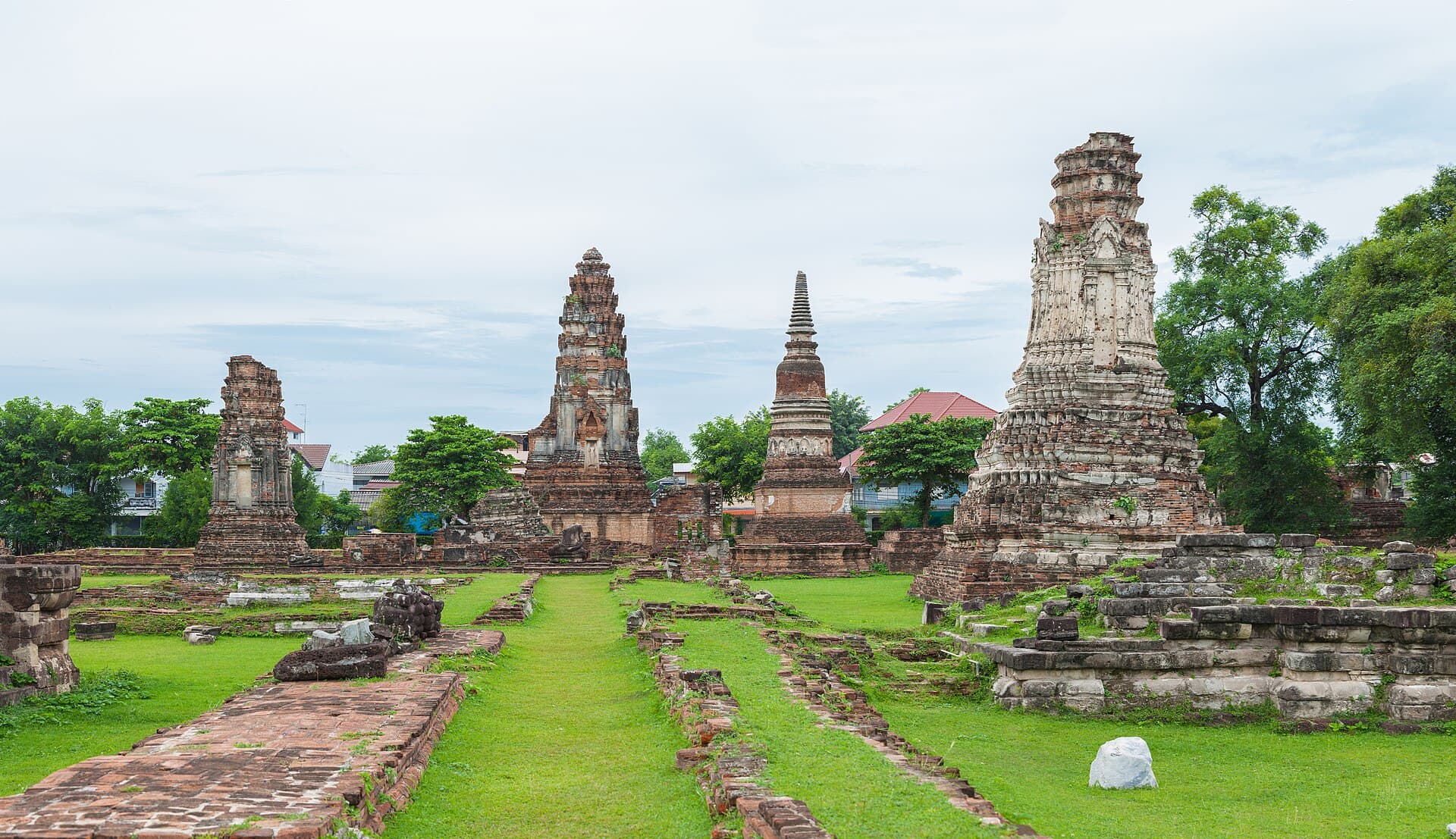 Wat Phra Si Rattana Mahathat (Lopburi)Lopburi's largest and oldest temple ruin, directly opposite the railway station,5 minutes walk
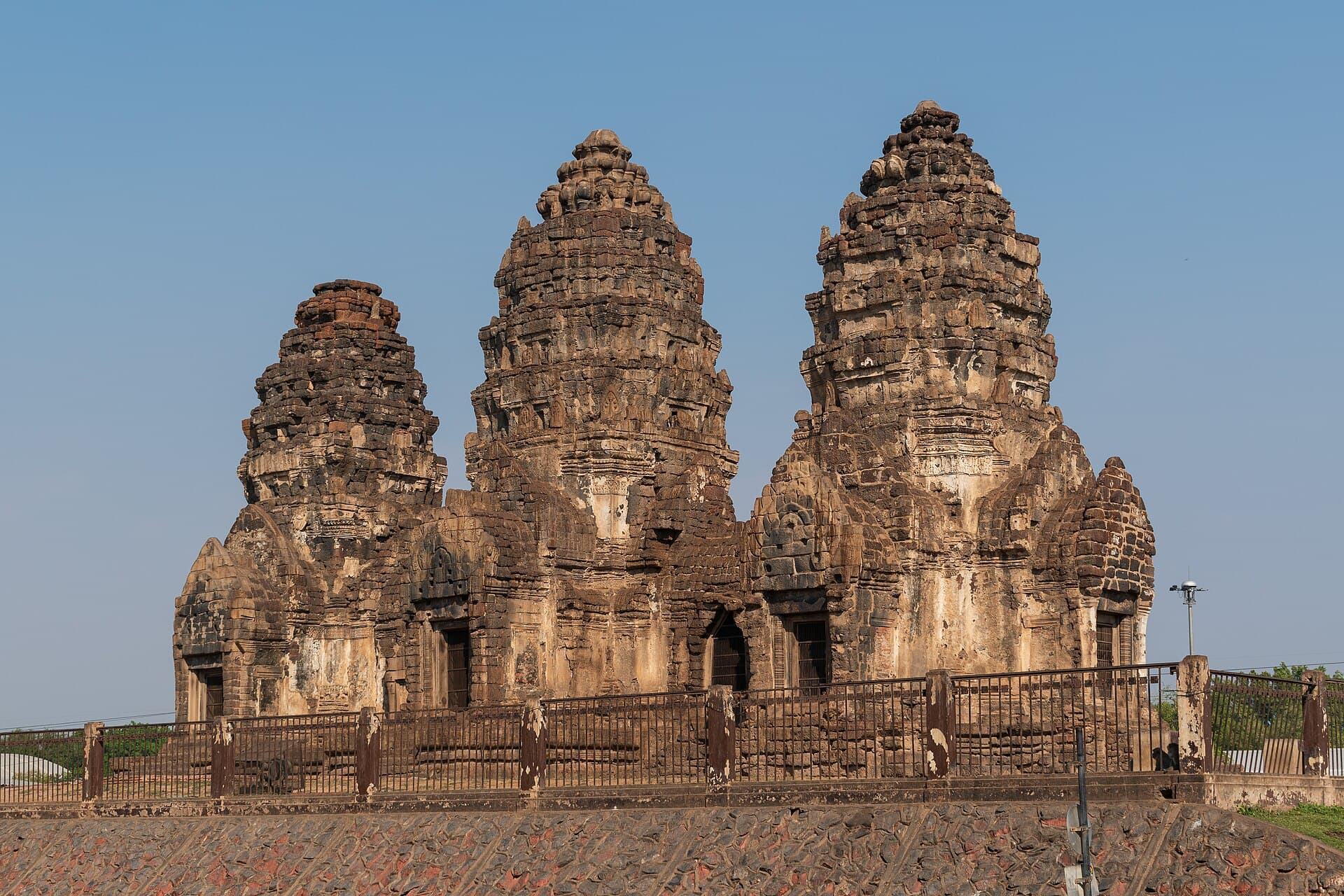 Phra Prang Sam YotThe symbol of Lopburi: three Khmer towers of sandstone and laterite joined by a 5 minutes walk
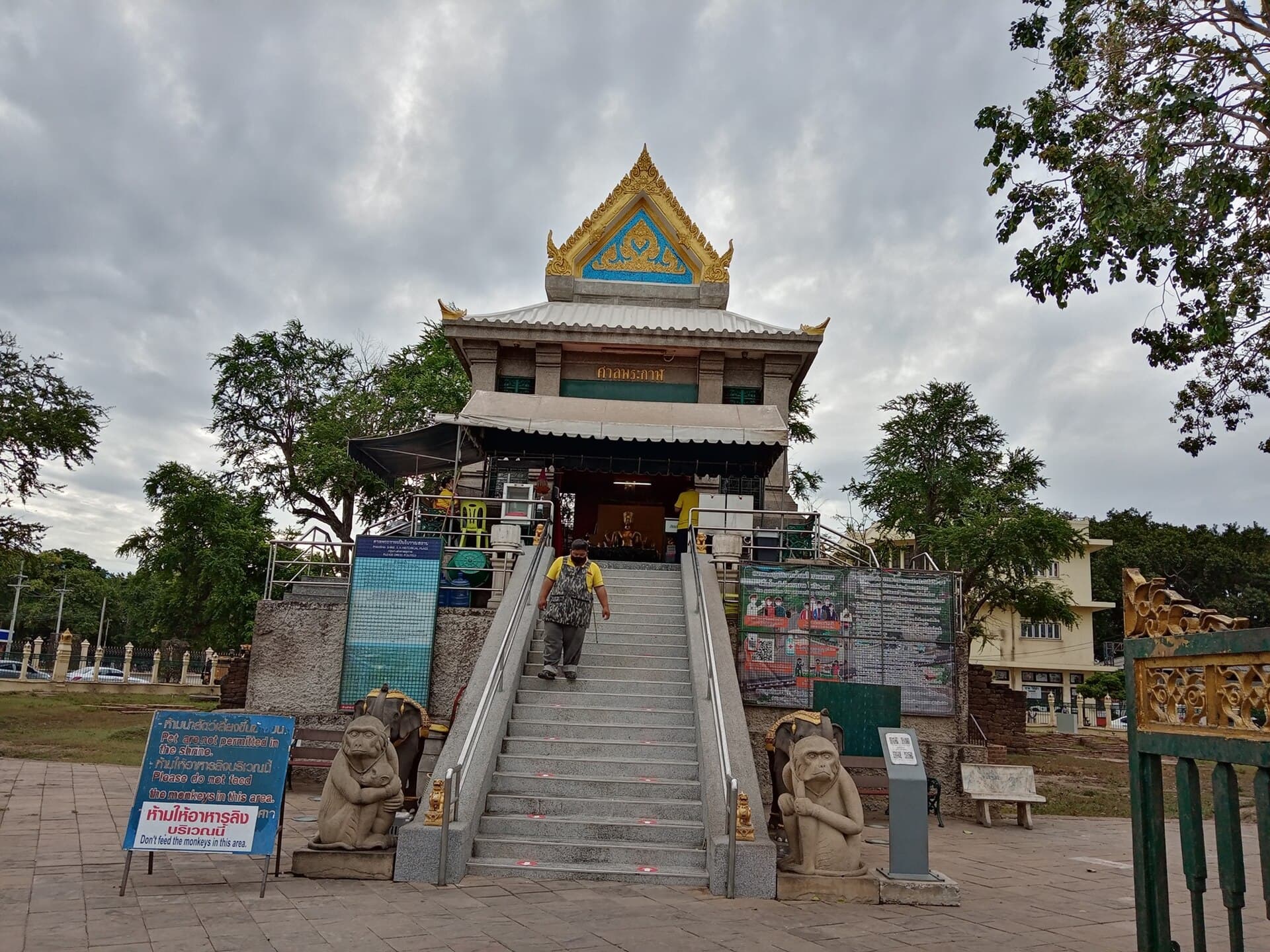 San Phra KanA small shrine held in great regard by the people of Lopburi, standing on the la5 minutes walk
King Narai used European engineers and his court had ties with France and Persia, hence the pointed arches in gates and windows.