A 1934 school
Sino-colonial architecture.
Deepak-nsk — CC0 · This Photo was taken by Supanut Arunoprayote. Feel free to use any of my images, but please mention me as the author and may send me a message. (สามารถใช้ภาพได้อิสระ แต่กรุณาใส่เครดิตผู้ถ่ายและอาจส่ — CC BY 4.0 · EasyKL — CC BY-SA 4.0 · Akeluk — CC BY-SA 4.0 · Полина Славянская — CC BY 3.0
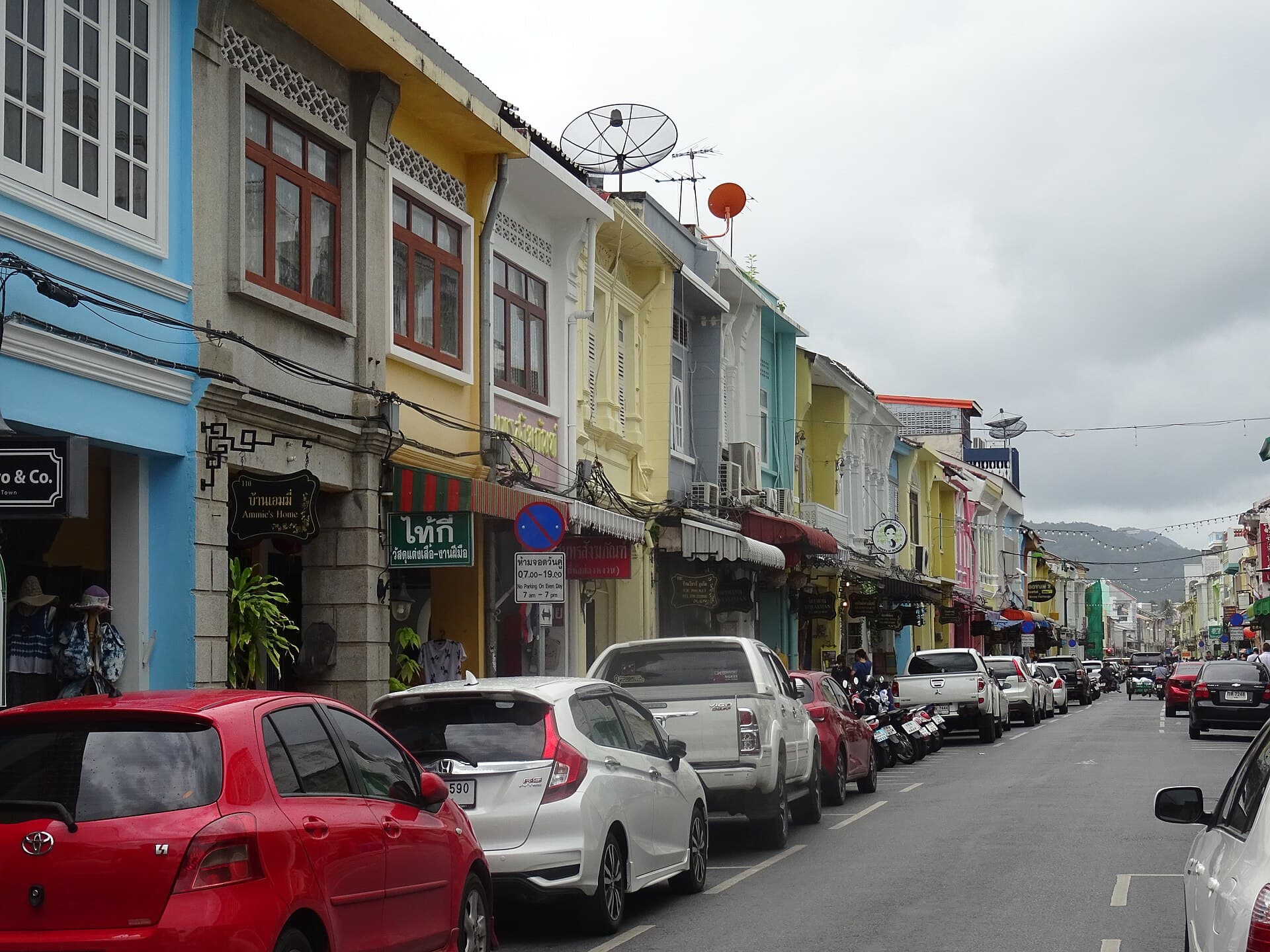
The best place to understand the story of old Phuket Town, in the building of the historic Thai Hua Chinese school, built in 1934 in Sino-colonial style with an elegant facade and small dome, Phuket's first Chinese school, restored and turned into a museum in 2010. Its galleries tell the story of the Chinese migrants who came to work the tin mines in the nineteenth century and made the island's fortune, and show the Peranakan culture born of their intermarriage with local people: embroidered dress, traditional weddings, cuisine, and the Sino-Portuguese architecture that defines the old-town streets. The displays are well arranged with photographs, models and explanations. Entry is about two hundred baht, and it opens daily from nine in the morning until five in the afternoon. It is air-conditioned, good for the hot midday hours or a rainy day. May to October is the Andaman rainy season, when the sea is rough and boat trips may be cancelled. Start your old-town walk here: it explains what you will see on Thalang Road and Soi Romanee afterwards. An hour is enough.
Sino-colonial architecture.
The root of Phuket's wealth.
Dress, weddings and food.
Krabi Road, Phuket Old Town
For older children interested in history, yes: the costumes and models appeal. Younger ones may get bored, so keep it short.