The ethnographic floor
The Americas, Oceania and Africa rooms are the heart of the visit, now shown with a frank account of where each collection came from and how.
Gustavo La Pizza — CC BY-SA 4.0 · CAPTAIN RAJU — CC BY-SA 4.0 · CAPTAIN RAJU — CC BY-SA 4.0 · CAPTAIN RAJU — CC BY-SA 4.0
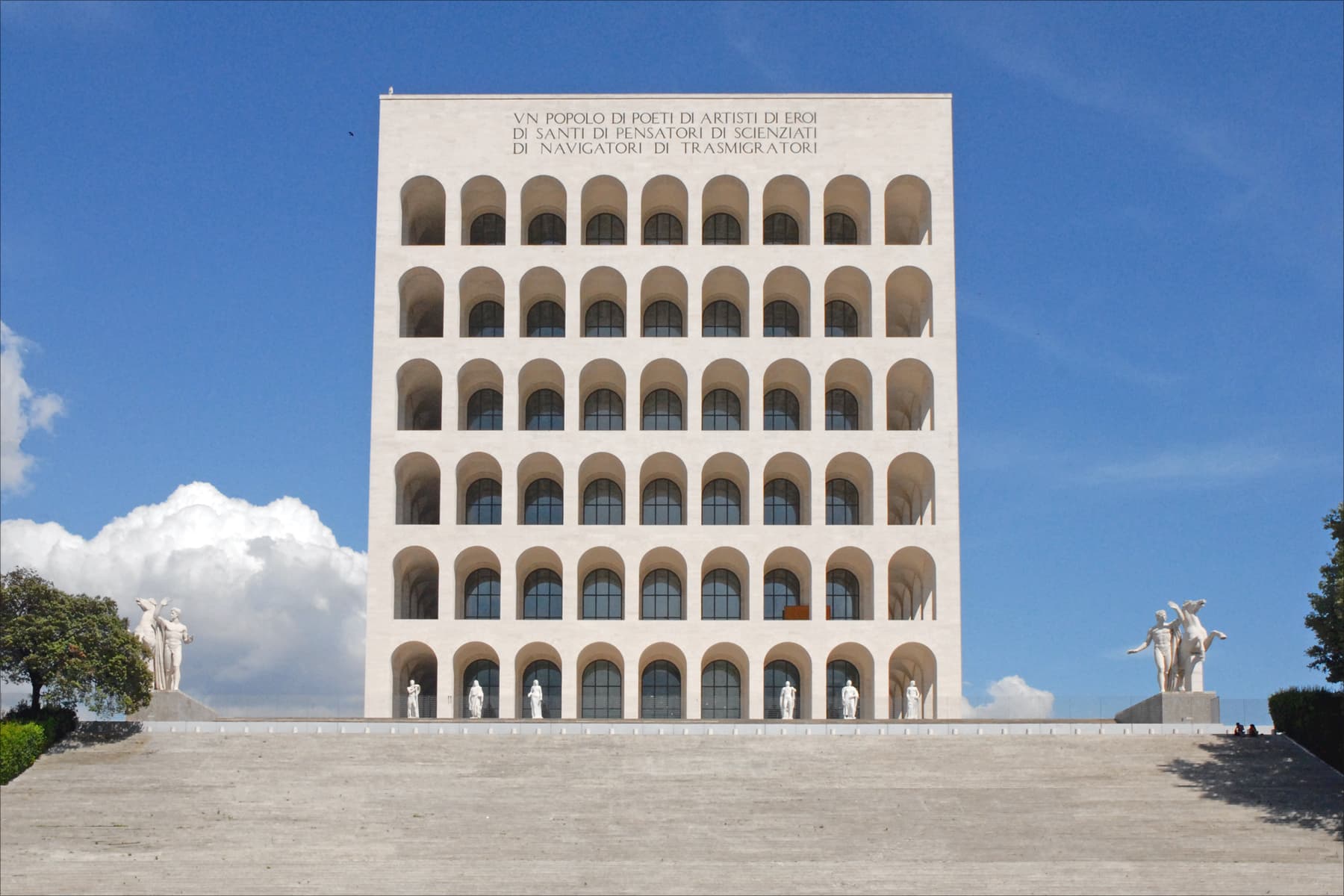
The palace housing this museum was built for a world's fair that never happened. The whole EUR district — its straight avenues, cold marble facades and arches repeated to the horizon — was the Fascist regime's bid to host the 1942 Universal Exhibition; the war came, everything stopped, and the shell remained. In one of those buildings, the Palazzo delle Scienze, the collections of the Luigi Pigorini National Museum of Prehistory and Ethnography have sat since 1977. Founded in 1876, they now produce a perfect irony: architecture designed to tell the world how great Italy was, sheltering a museum that spends most of its energy questioning how its own objects reached Rome. There are two routes through it. One covers prehistory in the Italian peninsula — stone tools, pots, burials, material from the southern coastal caves — arranged to show how the very idea of 'a people' gets assembled out of fragments. The other is ethnographic, and it is the real reason to come: rooms for the Americas, Oceania, Africa and Asia, holding masks, carvings, canoes and textiles that arrived in Italy by expedition, by trade and by occupation. Since 2016 all of this belongs to a single institution, the Museo delle Civiltà, which also absorbed the folk arts museum, the early medieval museum and the oriental collection. One ticket opens every part of it, including the second palace across the square. What sets the place apart now is an uncomfortable honesty. The holdings of the old Colonial Museum are here, and the current direction does not present them as dazzling trophies — it takes them apart: where the object came from, who removed it, by what right. That editorial line is rare in major European museums, and it makes a visit feel closer to reading an argument than to strolling past vitrines. The price is that the museum is in near-permanent reinstallation: rooms close and reopen in rotation, and whole wings may be out of service on the day you turn up. Check the official site before you get on the metro. Let us be plain. If this is your first trip to Rome and you have three days, ignore this page entirely — the Colosseum, the Vatican and the Pantheon have a better claim on your time, and EUR is a twenty-minute metro ride out of the centre. But on a second or third visit, or travelling with teenagers who have had their fill of churches, or with any interest in anthropology, this is one of the quietest ten euros in the city: wide, half-empty galleries, cool rooms in summer, space to move with a stroller, and no queue of any kind. Add half an hour walking EUR itself — the Palazzo della Civiltà Italiana, the so-called Square Colosseum, is worth a look from outside — and you have a full afternoon. The district is offices and apartments, and its restaurants are unremarkable; plan lunch somewhere else.
The Americas, Oceania and Africa rooms are the heart of the visit, now shown with a frank account of where each collection came from and how.
The building belongs to an entire district built by the Fascist regime for the 1942 exhibition the war cancelled, and it rewards half an hour on foot around the square.
The palace opposite on the square holds the Italian folk arts and traditions collections, and is included in the same admission at no extra cost.
Piazza Guglielmo Marconi 14, EUR district, Rome
Honestly, not on a short first visit. With three days, the historic centre and the Vatican own your time. But if you already know Rome, or want a cheap quiet day away from the crush, or care about anthropology and the colonial question, it is twenty minutes on the metro for a wide, near-empty museum at ten euros.
No, and this is the practical point that matters most. The museum has been reinstalling its collections in stages for years, so rooms close and reopen in rotation and some sections may be entirely out of service. Check the visit page on the official site the morning you plan to go, and if you are coming for one specific section, call ahead.