San Martín statue
Peru's liberator.
Ministerio de Defensa del Perú — CC BY 2.0 · Uwebart — CC BY-SA 3.0 · Felipe Restrpo Acosta — CC BY-SA 4.0 · Maipi Tuta — Public domain
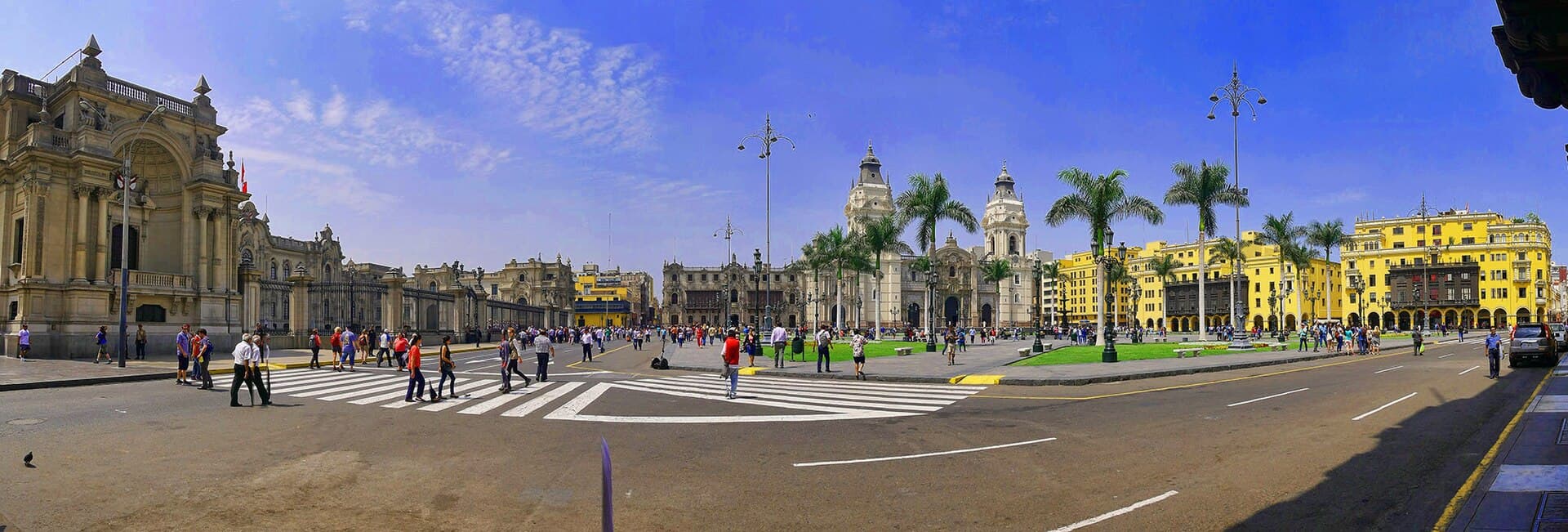
A wide, elegant square in Lima's UNESCO-listed historic centre, opened on 27 July 1921 to mark a hundred years of Peru's independence, and linked to the main square by the pedestrian Jirón de la Unión. At its centre stands a huge bronze statue of General José de San Martín on horseback, Peru's liberator. The square is ringed by early twentieth-century buildings with arched arcades and white and pale-yellow façades, the best known being the historic Gran Hotel Bolívar, so it feels like a piece of a European city in the heart of South America. On the monument's base is a female figure representing the «Mother Country», wearing a small crown in the shape of a llama. The popular story says the Spanish sculptor was asked for a «crown of flame», and the Spanish word for flame, «llama», is also the animal's name, so he carved a llama instead of fire. It is a tale guides love more than historians confirm. The square is a common spot for rallies and political protests, so if you find a large gathering, keep away. By day it is a pleasant stop between the main square and Miraflores.
Peru's liberator.
A tale of a word.
1920s façades.
Ninth block of Colmena avenue, Lima's historic centre
The tale goes that the sculptor was asked for a crown of flame, and the Spanish word for flame, «llama», is the animal's name, so he carved the animal. It is a popular story historians do not confirm.