
The yellow house
A leaning half-timbered front tying the two road levels together.
Heiner Krasser — CC BY-SA 4.0 · marsupium photography — CC BY-SA 2.0 · Tilman2007 — CC BY-SA 4.0 · Niki.L — CC BY-SA 4.0
**The most photographed street corner in Germany**: a small yellow half-timbered house at the centre, with two roads falling away from it left and right, and a gate tower closing each one. The name comes from Latin *planellin*, «the little square», in an old local corruption. What makes the composition work is **its asymmetry**: the left road drops to the **Siebers tower**, the right rises slightly to the **Kobolzell tower**, and the yellow house between them, with its leaning front, ties the two levels together. The towers are of different periods and the house is thirteenth century at its base. This composition is the source of the «old German town» image in the international imagination — and has been used as a reference in animation and film many times. Note: the site is **a street corner, not a monument**: no entrance, no ticket, nothing to go into. The visit is ten minutes, and the point is to stand and look. Note: **very crowded by day** — dozens of photographers stand in the same spot. Early morning or after six gives you the place empty.
A leaning half-timbered front tying the two road levels together.
Siebers below to the left, Kobolzell above to the right.
The view entirely empty before nine.
Plönlein, Rothenburg ob der Tauber
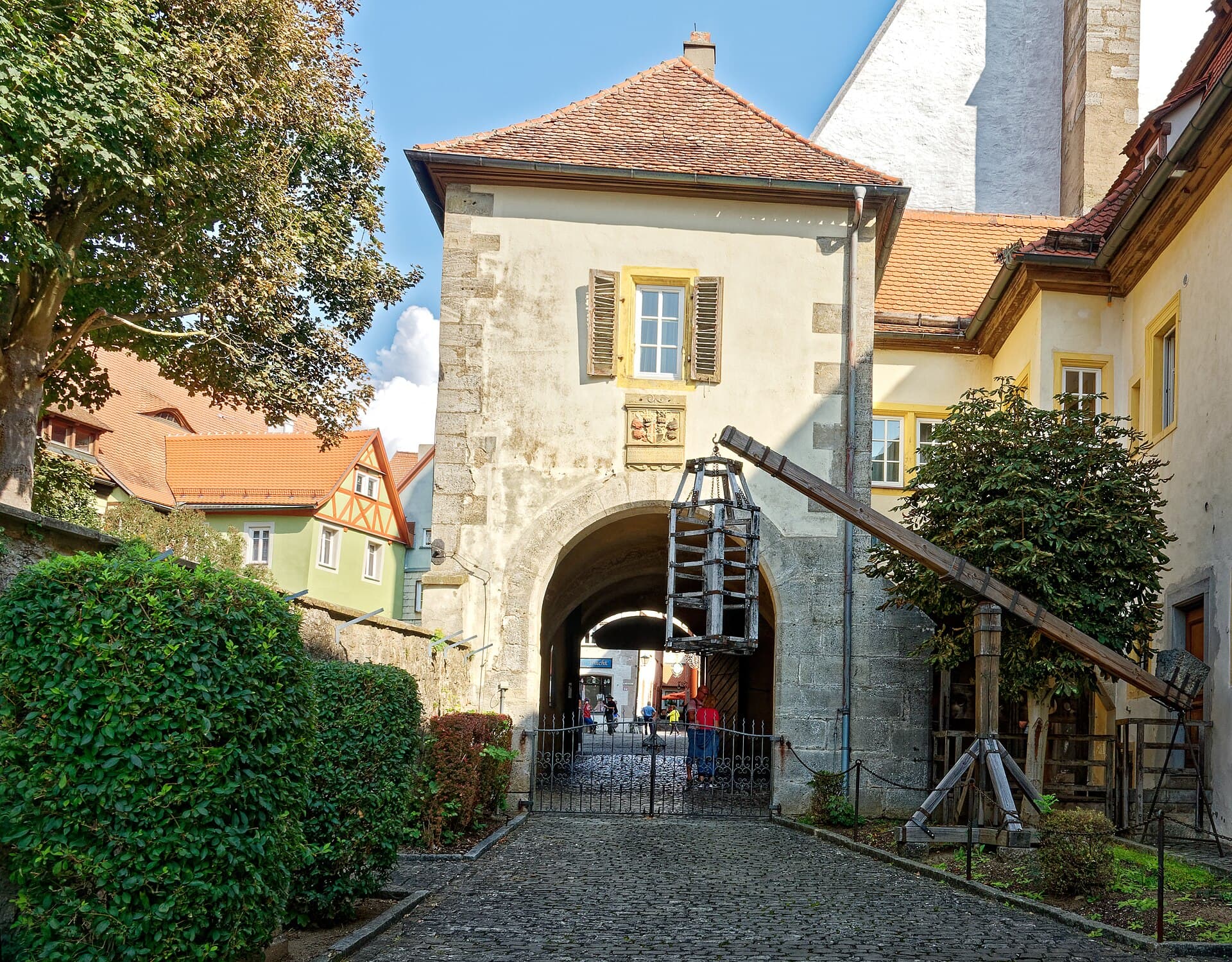 Medieval Crime MuseumA museum of the history of law and punishment in Europe, in the walled town of R2 minutes walk4.5
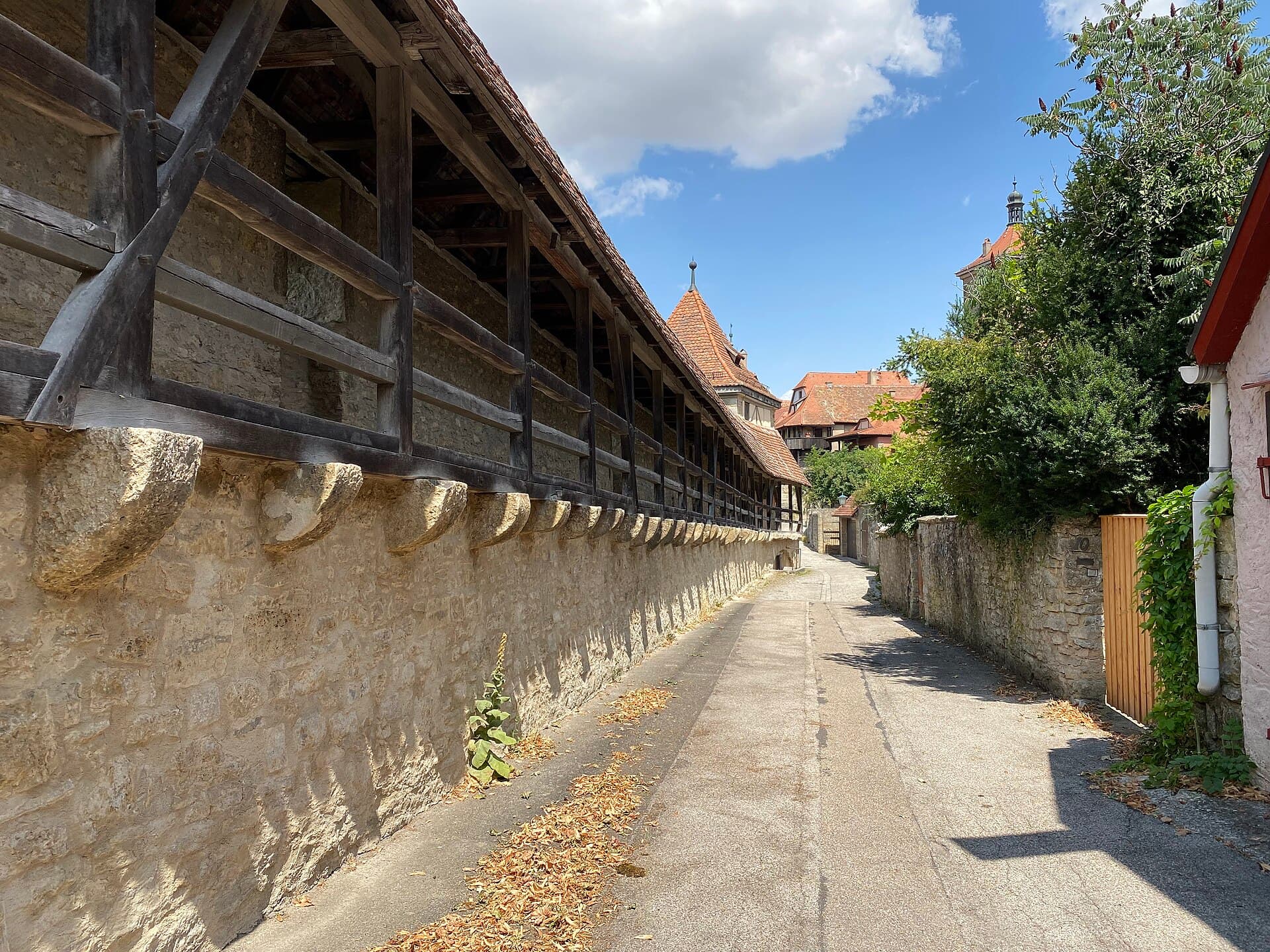 Rothenburg Town Walls**A complete wall circuit that can be walked the whole way round** — about **2.58 minutes walk4.9
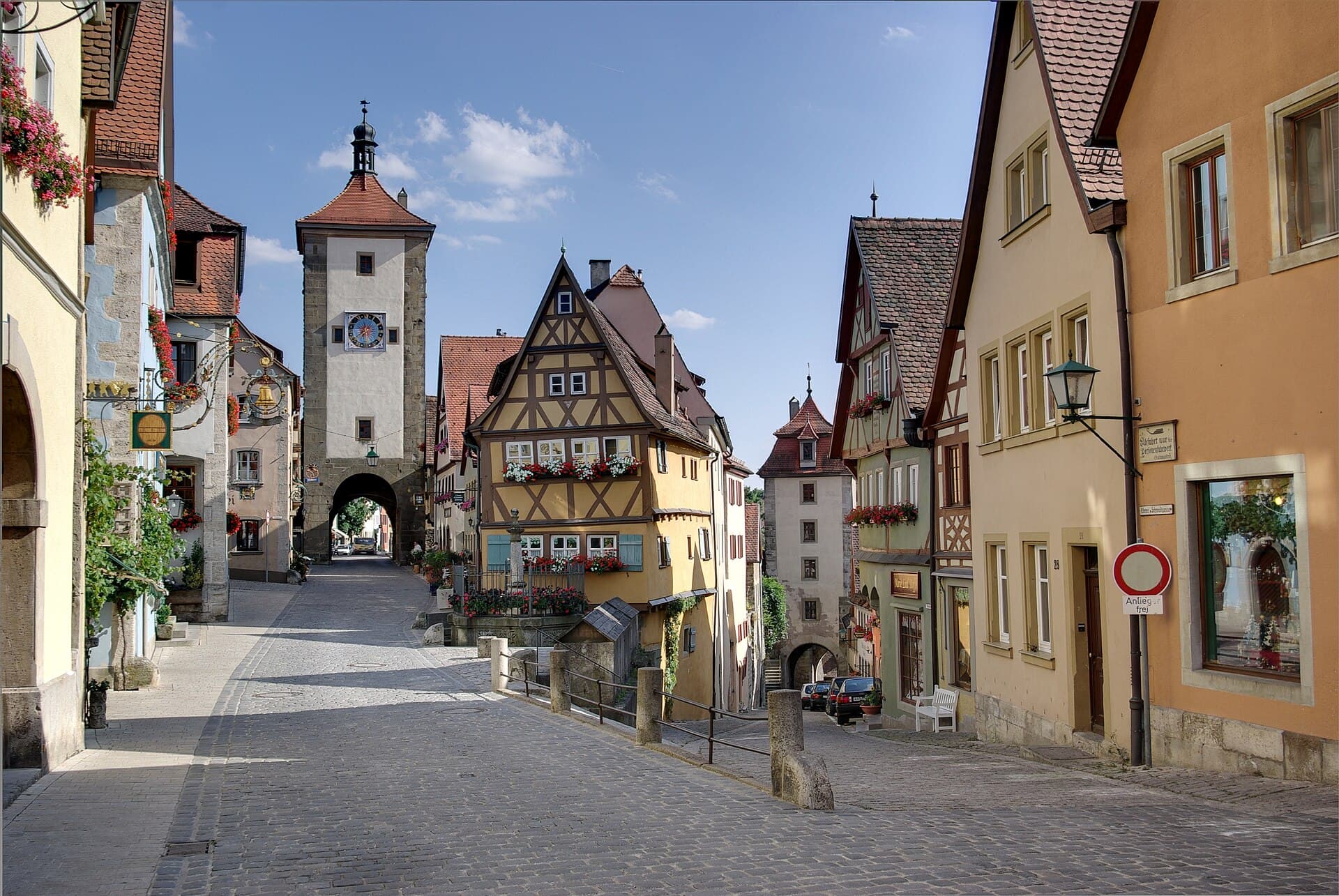 Rothenburg Old Town**The most complete walled medieval town in Germany**, and its wall can be walke10 minutes walk
**Both, and the division is clear.** About **60%** of the town is original and untouched — it survived the Thirty Years'' War and the centuries of stagnation that preserved it. The other **40%** was destroyed in the raid of **31 March 1945**, which targeted a fuel depot, and was rebuilt between 1945 and the 1970s. But that reconstruction was not improvised: pre-war **plans, surveys and photographs** were used, and each building was rebuilt to its original layout and materials as far as possible, funded by donations from around the world — Americans gave the most, among them a senior officer who called off an artillery bombardment that would have destroyed what remained. ⚠ That is why the wall carries **small plaques naming donors**, each opposite the section its money paid for. ⚠ Practically: the difference is not noticeable to a visitor, and the Plönlein itself is in the **original** surviving part.