The towers
Once the tallest in the Spanish colonies.
Diego Delso — CC BY-SA 3.0 · Juan Francisco Contreras Fernández — CC BY-SA 3.0 · RODRIGO1906 — CC BY-SA 4.0 · Luisalvaz — CC BY-SA 4.0 · Diego Delso — CC BY-SA 3.0 · Diego Delso — CC BY-SA 3.0
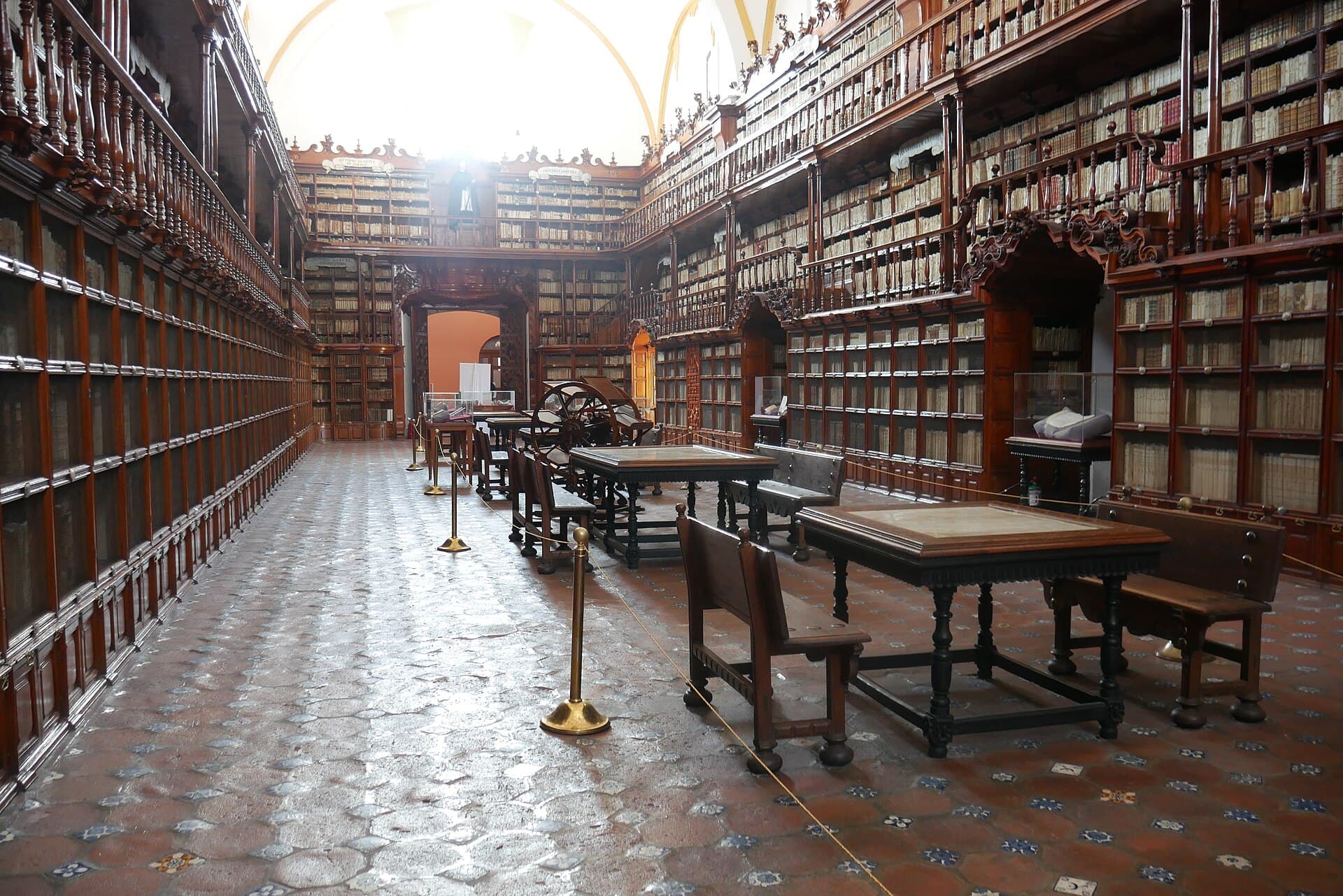
Puebla Cathedral, formally the Cathedral of Our Lady of the Immaculate Conception, faces the main square known as the Zócalo in the heart of the city. It is one of the most important buildings in the historic centre of Puebla, a UNESCO World Heritage Site, and with the square it forms the finest view in town. Building began in 1575 under the Spanish crown and took 74 years to consecration, across the reigns of three kings. Work stopped altogether in 1624 until Bishop Juan de Palafox arrived in 1640 and restarted it, consecrating the church on 18 April 1649 before it was finished. The south tower was completed only in 1768. The two dark towers, at a little over 70 metres, made it the tallest church in the Spanish colonies. The front is of grey stone with huge doors, and a coloured dome rises at the side. Before it stretches the square with large trees, a fountain and benches, ringed by stone arcades with cafes and shops. In the evening the fronts are lit, and it is a pleasant place to walk. The Biblioteca Palafoxiana is a few steps away, and the Great Pyramid of Cholula is 11.1 km in a straight line to the west. The cathedral is a working place of worship, so dress modestly and avoid walking about during Mass. On entering, ask about the rules for photography inside.
Once the tallest in the Spanish colonies.
Trees, a fountain and benches at the city's heart.
Stone walkways with cafes and shops.
Main square, historic centre of Puebla
Building began in 1575, it was consecrated in 1649 and the south tower was finished in 1768.
The Biblioteca Palafoxiana is steps away, and the Great Pyramid of Cholula is a short drive.