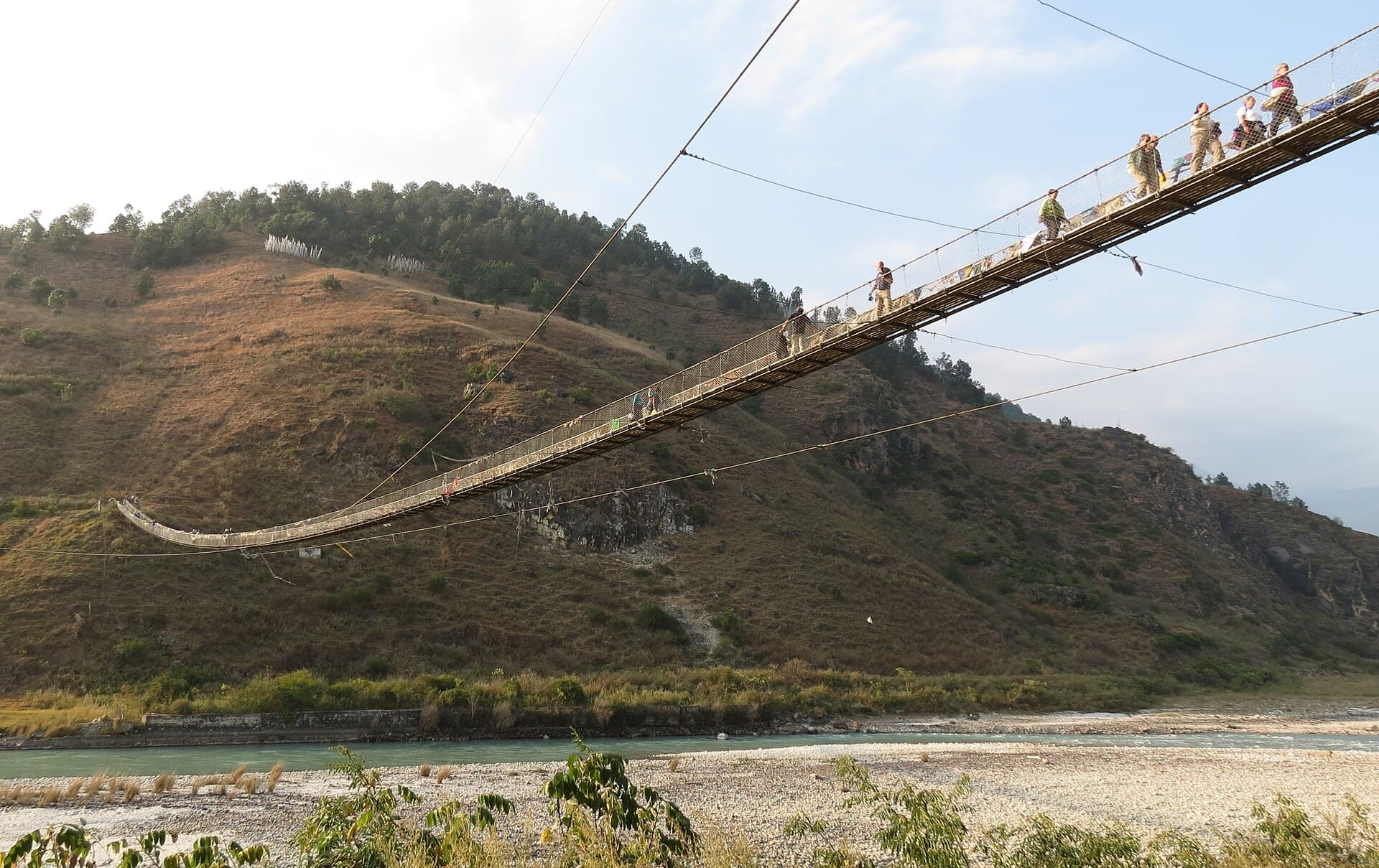
River meeting
Father and mother.
Bernard Gagnon — CC BY-SA 4.0 · Bernard Gagnon — CC BY-SA 4.0 · Bernard Gagnon — CC BY-SA 4.0
Bhutan's most beautiful and majestic fortress, built by Zhabdrung Ngawang Namgyal in 1637-38, the country's second-oldest and second-largest dzong; its name means palace of great happiness. Punakha was Bhutan's capital until the mid-20th century, and its first king was crowned here. The dzong stands on a tongue of land where two rivers meet, the Pho Chu, father river, and the Mo Chu, mother river, reached by a covered wooden bridge. Its towering white walls, golden roofs and carved red windows are mirrored in the turquoise water. The loveliest time is spring, when jacaranda trees around it bloom purple, making it one of Bhutan's most famous sights. In winter the central monastic body moves here from Thimphu, and a major festival is held in late winter. The ticket is about BTN 500, per visitor guides, with a licensed guide. Dzongs and temples are places of worship and state: wear long sleeves and long trousers or skirts, remove hats, walk clockwise and take no photos inside the halls. Most visitors to Bhutan pay a Sustainable Development Fee of USD 100 per person per night, fixed until August 2027, and a licensed guide is required at dzongs and major temples.
Father and mother.
Purple bloom.
To the gate.
At the meeting of the Pho Chu and Mo Chu rivers, Punakha
In spring, roughly April to May, framing the dzong in purple.