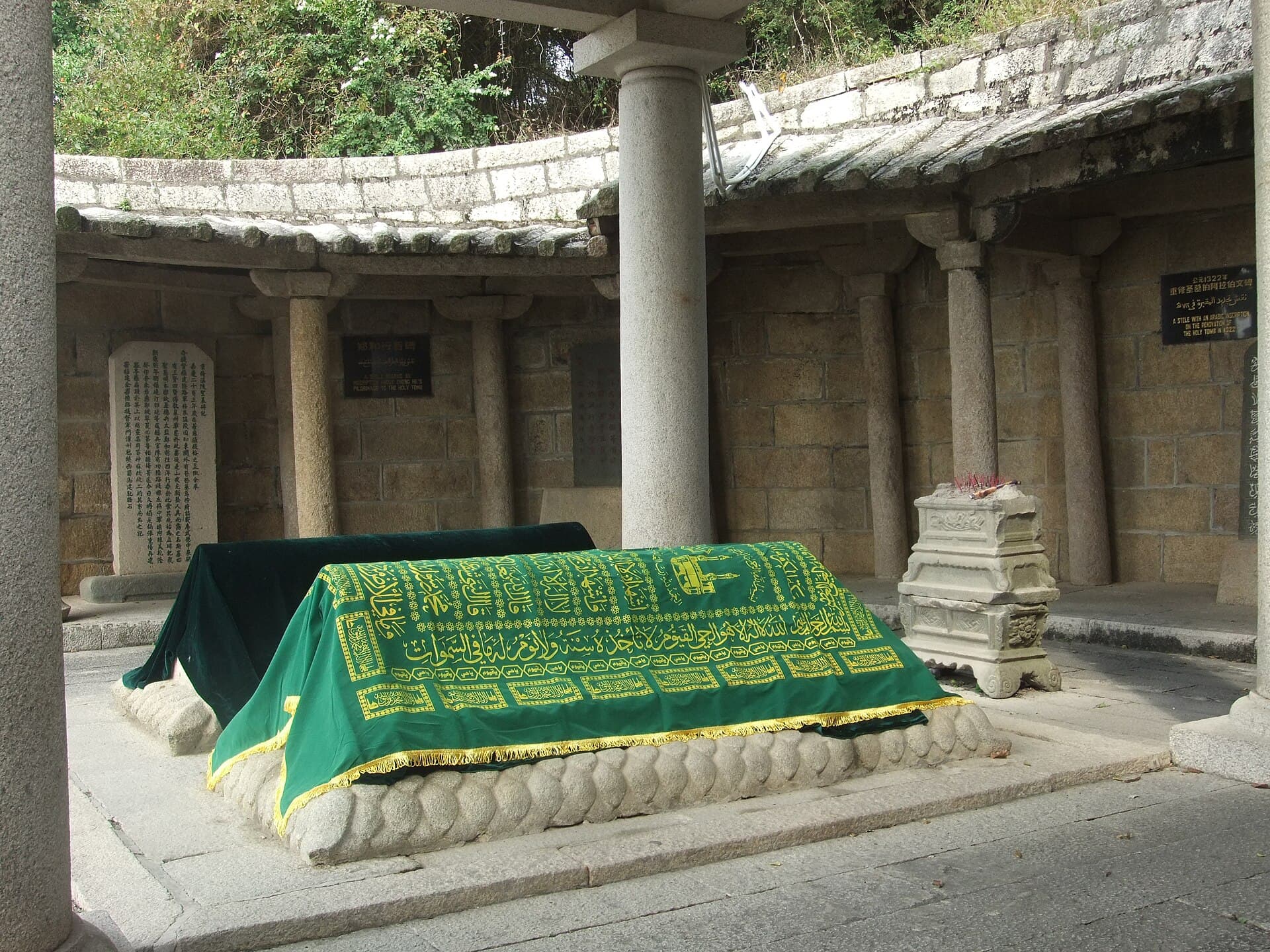
Muslim gravestones
Carved in Arabic.
Iswzo — CC BY-SA 4.0 · meckleychina — CC BY 2.0 · Siyuwj — CC BY-SA 3.0 · jonjanego — CC BY 2.0 · Iswzo — CC BY-SA 4.0
China's only museum devoted to the history of its maritime ties with the world, founded in 1959, telling the story of Quanzhou, the port the Arabs called «Zaytun», one of the world's greatest ports from the eleventh to the fourteenth century, praised for its wealth by Marco Polo and Ibn Battuta. Its new building, finished in 1991 near East Lake Park, looks like a great sailing ship and holds galleries on Quanzhou's seafaring history, models of old Chinese ships and the cultures of the communities that lived in the city. For Arab visitors the highlight is the hall of religious stone carvings, with a large collection of Muslim gravestones carved in Arabic from the Song and Yuan eras, telling the stories of the Muslim merchants who lived and were buried here. Entry is free with advance registration on WeChat, 09:00–18:00 (17:30 in winter), closed Mondays, per visitor guides.
Carved in Arabic.
Old Chinese junks.
The city's story.
Near East Lake Park, east Quanzhou
Yes, its hall of religious stone carvings holds a large collection of Arabic-inscribed Muslim gravestones from the Song and Yuan eras; entry is free with registration.