
The Ramkhamhaeng inscription
A copy of the famous stone.
Christophe95 — CC BY-SA 4.0 · Gary Todd from Xinzheng, China — Public domain · Gary Todd from Xinzheng, China — Public domain · Gary Todd from Xinzheng, China — Public domain
The main museum of the Sukhothai kingdom's history, at the entrance to the central zone, named after King Ramkhamhaeng the Great, who ruled in the late thirteenth century and is credited with creating the Thai alphabet. Sukhothai was the capital of the first Thai kingdom in the thirteenth and fourteenth centuries, where the Thai alphabet took shape and a distinctive style of Buddha images flourished, with flowing bodies and serene smiles; its ruins are today part of a UNESCO World Heritage Site listed in 1991. Its highlight is a copy of the famous Ramkhamhaeng stone inscription, inscribed on UNESCO's Memory of the World register, which describes the kingdom's life and economy in a celebrated line: «there are fish in the water and rice in the fields»; the original is kept in the National Museum in Bangkok. The galleries hold the famed flowing bronze Buddhas, including a beautiful walking Buddha, the Sangkhalok ceramics the kingdom exported, and finds from the surrounding sites. Foreigners pay about one hundred and fifty baht, and it opens from nine in the morning until four in the afternoon, with outdoor exhibits in the garden. The midday heat is fierce from March to May, so come early in the morning or late afternoon, with a hat and water. Visit before touring the temples or in the hot midday hours: it is air-conditioned and helps you understand what you will see. An hour is enough.
A copy of the famous stone.
Flowing Sukhothai bronze.
The old kingdom's exports.
At the central-zone entrance, Sukhothai Historical Park
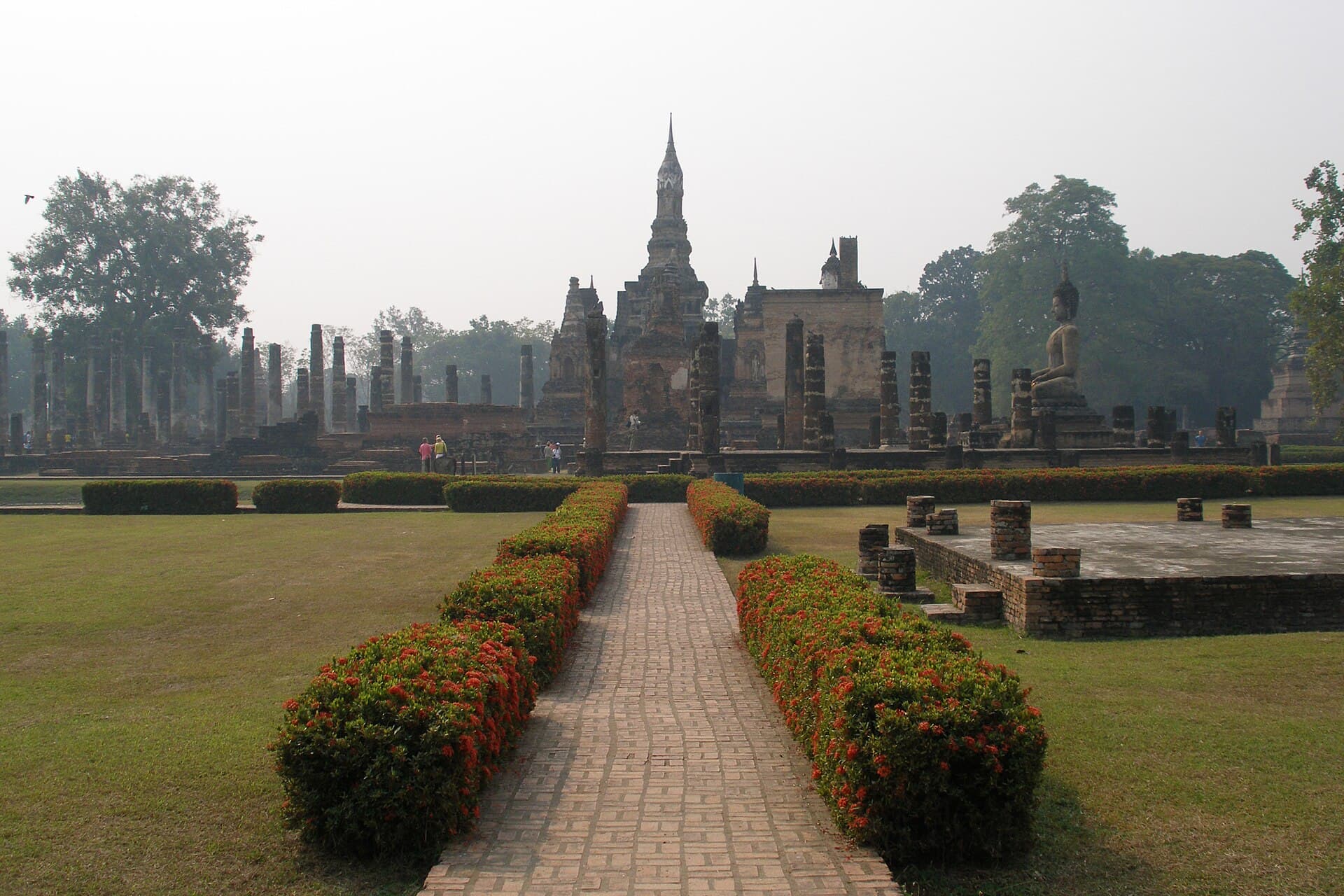 Wat Mahathat, SukhothaiSukhothai's most important and largest temple, the spiritual heart of the royal 5 minutes walk
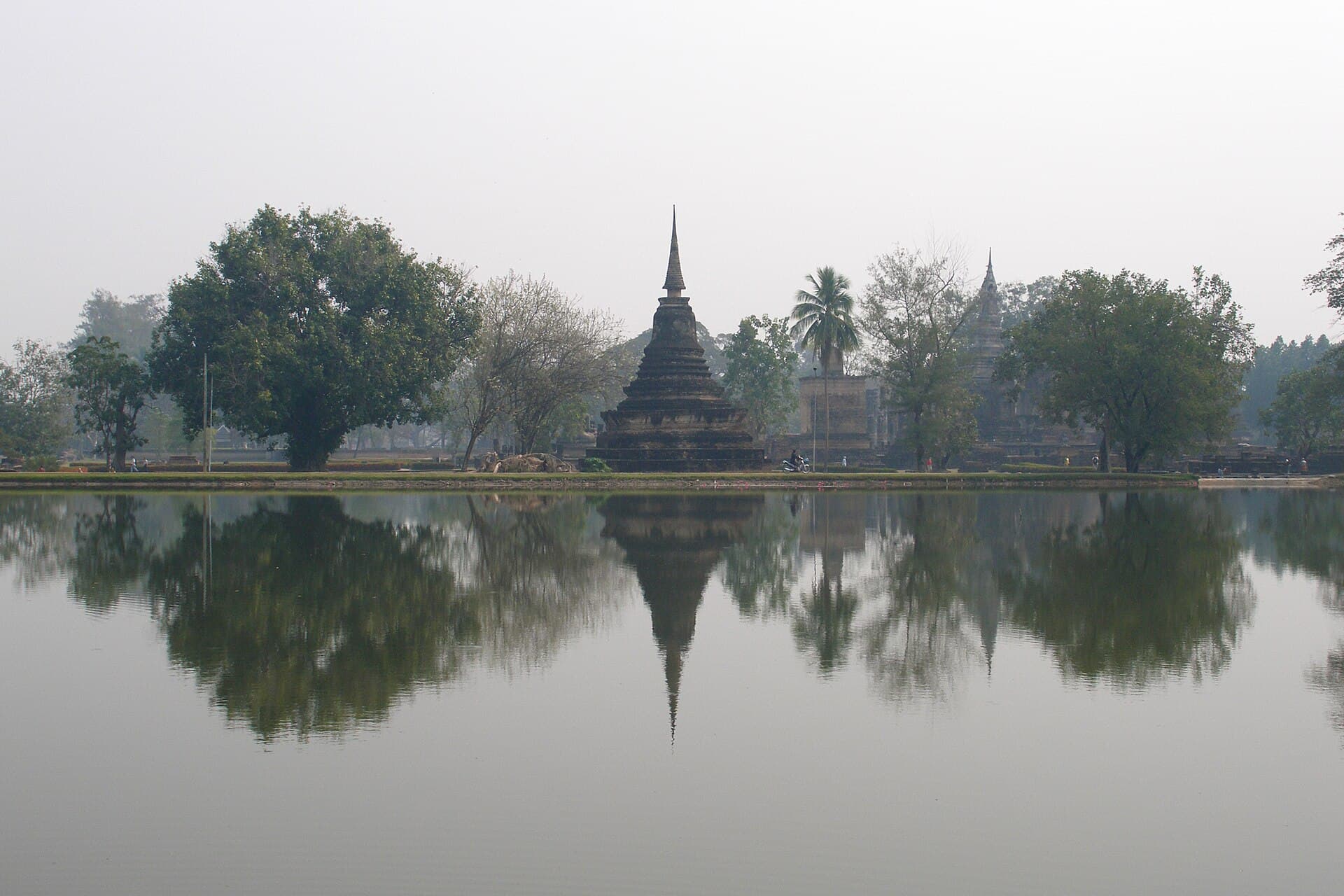 Sukhothai Historical ParkOne of the most beautiful archaeological sites in South-East Asia: the ruins of 8 minutes walk
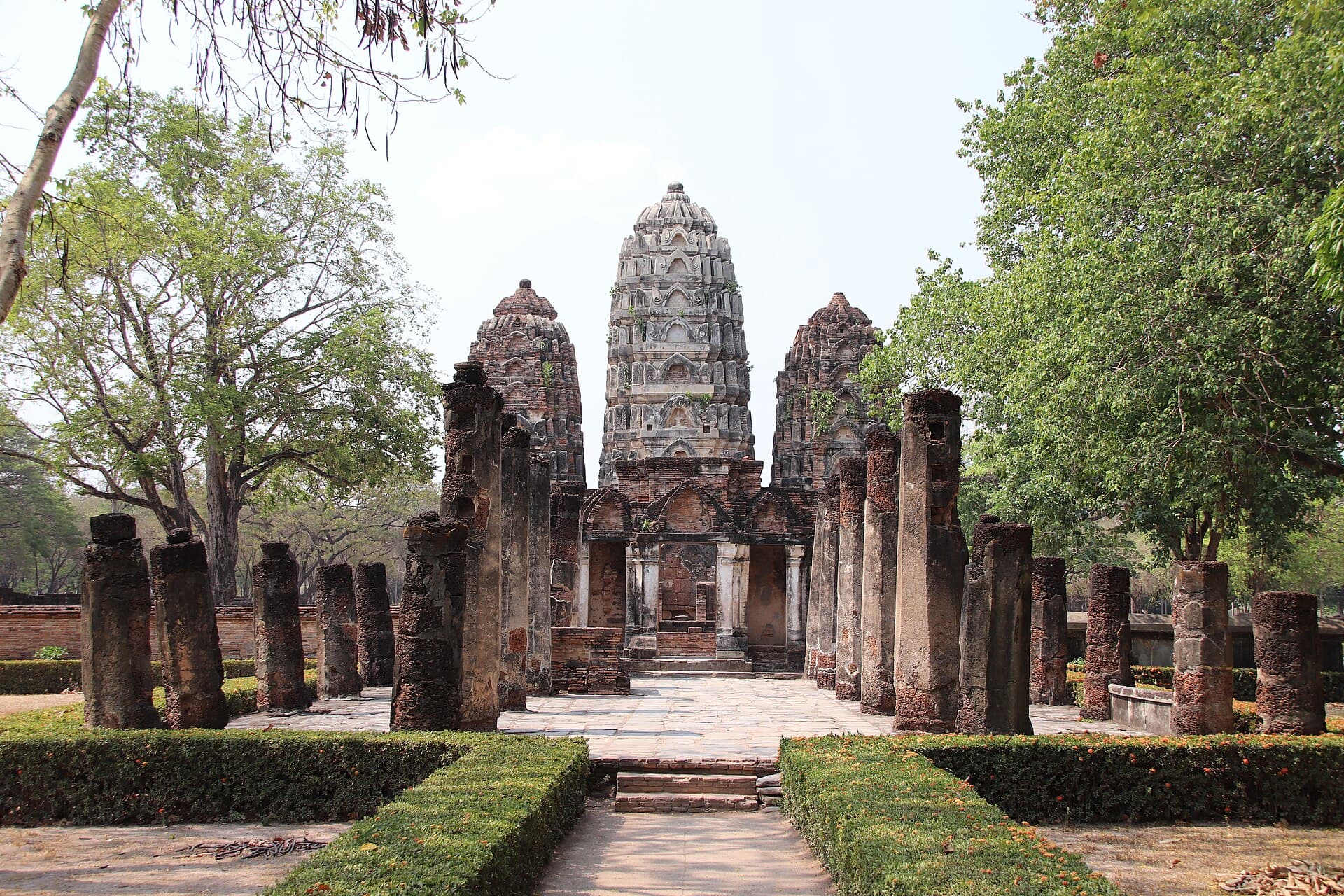 Wat Si SawaiA striking temple of three adjoining Khmer-style towers, called prang, with stuc8 minutes walk
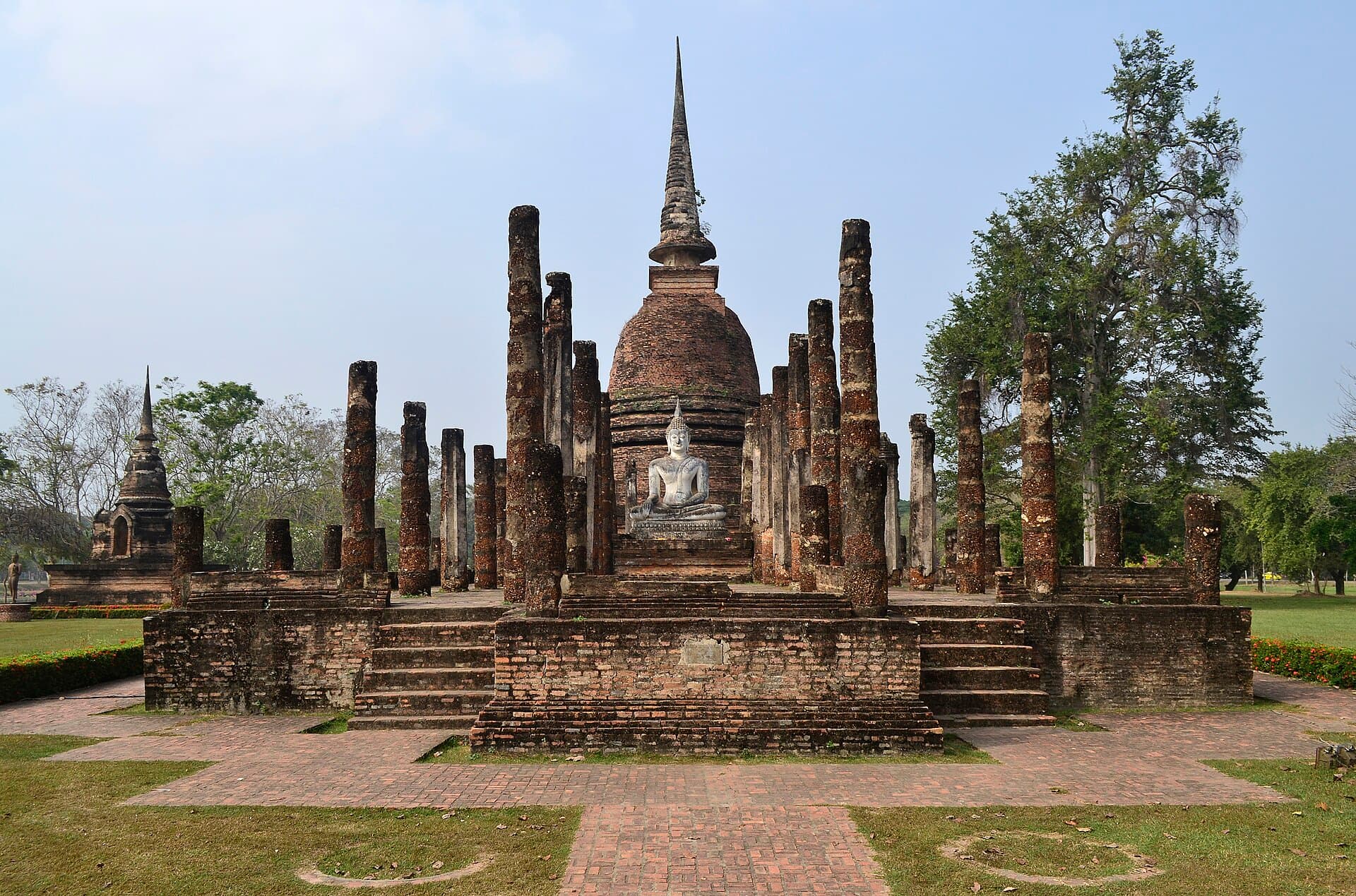 Wat Sa SiOne of Sukhothai's most poetic sights: a small temple on an island in the middle9 minutes walk
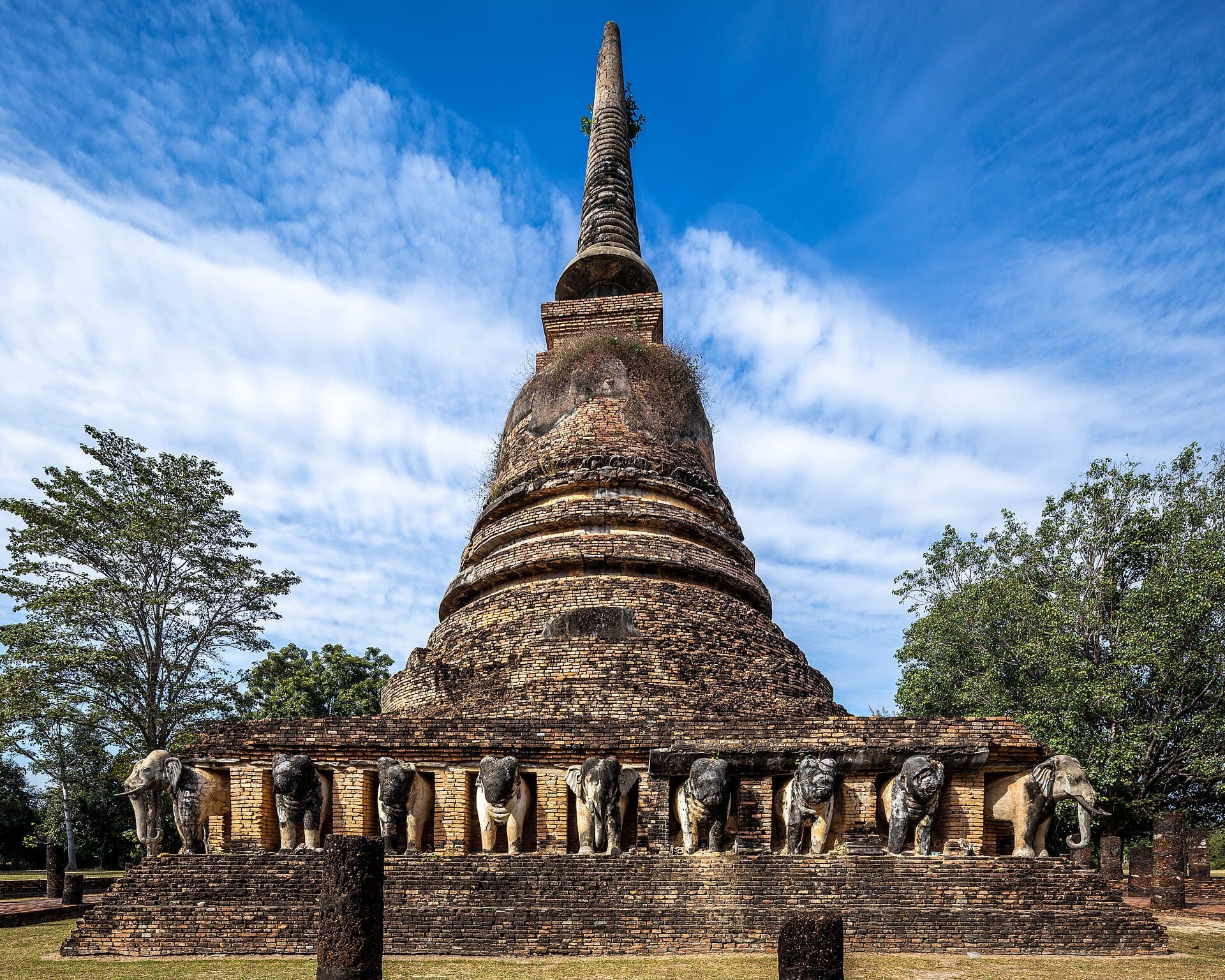 Wat Chang Lom, SukhothaiA temple in the eastern zone outside Sukhothai's walls, whose name means «temple16 minutes walk
No, the original is in Bangkok's National Museum; here is an accurate copy with explanation. The museum is still worth it for its bronzes and ceramics.