The crater
Over 1 km wide.
Dennis G. Jarvis — CC BY-SA 2.0 · Dennis G. Jarvis — CC BY-SA 2.0 · Dennis G. Jarvis — CC BY-SA 2.0 · kallerna — CC BY-SA 4.0 · Bjørn Christian Tørrissen — CC BY-SA 3.0
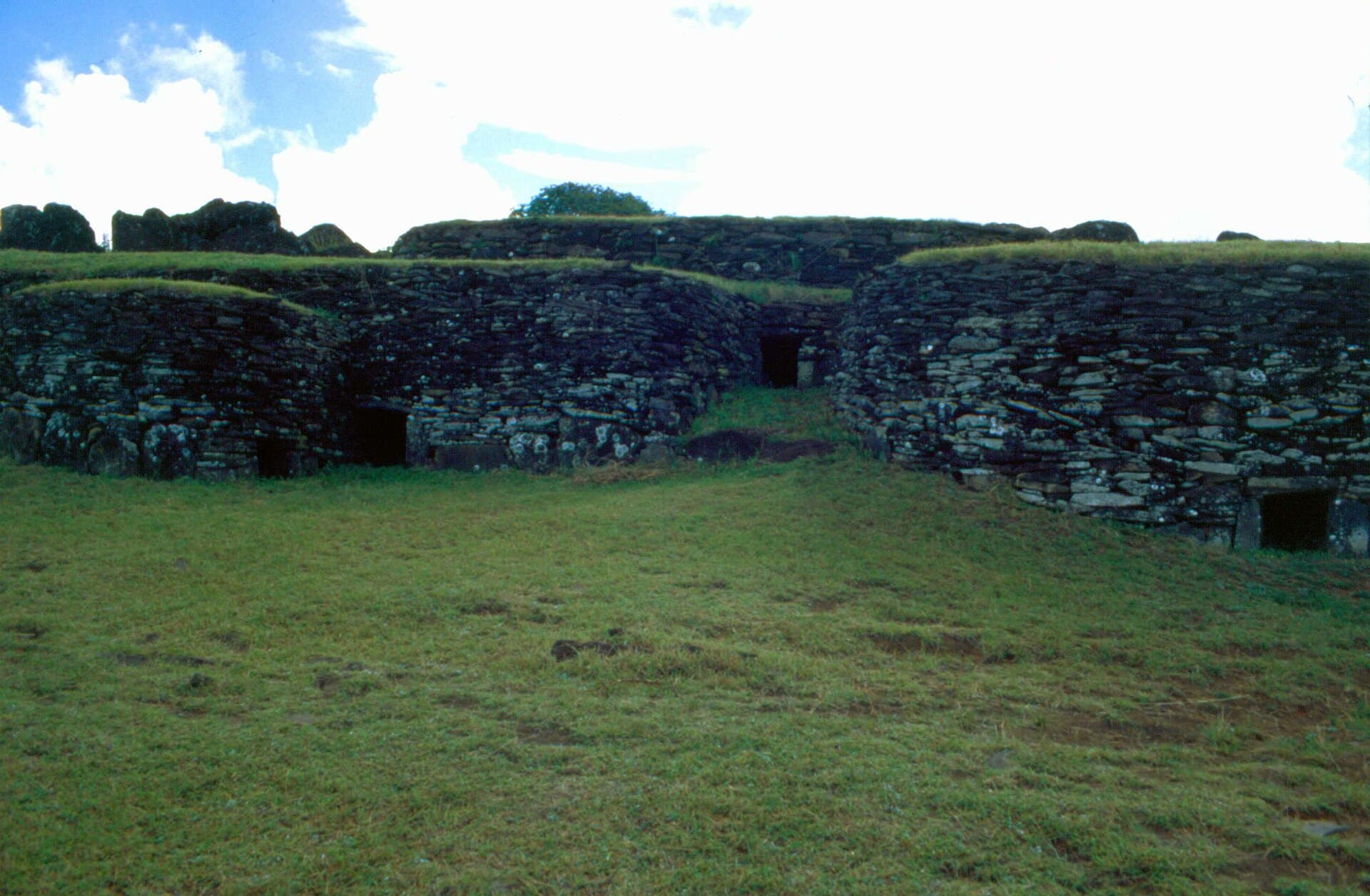
Rano Kau is a 324-metre extinct volcano forming the south-western headland of Chile's Easter Island in the Pacific. It was built by basalt lava flows, and its youngest rocks are 150,000 to 210,000 years old. Its name comes from the Rapa Nui language: rano means a volcano holding water, and kau means abundance or broadness, so it is a wide volcano full of water. Its crater holds one of the island's only three natural freshwater lakes, its surface covered in reeds. The ancient stone village of Orongo sits on its rim. You see a huge round crater more than a kilometre across, its floor a lake covered in green patches of floating reed broken by mirror-like blue pools. The crater walls are steep and green, and a gap in one side shows the blue ocean. It is about 4 km from Hanga Roa in a straight line. Going down into the crater is not allowed, and the wind is strong on the rim.
Over 1 km wide.
Green patches.
To the ocean.
South-west headland, Easter Island, Chile
A wide volcano full of water.
The old stone village of Orongo.