Wooden bridge
Over the river.
Christopher Fynn — CC BY-SA 3.0 · Kheng Singye Dorji (KSD) — CC BY-SA 4.0 · Bernard Gagnon — CC BY-SA 4.0
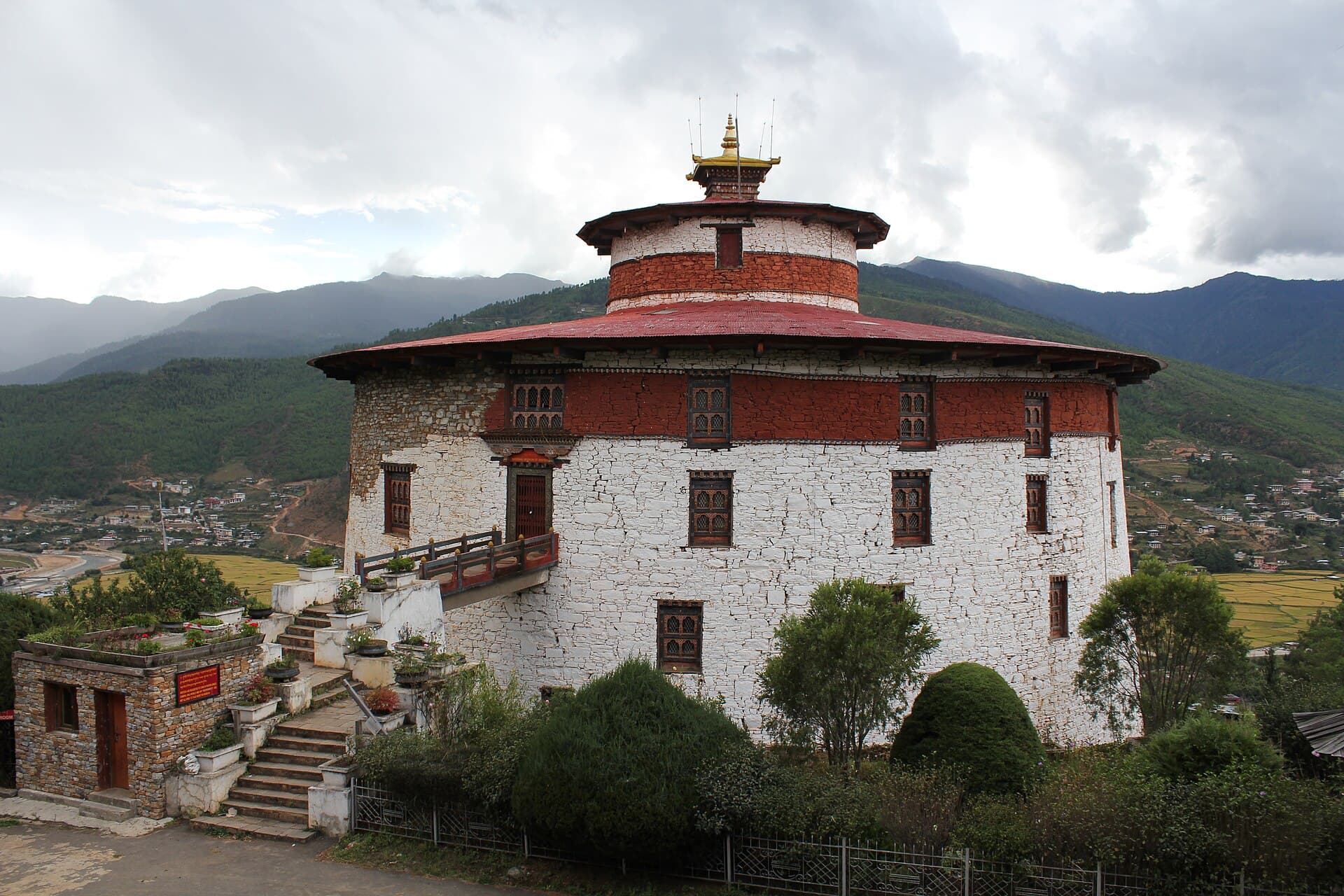
The great fortress of the Paro valley, also called Paro Dzong, rising on a hillside above the Paro Chu river. It houses the district's monastic body and government offices and is on Bhutan's tentative World Heritage list. Visitors reach it over a traditional covered wooden bridge across the river, then a stone path up to its gate. The dzong is huge, with sloping white walls and finely carved wooden windows and balconies; inside are two courtyards, one for administration and one for the monks, around a towering central tower. In spring it hosts the famous Paro Tshechu festival with colourful masked dances, and at dawn on its last day a huge embroidered religious cloth is unveiled on a wall for a short time, drawing people from all over the country. On the hill above stands the National Museum's tower. Entry is with a licensed guide, and sources differ on the fee. Dzongs and temples are places of worship and state: wear long sleeves and long trousers or skirts, remove hats, walk clockwise and take no photos inside the halls. Most visitors to Bhutan pay a Sustainable Development Fee of USD 100 per person per night, fixed until August 2027, and a licensed guide is required at dzongs and major temples.
Over the river.
Towering.
In spring.
Above the Paro Chu, central Paro valley
Usually in spring, March or April depending on the lunar calendar, lasting several days with masked dances.