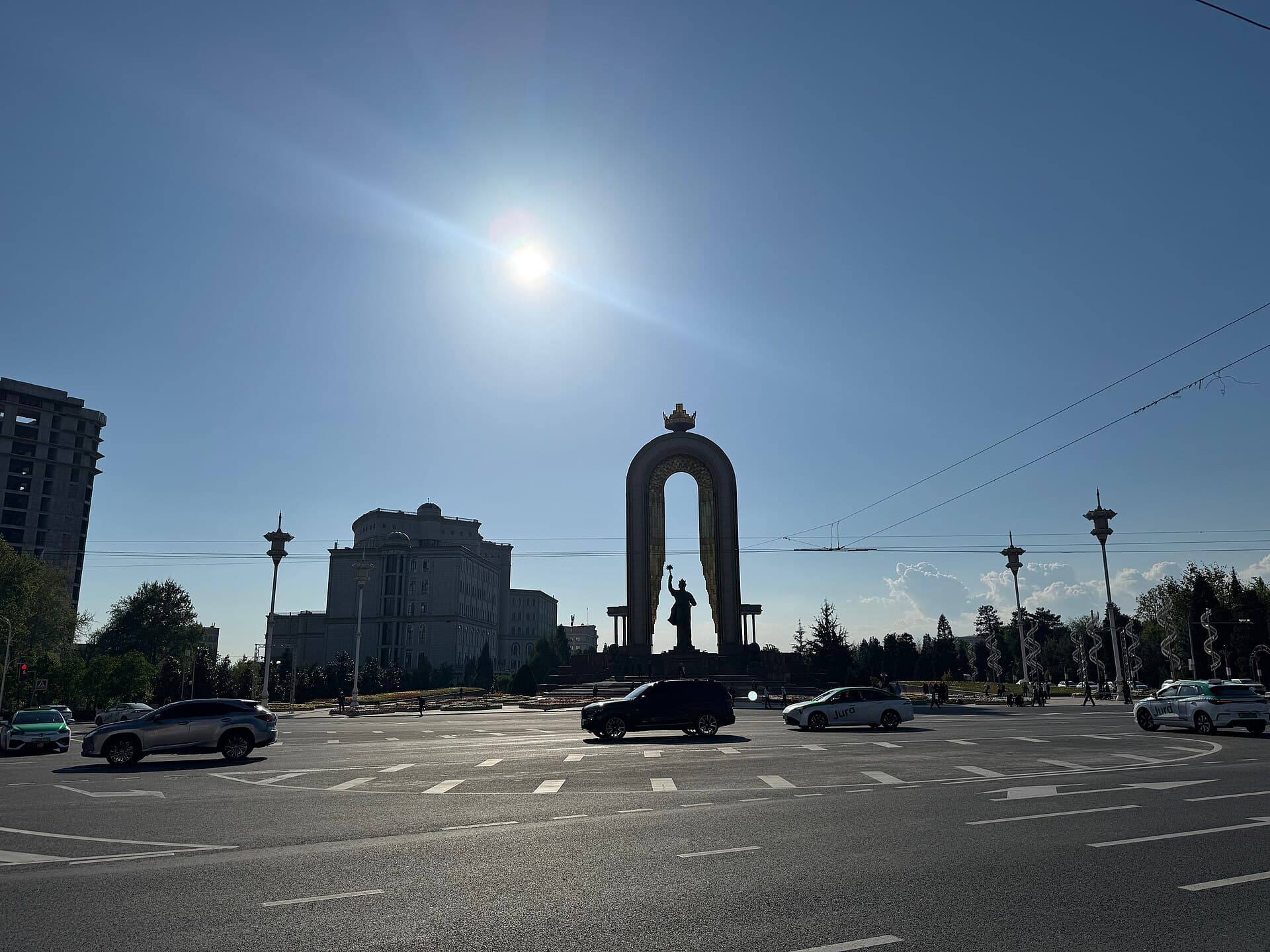
The mosaic arch
Blue and gold.
Шухрат Саъдиев — CC BY-SA 4.0 · Maris Teteris — CC BY 3.0 · Шухрат Саъдиев — CC BY-SA 4.0 · Шухрат Саъдиев — CC BY-SA 4.0 · 5had3r — CC BY 3.0
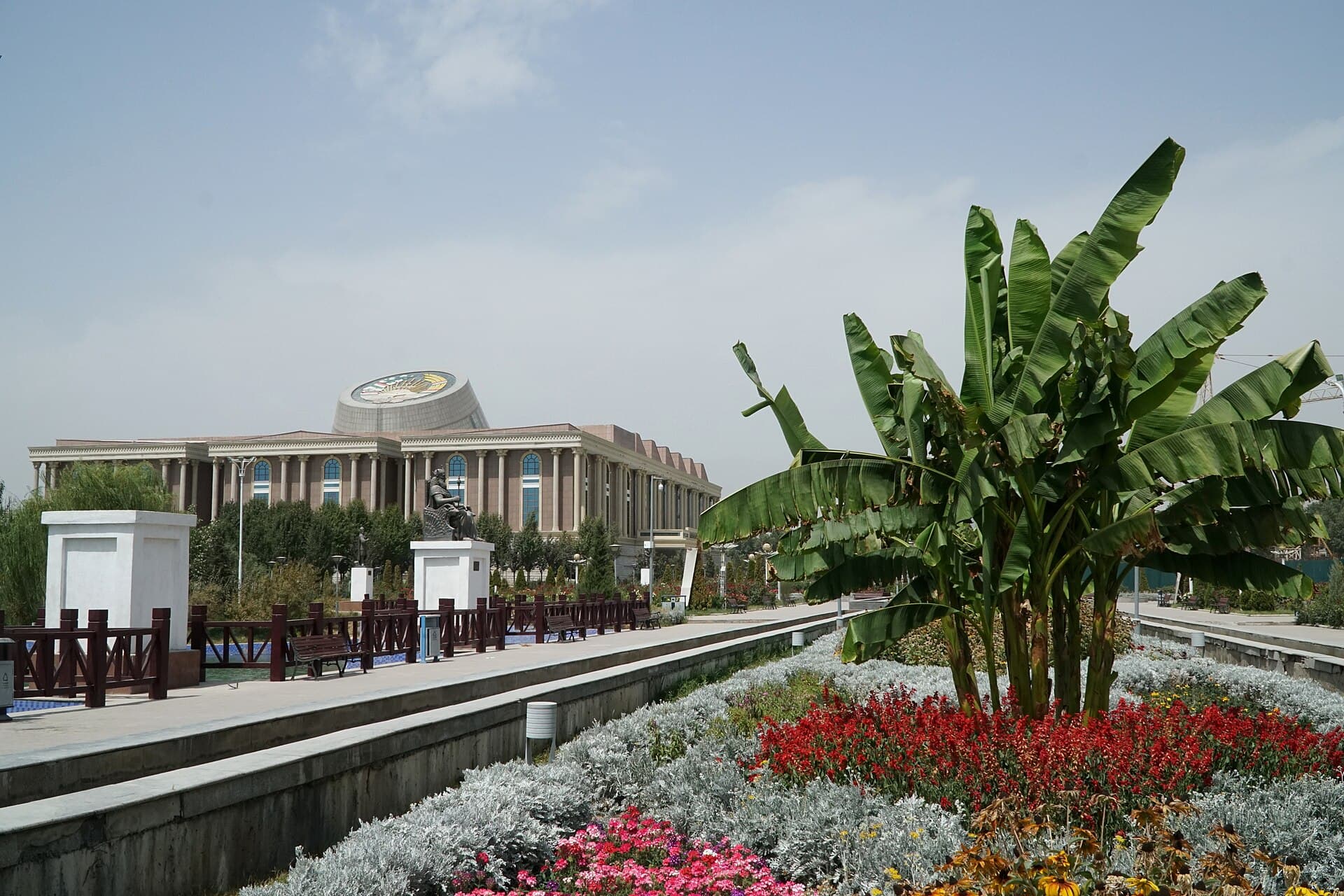
Rudaki Park is a public park in central Dushanbe, named for the poet many regard as the first major writer in New Persian. It has rose-lined paths, fountains and a statue of the poet under a mosaic-covered arch. It is the most visited park in the city and the most pleasant place to rest between the sights of the centre. Rudaki lived from about 858 until 940 or 941. Born in the village of Panjrud near Samarkand, he worked as a poet, singer and musician at the Samanid court. He reportedly wrote more than 180,000 verses, of which little survives, most notably parts of his verse version of Kalila wa-Dimna, the Arabic classic that Arab readers know through Ibn al-Muqaffa. At one entrance stands a large white gate bearing the park's name, with the Palace of the Nation visible beyond it. At the centre Rudaki's statue stands within a blue and gold arch before a round fountain. Paved walks run between cypress trees and beds of red roses. At night lamps and light displays change the park's look entirely. The Ismoil Somoni Monument is about 300 metres away in a straight line, and the National Museum under 1 km. It suits children and has no cars. Choose the evening for summer walks, as midday is hot. Parts near the Palace of the Nation may close for events, so follow the guards' directions.
Blue and gold.
With the park's name.
Cypress and red roses.
Rudaki Avenue, central Dushanbe, Tajikistan
A poet of the Samanid court, regarded as the first major poet in New Persian.
Late in the day is finest, above all with the evening lights.