
A protest that changed the design
The argument over demolishing the old building led to a carefully designed replacement.
Berthold Werner — CC BY-SA 3.0 · Flocci Nivis — CC BY 4.0 · Fentriss — CC BY-SA 4.0 · Fentriss — CC BY-SA 4.0
Three adjoining buildings near Marienplatz, built between 1903 and 1905, their facades painted entirely in colour. That is what makes them striking: the walls are covered in bright mural painting — plant and geometric forms and figures — in the German Art Nouveau manner known as Jugendstil. In a city of white, yellow and grey facades, these buildings are visible from a distance. Their story is one of early conservation: an old historic building stood on the site, which the city decided to demolish in the early twentieth century to widen the street. The decision provoked wide protest from Munich's residents in defence of the old city's character. The building was demolished in the end, but the argument led to the replacement being carefully designed by the architect Gabriel von Seidl to preserve the scale and character rather than a utilitarian block. The buildings today hold shops and cafés on the ground floor, and the facades are what you look at. A stop of minutes near Marienplatz and the Viktualienmarkt.
The argument over demolishing the old building led to a carefully designed replacement.
Munich's facades are white and yellow; these are visible from a distance.
Beside them, Munich's main open food market since 1807.
Rindermarkt, near Marienplatz
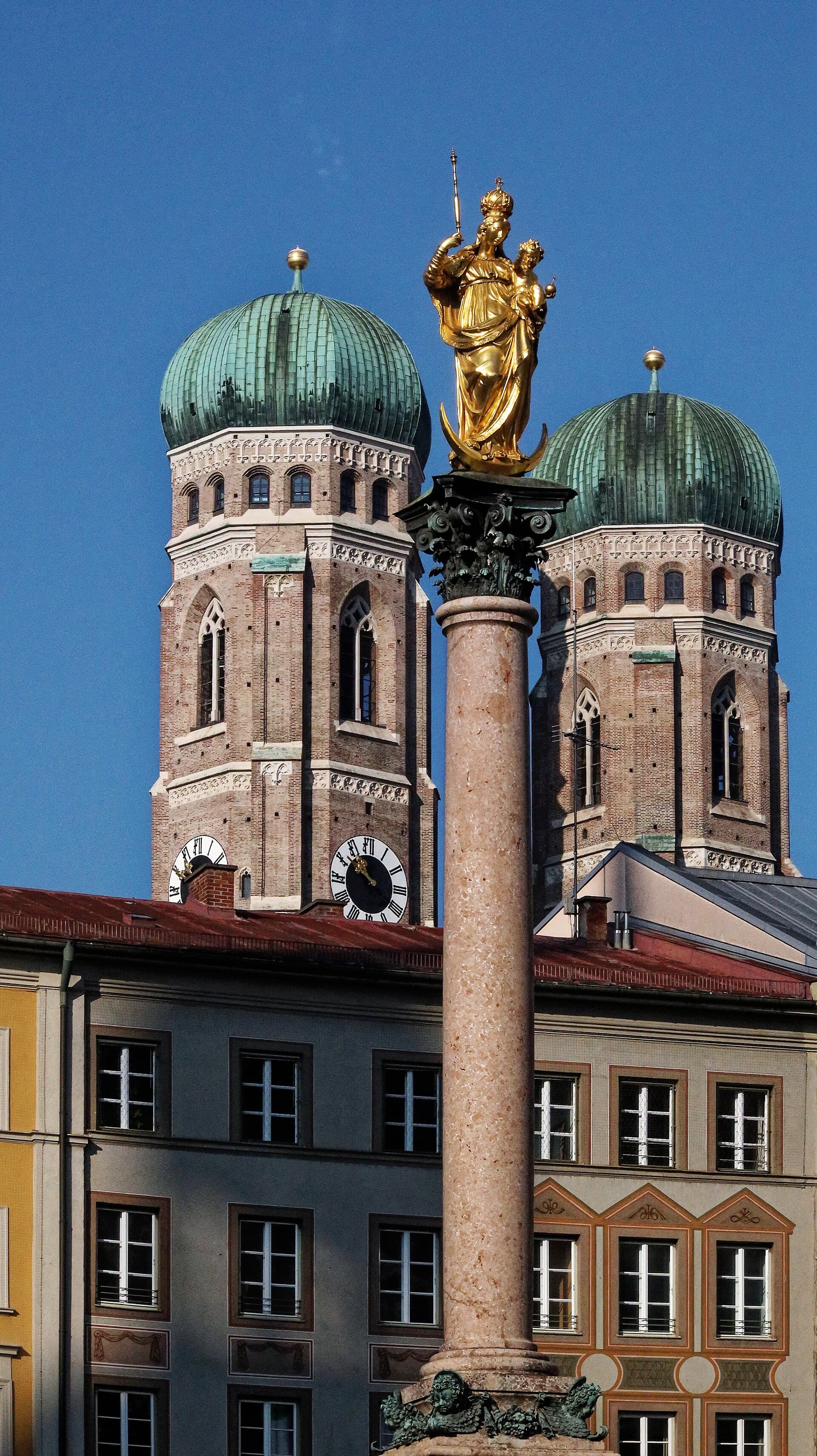 MariensäuleThe Mariensäule is a marble column in the middle of Marienplatz, topped by a gol2 minutes walk4.6
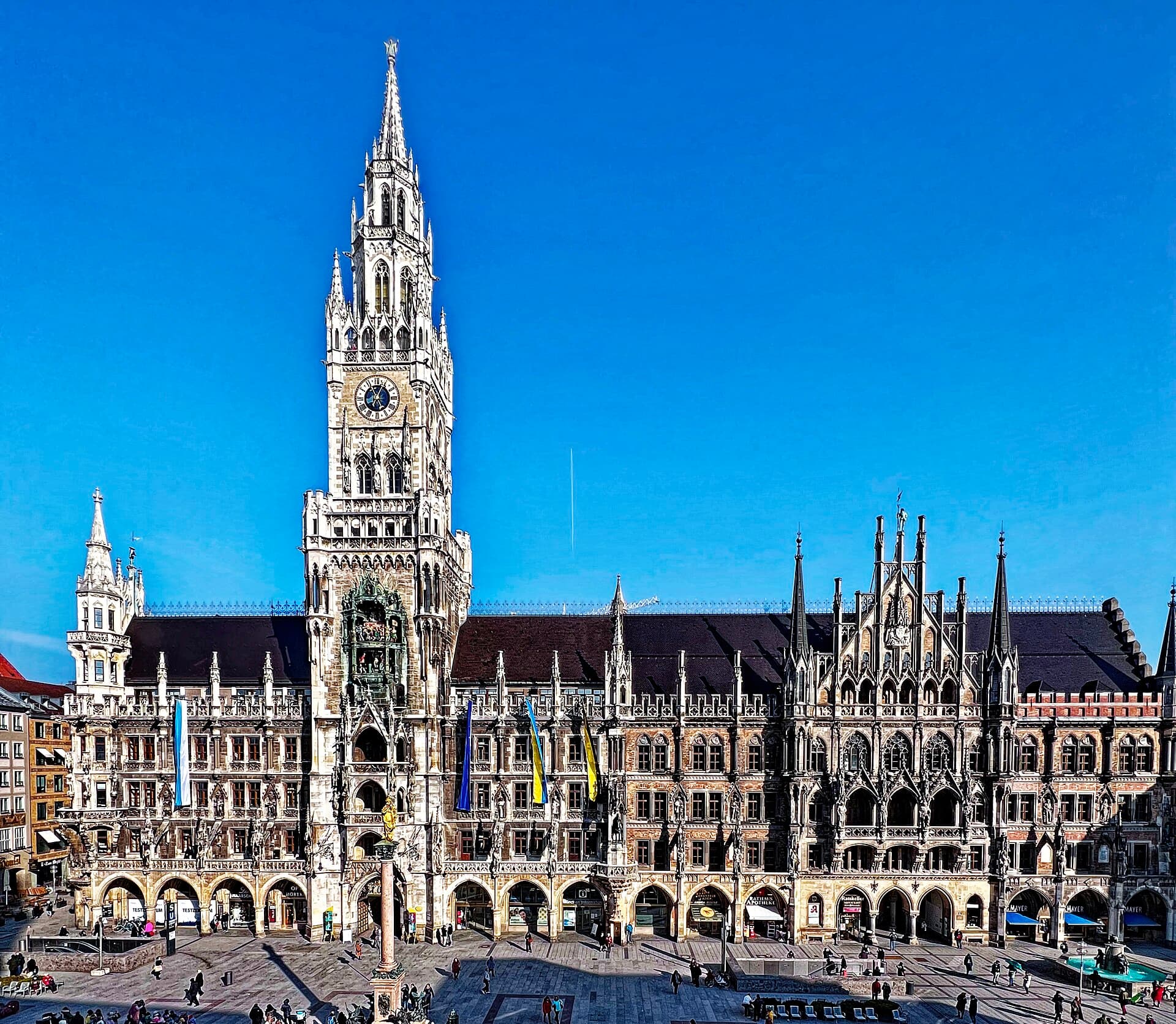 MarienplatzMarienplatz is the heart of Munich and the starting point for any visit. It has 2 minutes walk4.8
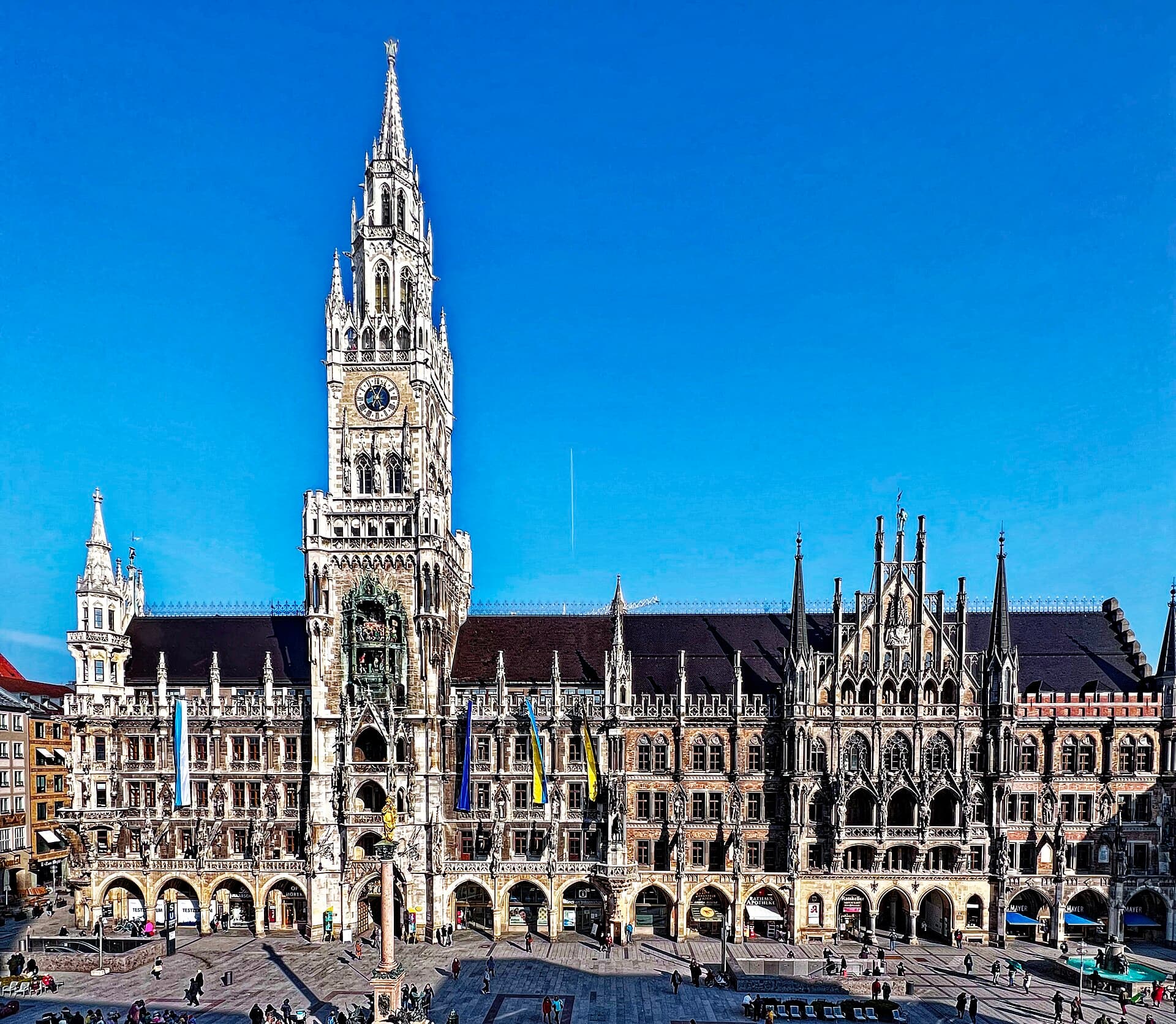 New Town HallThe New Town Hall is the large building with pointed towers filling the north si2 minutes walk4.8
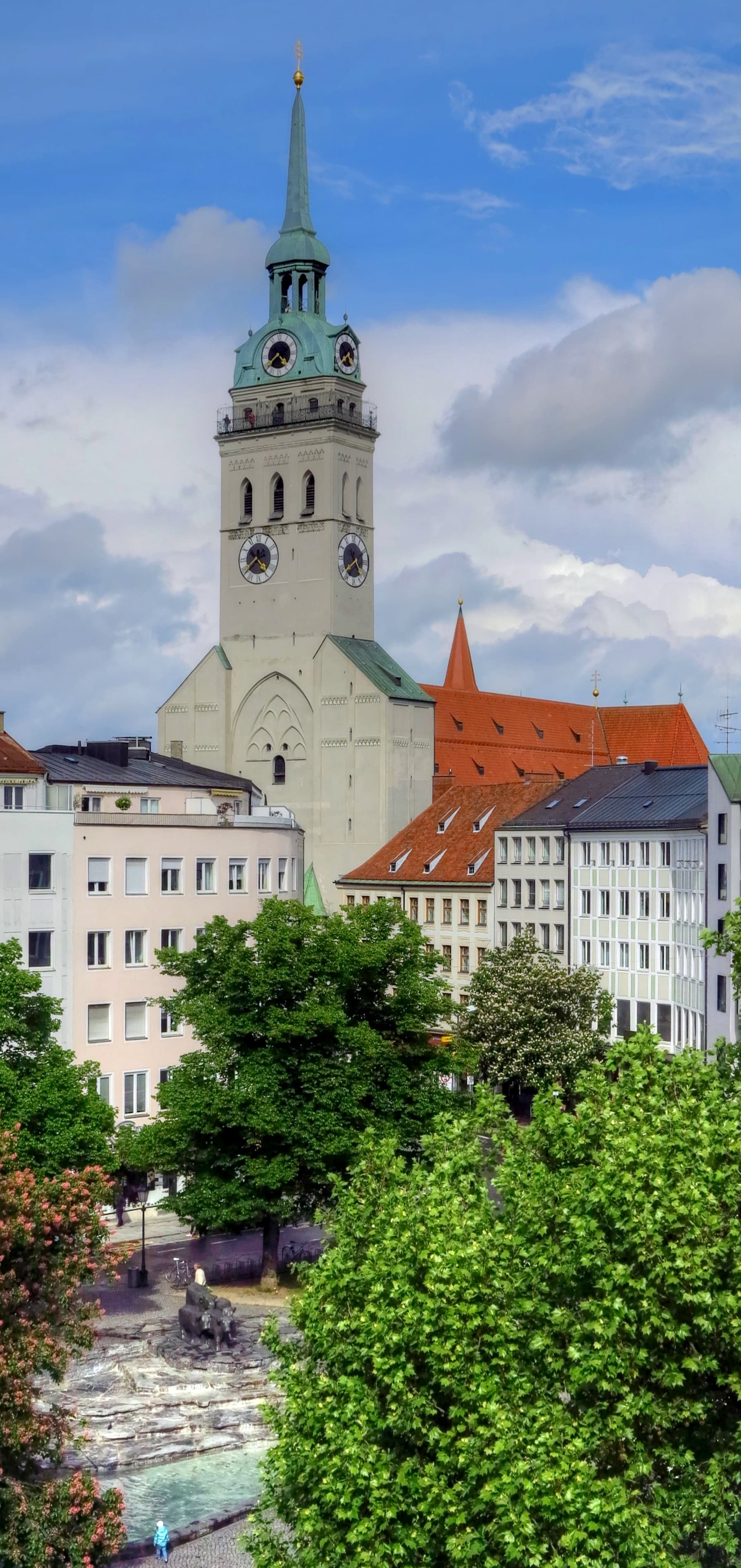 St Peter's ChurchMunicher call it the Alter Peter, Old Peter, and it is the oldest parish church 2 minutes walk4.8
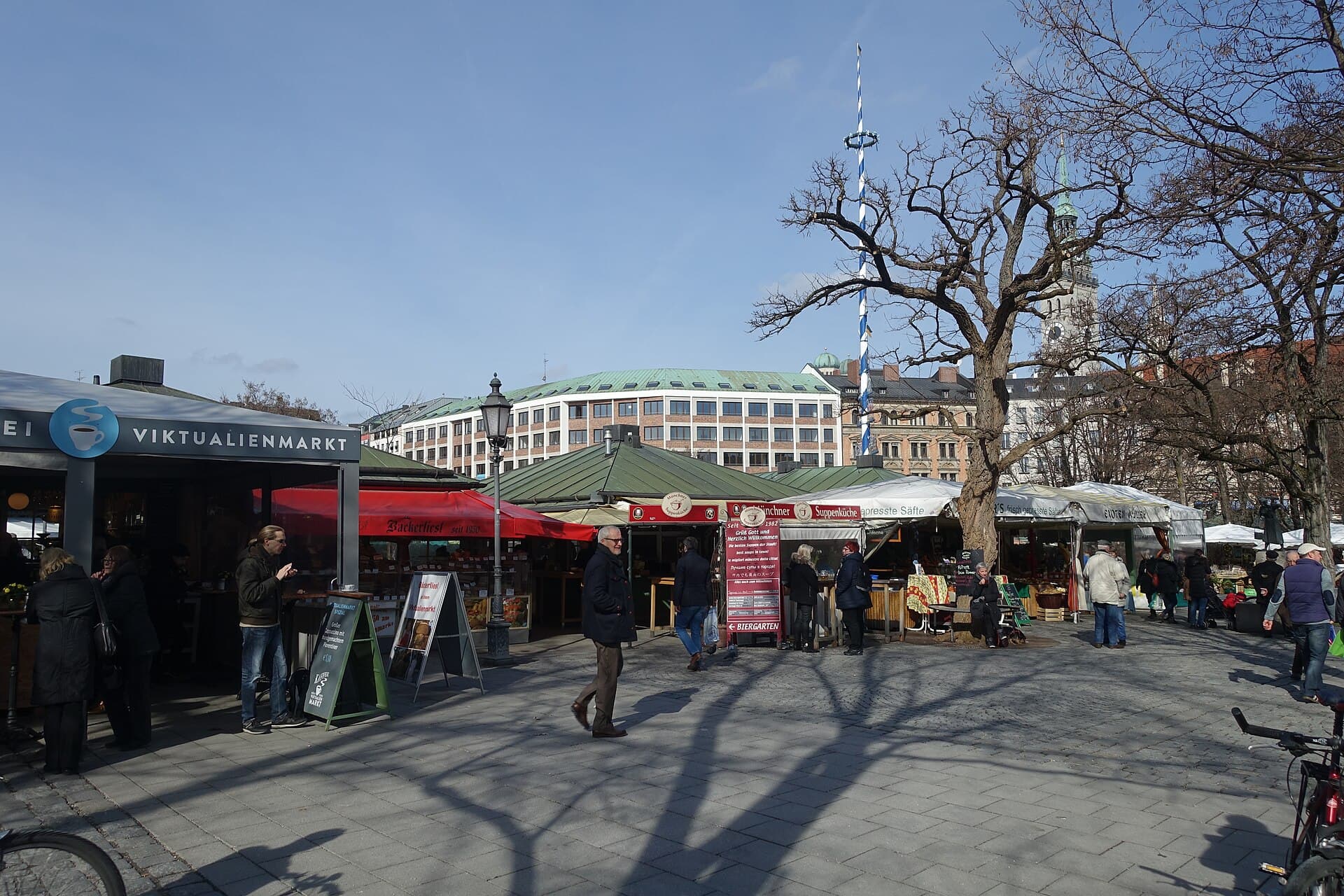 ViktualienmarktThe Viktualienmarkt is a daily open-air food market in the heart of the old town3 minutes walk4.5
An open food market in central Munich working since 1807, with more than a hundred stalls of vegetables, fruit, cheese, spices, flowers and fish. At its centre is a beer garden under chestnut trees that opens in good weather, where you may bring your own food from the market and buy only the drink — an old rule still in force.
The German name for Art Nouveau, taken from the magazine Jugend published in Munich in 1896 which promoted the style. Munich was among its main European centres. It is marked by curving lines, plant forms and a rejection of classical imitation — a reaction against nineteenth-century academic architecture. In Munich you see it in facades, doors and railings, especially in the Schwabing district.