The portal
Tile and muqarnas.
Florstein (Telegram:WikiPhoto.Space) — CC BY-SA 4.0 · Ninara — CC BY 2.0 · Sandra Cohen-Rose and Colin Rose from Montreal, Canada — CC BY-SA 2.0 · angelius1979 — CC BY-SA 3.0 · sergejf — CC BY 2.0
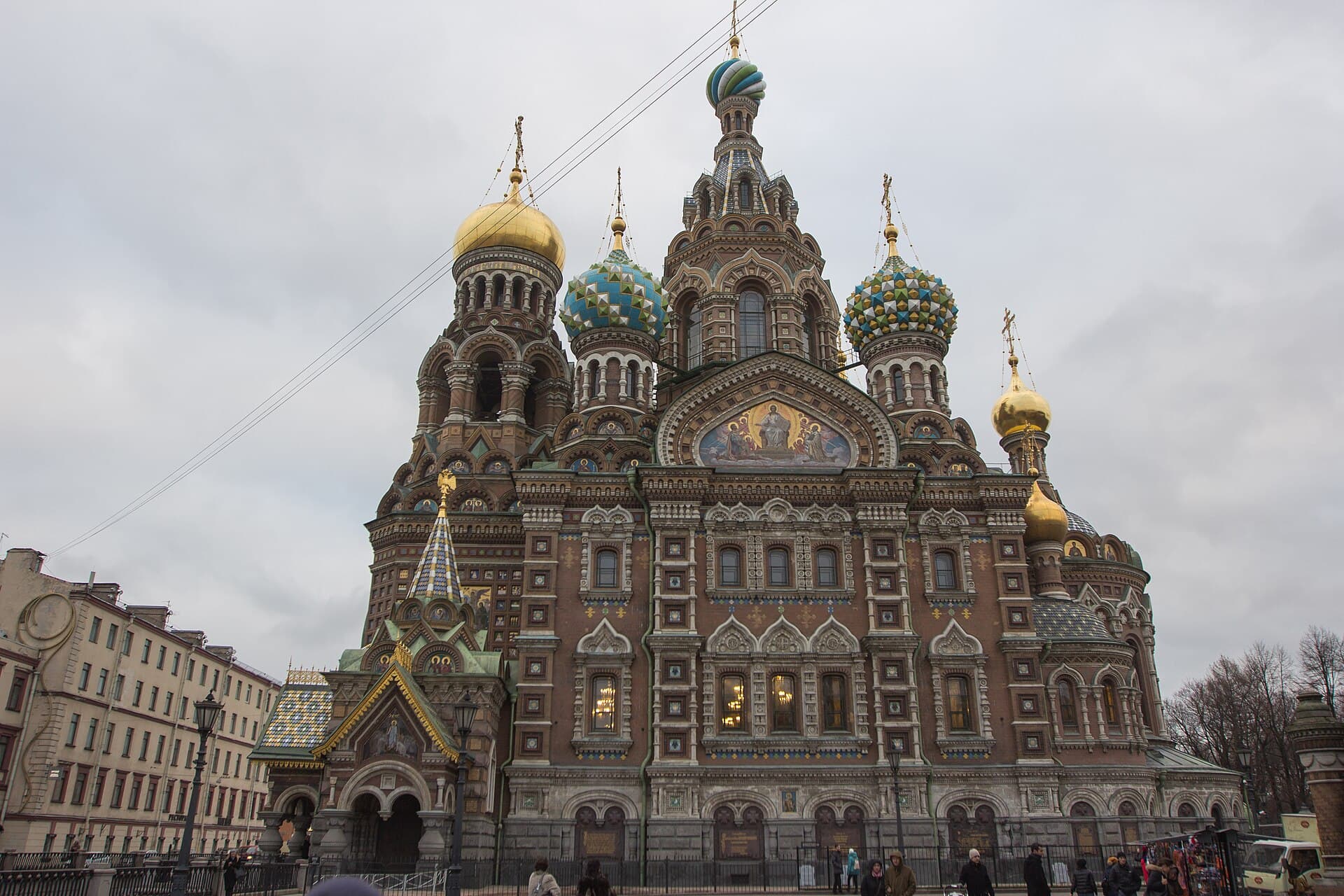
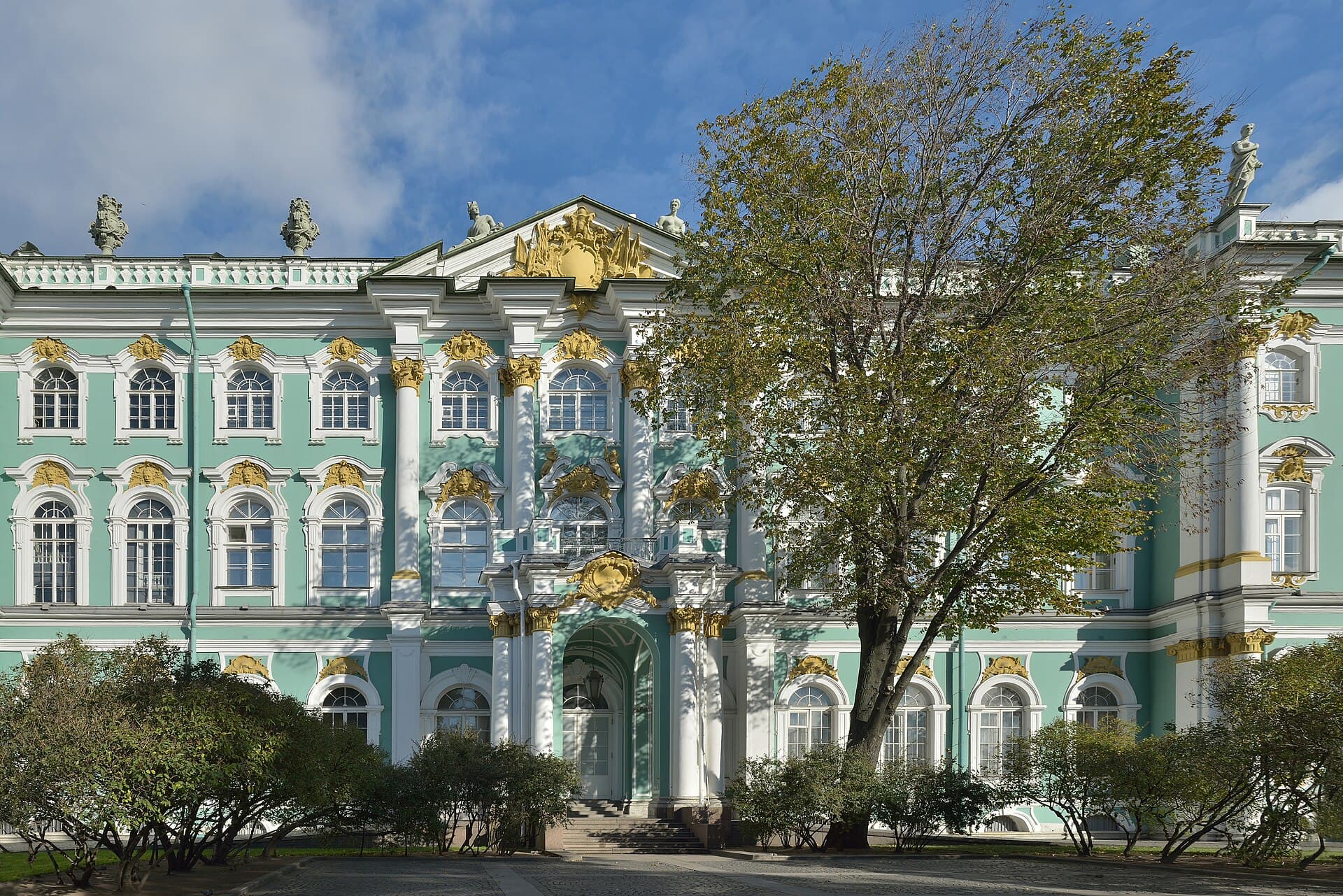
The Saint Petersburg Mosque stands in the city centre, and when it opened in 1913 it was the largest mosque in Europe outside Turkey. Its two minarets are 49 metres high and its dome 39 metres, and it holds up to five thousand worshippers. What most strikes an Arab visitor is finding a blue dome like those of Samarkand in the old tsarist capital, among classical European buildings. The founding stone was laid in 1910 to mark 25 years of the reign of Abdul Ahat Khan of Bukhara, when the Muslims of the Russian capital numbered over 8,000. The architect Nikolai Vasilyev patterned it after Gur-e-Amir, the tomb of Timur in Samarkand, and it was completed by 1921. It was closed during the Second World War and reopened in 1956. Above the grey building rises a ribbed turquoise dome flanked by two slender minarets. The finest part is the tall front portal, covered in blue, turquoise and gold tile, with geometric patterns, Arabic script and a niche of muqarnas. Come close to see its fine mosaic stars, at their brightest in sunlight. The Church of the Savior on Blood is about 1.7 km away in a straight line, and the Winter Palace a similar distance across the Neva. Men and women pray apart, women upstairs and men on the ground floor. Dress modestly, avoid prayer times and ask about entry for those not praying. The UK Foreign Office advises against all travel to Russia, and non-Russian bank cards may not work, so read the current advice before you plan.
Tile and muqarnas.
Ribbed like Samarkand's.
Details in the sun.
Near Gorkovskaya station, central Saint Petersburg, Russia
Yes, it is among the city's main mosques and gets very crowded, so come early.
It was patterned on Gur-e-Amir, which shows in the dome and portal.