Sultans of Arab descent
The Shahab line of sayyids.
Wagino 20100516 — CC BY-SA 3.0 · Abdul Harits Ritonga — CC BY-SA 4.0 · D.W. Fisher-Freberg — CC BY-SA 3.0 · D.W. Fisher-Freberg — CC BY-SA 3.0
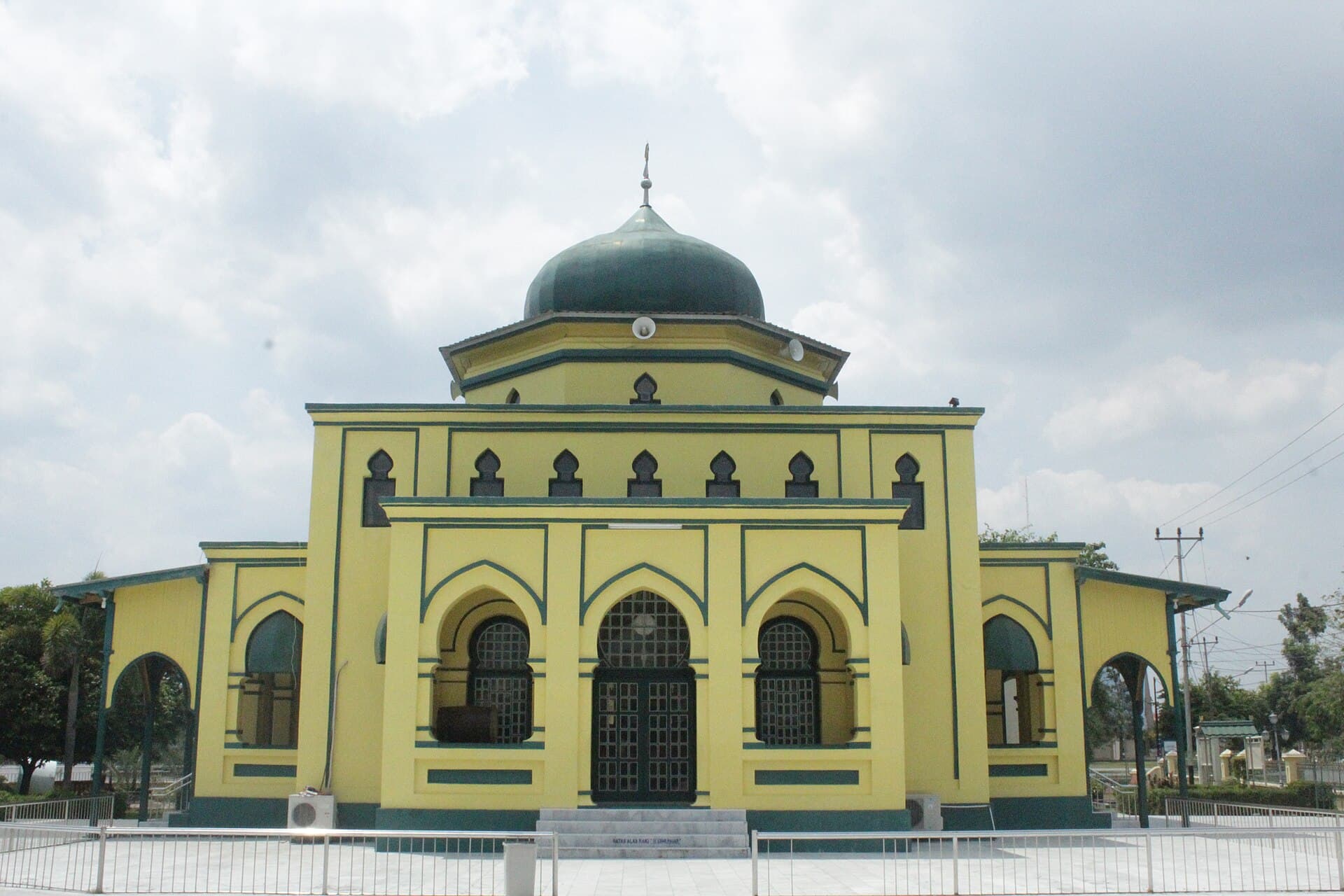
The palace of the Siak sultans, also known as the Palace of the Rising Sun, on the bank of the Siak River, built in 1889 by the eleventh sultan, Syarif Hasyim Abdul Jalil Syaifuddin, after a journey to the Netherlands and Germany from which he brought some of its furniture. The sultans' family is of Arab descent, from the Shahab line of sayyids. Its architecture blends Malay and Moorish style with European touches: a white two-storey building with arches, small domes and eagle statues on the roof. Inside are royal furniture, chandeliers and portraits of the sultans, and its most famous piece is the komet, a rare German music machine said to exist in only two examples in the world, which still plays. The palace holds national importance: its last sultan, Syarif Kasim II, gave up his sultanate and its wealth to the Indonesian republic after independence, and he is now a national hero after whom Pekanbaru's airport is named. The fee is a token ten thousand rupiah or so, and it opens daily from eight to five. About five hundred metres away are the historic Syahabuddin Mosque and the tomb of Sultan Syarif Kasim II, so combine them in one visit. The town is quiet on the river, its modern red bridge a landmark.
The Shahab line of sayyids.
A rare German music machine.
He gave his sultanate to the republic.
Siak, on the Siak River, about two and a half hours from Pekanbaru
Yes for history lovers: it is one of Sumatra's loveliest palaces, and the story of its Arab-descended sultans and the last one's gift to the republic is moving. The road takes two and a half hours, so make it a day trip with the mosque.