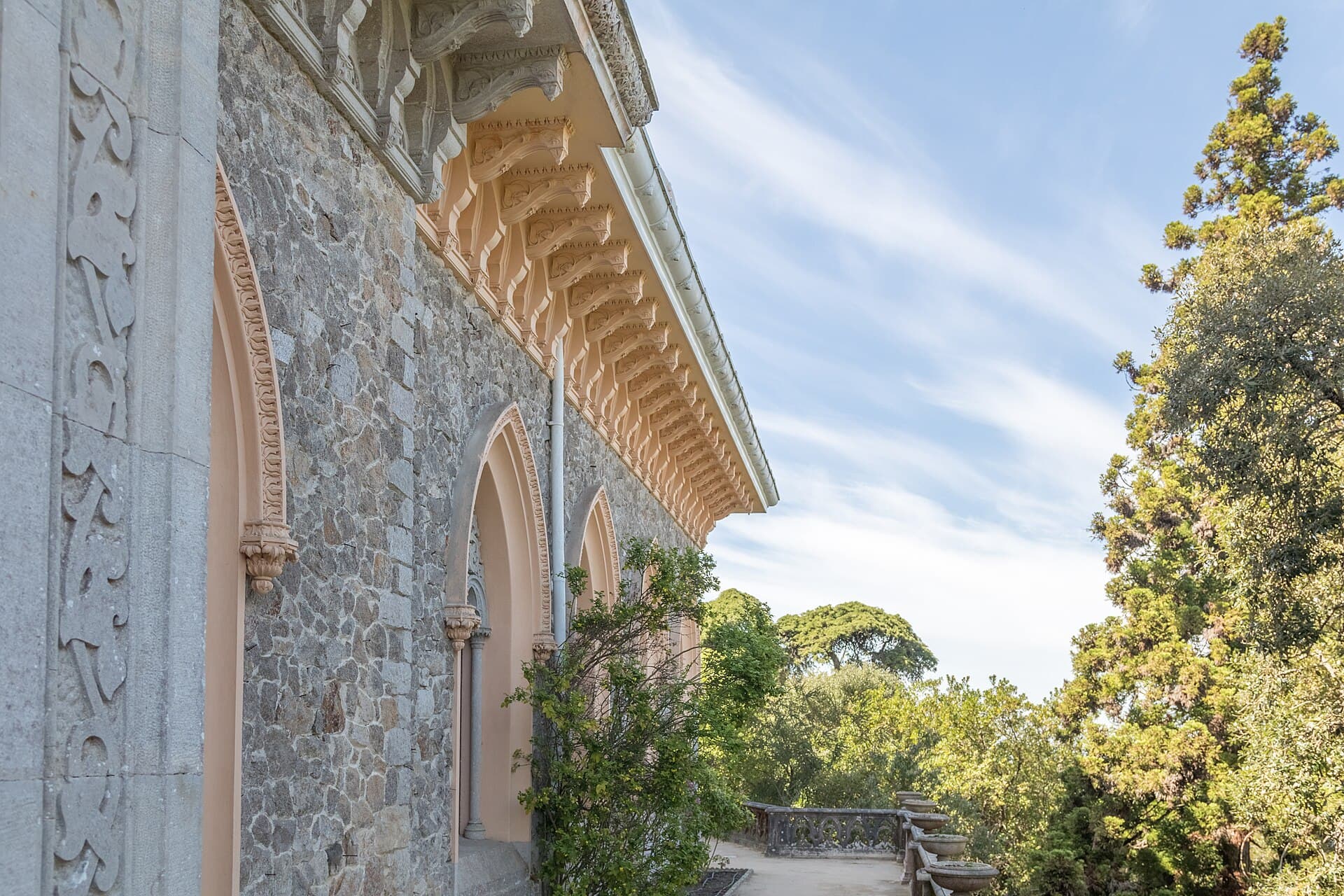
Contrast in a small space
Damp woodland north, dry slopes south, sea cliffs beyond — because the hills intercept Atlantic moisture.
Antonio Juan Sánchez — CC BY-SA 4.0 · LensaCibi — CC BY-SA 4.0 · Raquel Sánchez de Pedro — CC BY-SA 3.0 es
A protected area running from the Sintra hills west to the Atlantic, covering the coast between Sintra and Cascais. The same area that holds the Sintra palaces is inscribed on the UNESCO World Heritage list as a cultural landscape, and the park is the natural setting those palaces sit in. What makes it distinctive is the variety within a small space: damp woodland on the northern slopes with a climate closer to northern Europe, dry southern hillsides, high sea cliffs and beaches open to the ocean. The contrast exists because the hills intercept moisture coming off the Atlantic. Inside the park lies Cabo da Roca, the westernmost point of mainland Europe, and cliffs dropping straight to the sea. The beaches here face the open ocean rather than the Mediterranean: the surf is strong, the water cold and the currents dangerous in many places. Most visitors see the park only in passing while moving between the Sintra palaces. Giving it time in its own right, a walking route or a stop on the coast, produces a quite different day from a palace day.
Damp woodland north, dry slopes south, sea cliffs beyond — because the hills intercept Atlantic moisture.
The UNESCO cultural landscape is the palaces and this terrain together, not the palaces alone.
Most visitors only pass through — giving it a walking route produces an entirely different day.
Between Sintra and Cascais, west of Lisbon
With real caution. These are open-ocean beaches, not Mediterranean ones: the surf is strong, the water cold year round and rip currents dangerous in many spots. Stick to beaches with lifeguards in season and watch the flags.
The palaces easily fill a whole day, so do not try to compress both. With two days, give the first to the palaces and the second to the coast, Cabo da Roca and a walking route. A car makes this far easier, as public transport between points in the park is limited.