
The stone arch
On the river.
Joseph Mischyshyn — CC BY-SA 2.0 · Suzanne Mischyshyn — CC BY-SA 2.0 · Sarah777 — Public domain · David Stanley from Nanaimo, Canada — CC BY 2.0 · Wolfgang Glock — CC BY-SA 3.0 · Ian Capper — CC BY-SA 2.0 · Robert Linsdell from St. Andrews, Canada — CC BY 2.0 · nick macneill — CC BY-SA 2.0
A historic stone arch where the River Corrib meets Galway Bay, part of what remains of an extension to the city wall built in 1584 to protect the quays, in an area once known as the Fish Market. The arch had no historical link to Spain; it took the name later from Galway's old trade with Spain and the ships that docked here laden with goods. Part of it was destroyed in 1755 by the waves sent by the famous Lisbon earthquake. Beside the arch are the free Galway City Museum and a grassy riverside spot where young people and musicians gather on sunny days; across the water runs the row of colourful houses on the Long Walk, and swans glide near the Claddagh. It's free and always open, at the edge of the Latin Quarter, which makes it the perfect starting point for a walk around central Galway; it is loveliest at sunset over the bay.
On the river.
Colourful houses.
Free, next door.
Mouth of the River Corrib, central Galway
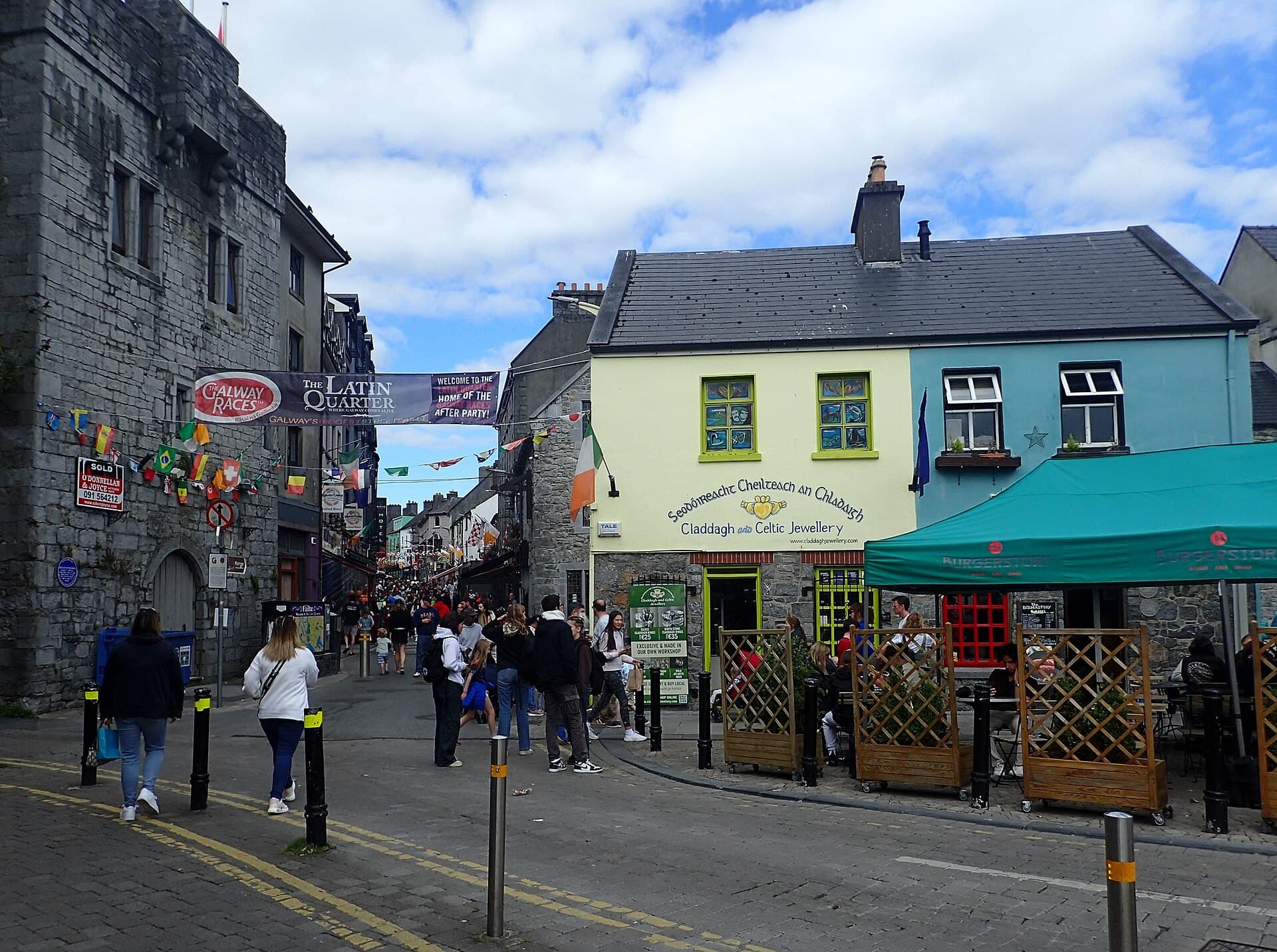 Galway Latin QuarterGalway's historic heart, a web of cobbled, pedestrian streets running from the S1 minute walk4.6
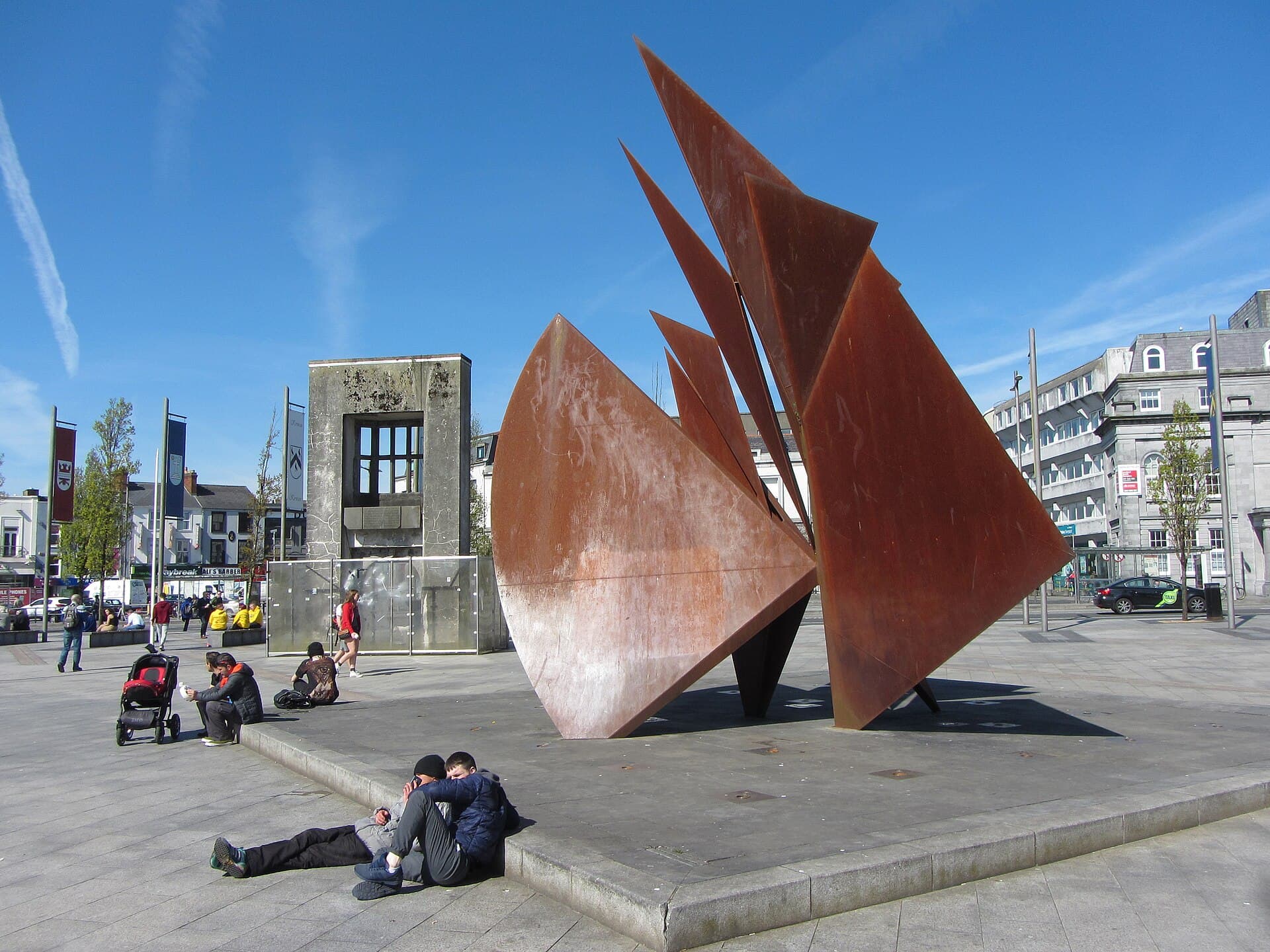 Eyre SquareThe main green square in the heart of Galway, which began as an open green in fr8 minutes walk4.6
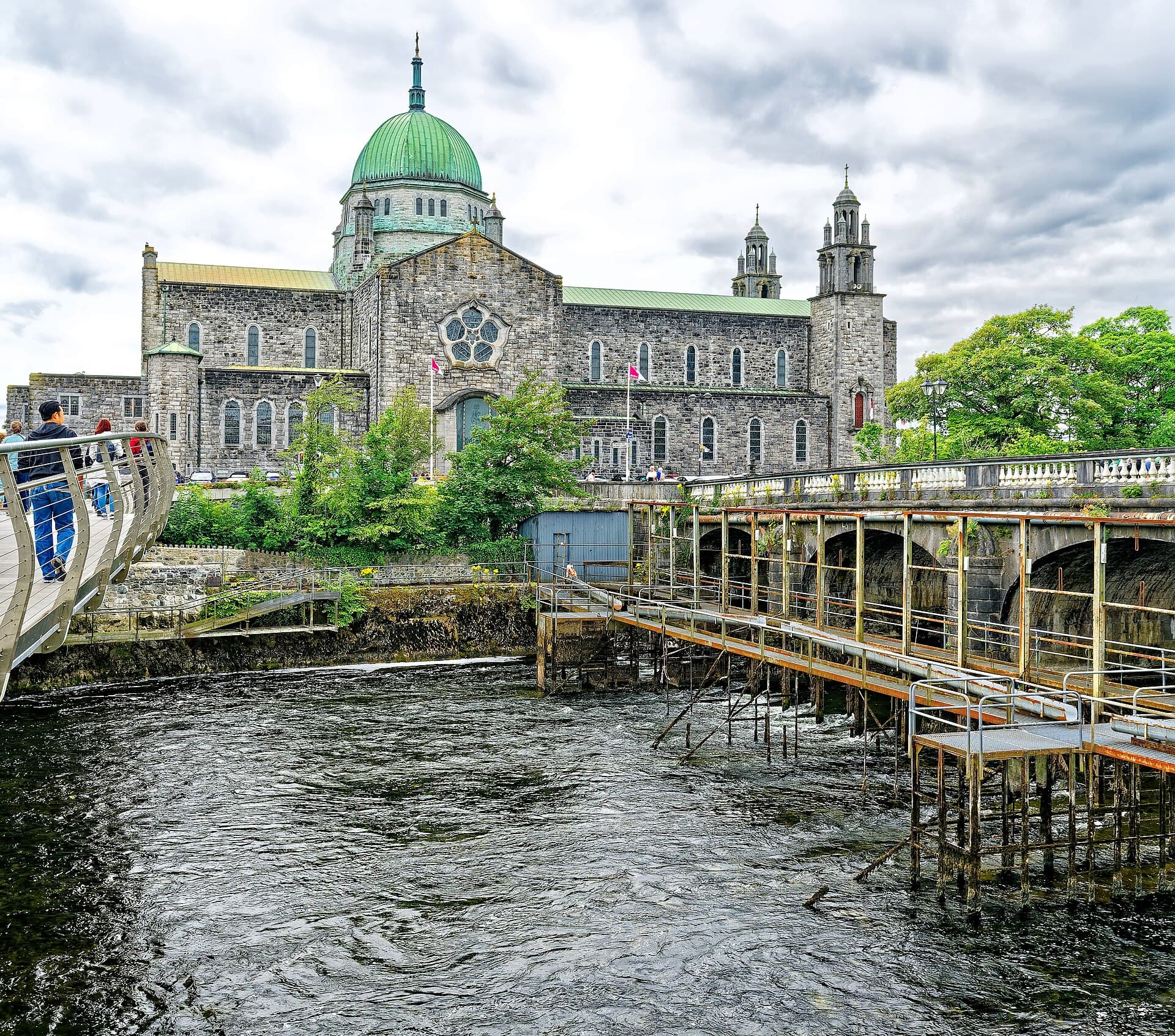 Galway CathedralA massive stone cathedral with a green dome that rises above Galway's skyline. B8 minutes walk4.7
It has no historical link to Spain; the name came later from Galway's old trade with Spain and the ships that docked nearby.