
Twin towers
A neo-Gothic facade.
slawomir.gajowniczek — CC BY-SA 4.0 · Chongkian — CC BY-SA 4.0 · Ah Wei (Lung Wei) — CC BY-SA 2.0 · Slleong — CC0 · Theo.Vilein — CC BY-SA 4.0
A twin-towered neo-Gothic Catholic church overlooking the Malacca River a few minutes' walk from Dutch Square. A French priest, Father Farvé, began building it in 1849 on the site of an old Portuguese church, and it was finished in 1856; it is the largest church in Malacca. Its design is said to be modelled on the Cathedral of Saint Peter in Montpellier in southern France, and the likeness shows in the two front towers and the rose window between them. It is named after Francis Xavier, the Spanish missionary who passed through Malacca several times in the sixteenth century. The pale sand-coloured facade stands out among the red buildings nearby, and the interior is simple, with pointed arches and stained-glass windows. A visit is short and free, and visitors are not admitted during services. The best view is from the river or the nearby bridge, where the two towers rise above the houses, so look out for it if you take the river boat. It lies on the way between Dutch Square and the Portuguese Settlement, so pair it with Christ Church on a short walk.
A neo-Gothic facade.
The towers above the rooftops.
A simple interior of pointed arches.
Jalan Laksamana, a few minutes' walk from Dutch Square
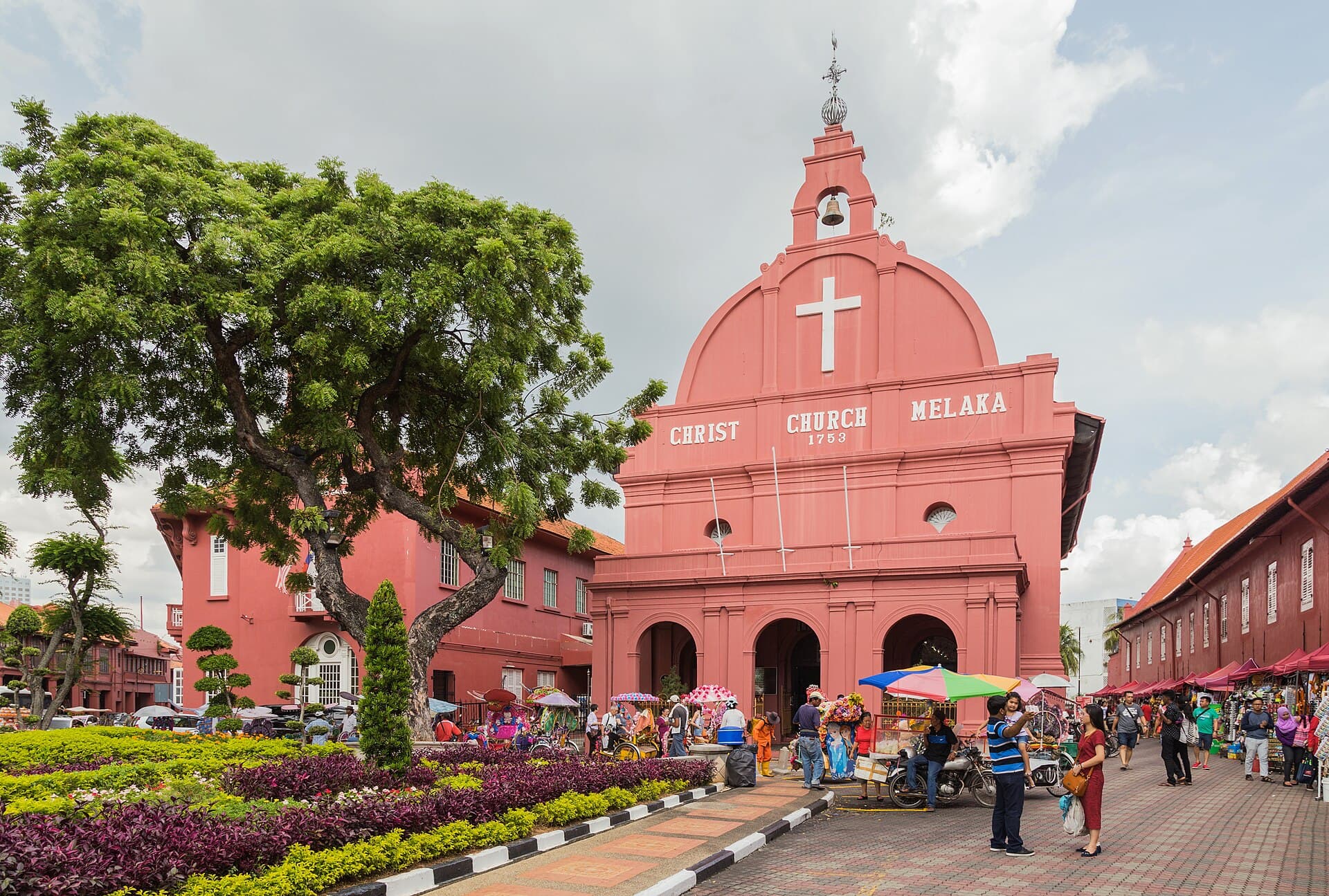 Christ Church, MalaccaThe red building at the front of most photographs of Malacca stands in Dutch Squ2 minutes walk
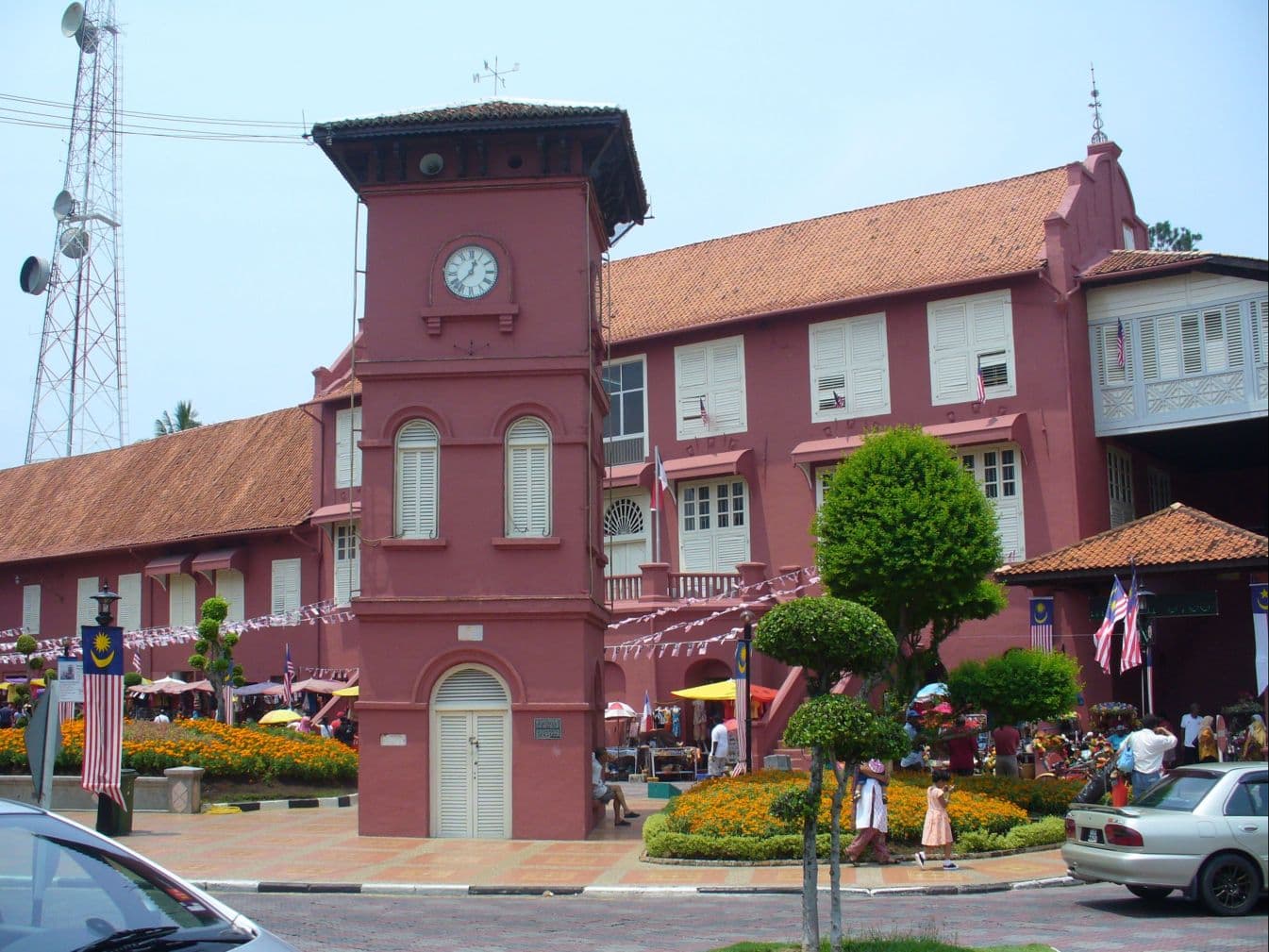 Stadthuys and Dutch SquareEverything around you is red: the Stadthuys, completed by the Dutch around 1650 2 minutes walk4.5
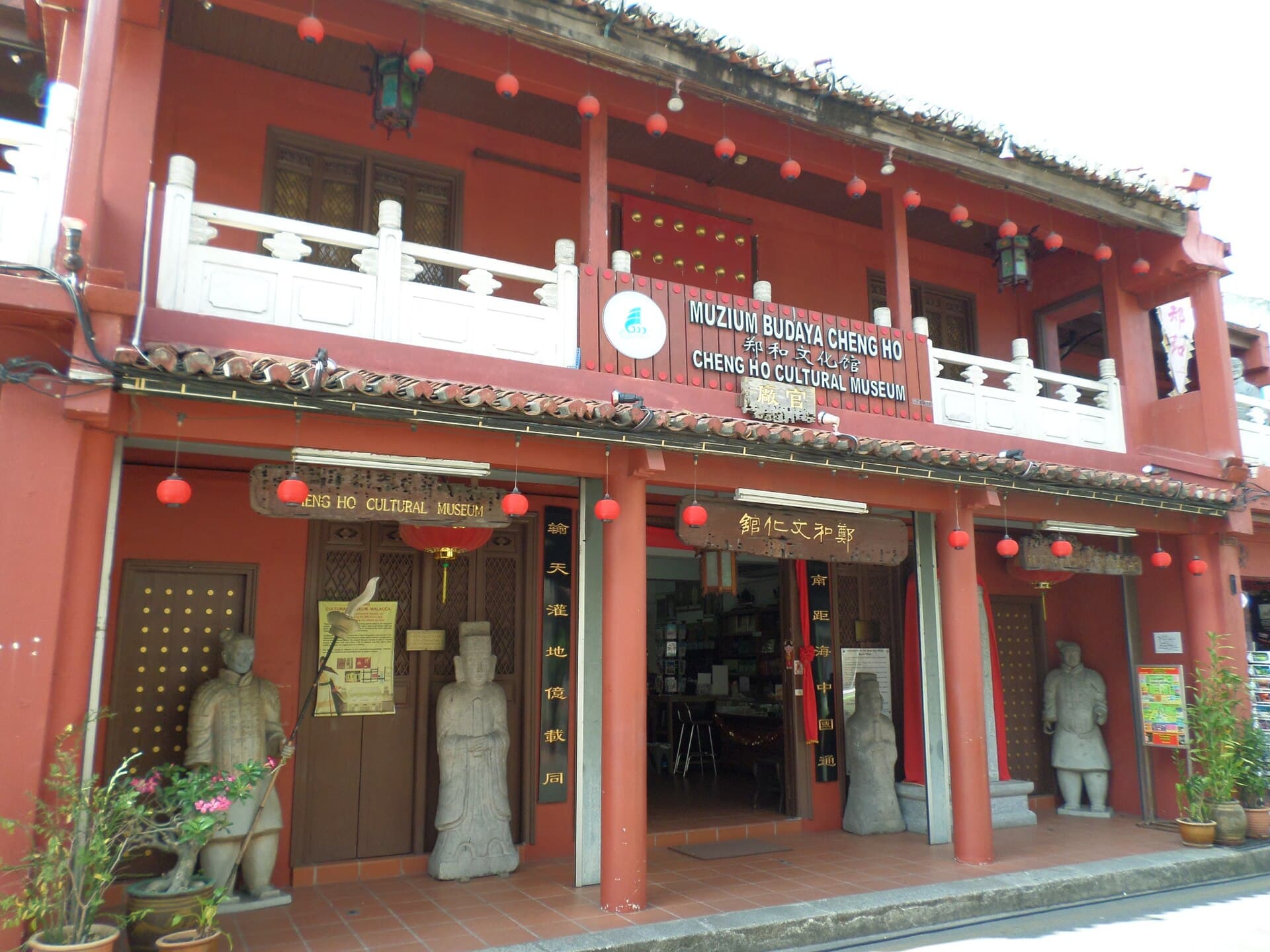 Cheng Ho Cultural MuseumA museum about the life of Admiral Zheng He, the Ming dynasty's Muslim naval com3 minutes walk
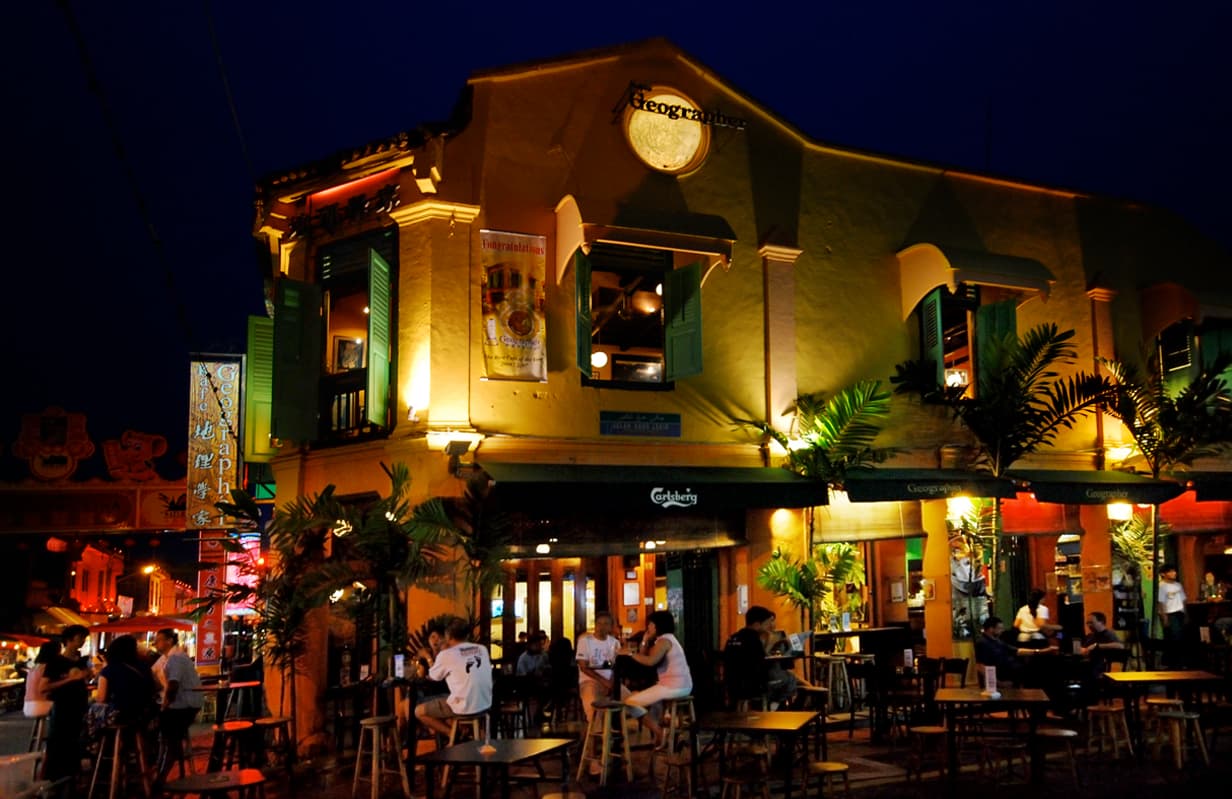 Jonker Street Night MarketEvery Friday, Saturday and Sunday evening Jonker Street closes to cars and turns3 minutes walk4.4
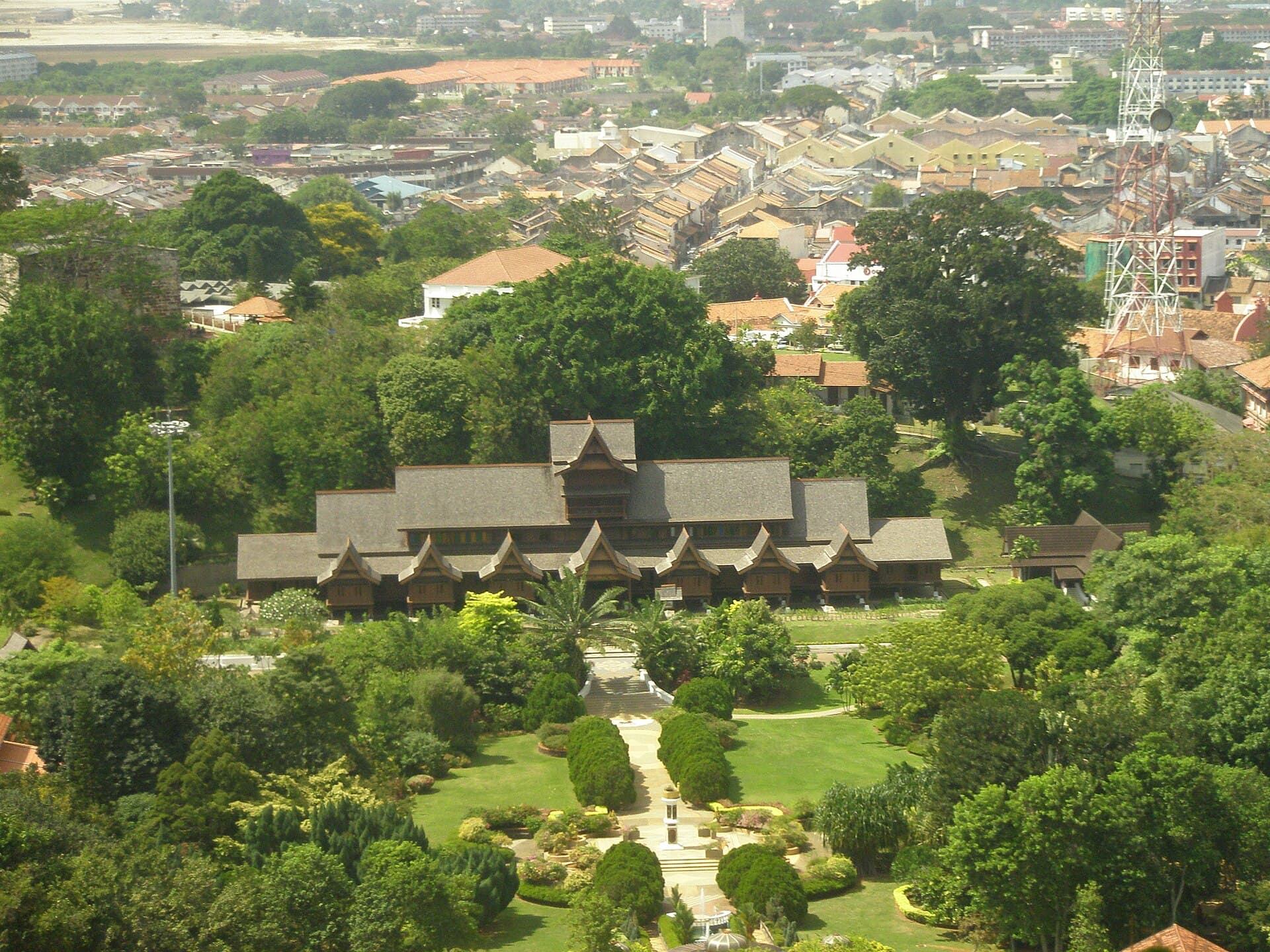 Melaka Sultanate Palace MuseumBefore the Portuguese arrived in 1511, Malacca was the capital of a Muslim sulta3 minutes walk4.3
A sixteenth-century Spanish missionary who travelled to India and Japan and passed through Malacca several times on his voyages, which is why the church bears his name.