Terracotta figures
About 200 survive from more than a thousand.
CC BY 2.0 · Scotch Mist — CC BY-SA 4.0 · Jeroenm — CC BY-SA 3.0 · Ypsilon from Finland — CC0 · Scotch Mist — CC BY-SA 4.0
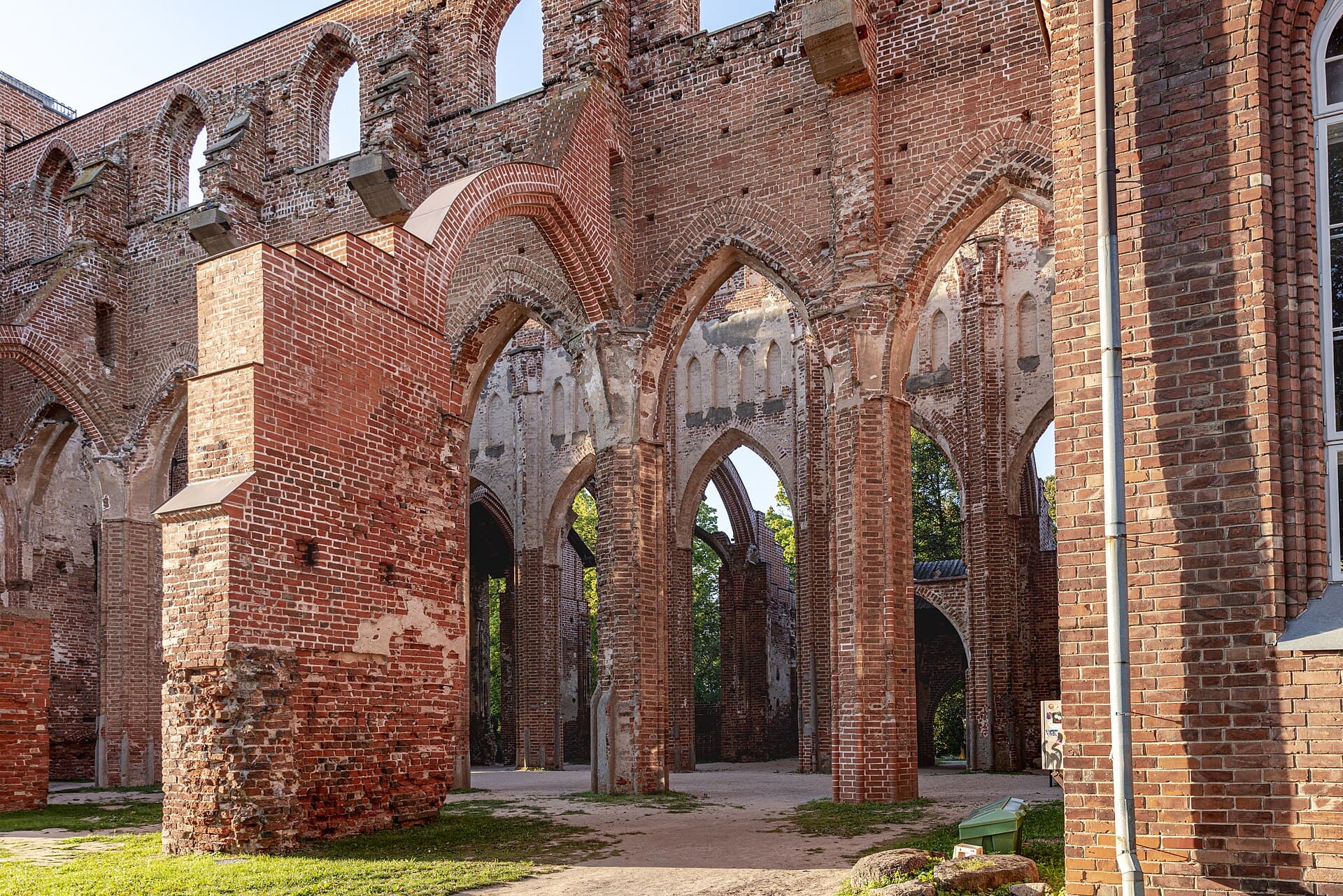
St John's Church is a red-brick Gothic Lutheran church and one of the landmarks of Tartu, dedicated to John the Baptist. It is famous for the small terracotta figures around its exterior, a rare feature in architecture of this kind. It began as a Catholic church, with the oldest parts of the current building from the 14th century and a church on the site since at least the first half of the 13th. Excavations hint at an even older wooden church. The Great Fire of Tartu started nearby in 1775, but the church survived. It was largely rebuilt after both the Great Northern War and the Second World War, and Baroque chapels were added in 1746 and 1769. Originally there were more than a thousand handmade figures around the church, each different from the others, and about 200 survive. One hypothesis holds that they were modelled on citizens of Tartu, while the crowns on some hint at other subjects. From outside, the tower and apse stand out in red brick beneath dark roofs. The church lies about 300 m from Town Hall Square and about 300 m from Toomemägi. As a working church it asks for modest dress and quiet voices, and it is best to avoid service times. Walk slowly around it, since the small figures show up best in daylight.
About 200 survive from more than a thousand.
A Gothic tower and apse.
Spared by the great fire of 1775 nearby.
Jaani 5, Tartu, Estonia
There were once more than a thousand, all different, and one hypothesis says they were modelled on citizens.
Generally yes, outside service times, with modest dress and a quiet voice.