The origin of the town's name
Zell from a monk's cell — the monastery the town grew around in the 700s.
Wald1siedel — CC BY-SA 3.0 at · GT1976 — CC BY-SA 4.0 · Wald1siedel — CC BY-SA 3.0 at · GT1976 — CC BY-SA 4.0
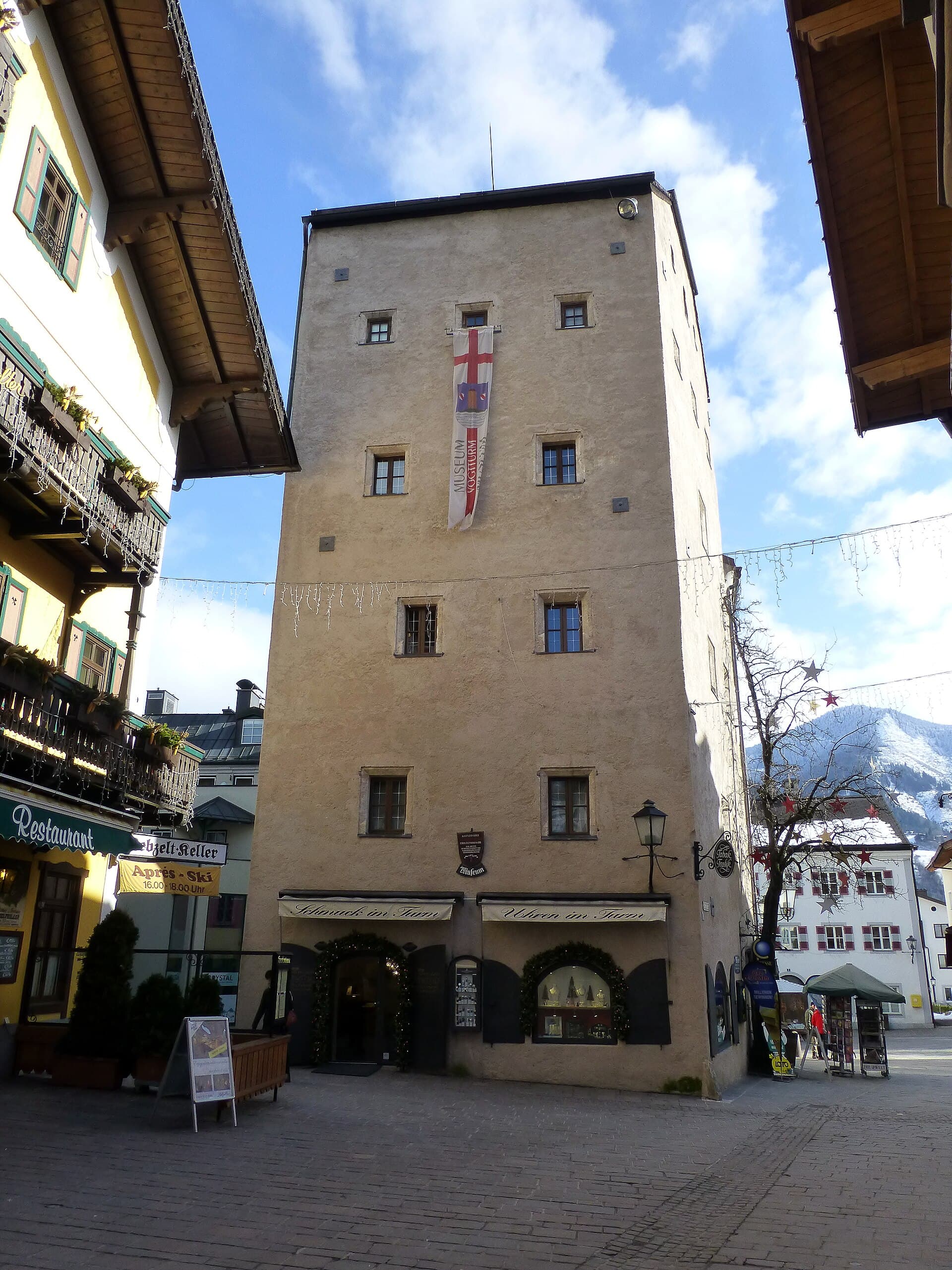
The parish church in central Zell am See, the oldest building in the town and the reason it exists. The town grew around a monastic cell founded here in the eighth century, and the name itself points to that: Zell comes from the Latin word for a monk's cell. The present church is eleventh century in its core and Romanesque, with Gothic elements added later. That makes it the only historic layer in a town people come to today for skiing, the lake and the mountains: Zell am See is modern in appearance, and this church is what survives of what preceded that by a thousand years. The square stone tower rising above the town's roofs is what you see from a distance, and inside are Gothic wall paintings and an altar. Entry is free and the church is working, so the usual etiquette for places of worship applies. It stands in the town centre minutes from the lake and the railway station, so it needs no detour — a twenty-minute stop on your route.
Zell from a monk's cell — the monastery the town grew around in the 700s.
A modern-looking town, and this is what survives from a thousand years before it.
The square stone tower is what you see across the town from a distance.
Central Zell am See, near the lake
As a stop yes, because it is central, on your route between the lake and the station, and costs nothing in money or time. Do not plan it as a destination — Zell am See is visited for the lake, the Schmittenhöhe and the Kitzsteinhorn glacier, and this is a twenty-minute addition.
The lake itself and walking or cycling around it, the Schmittenhöhe with its cable car and view over the peaks, the Kitzsteinhorn glacier where skiing runs most of the year, and the Krimml falls to the north, among Europe's highest.