St George's Cathedral (Stari Bar)
Foundations of a cathedral turned mosque, wrecked in 1881.
Michal Klajban — CC BY-SA 4.0 · Alexkom000 — CC BY 4.0 · Alexkom000 — CC BY 4.0 · Nick Savchenko from Kiev, Ukraine — CC BY-SA 2.0 · Nick Savchenko from Kiev, Ukraine — CC BY-SA 2.0
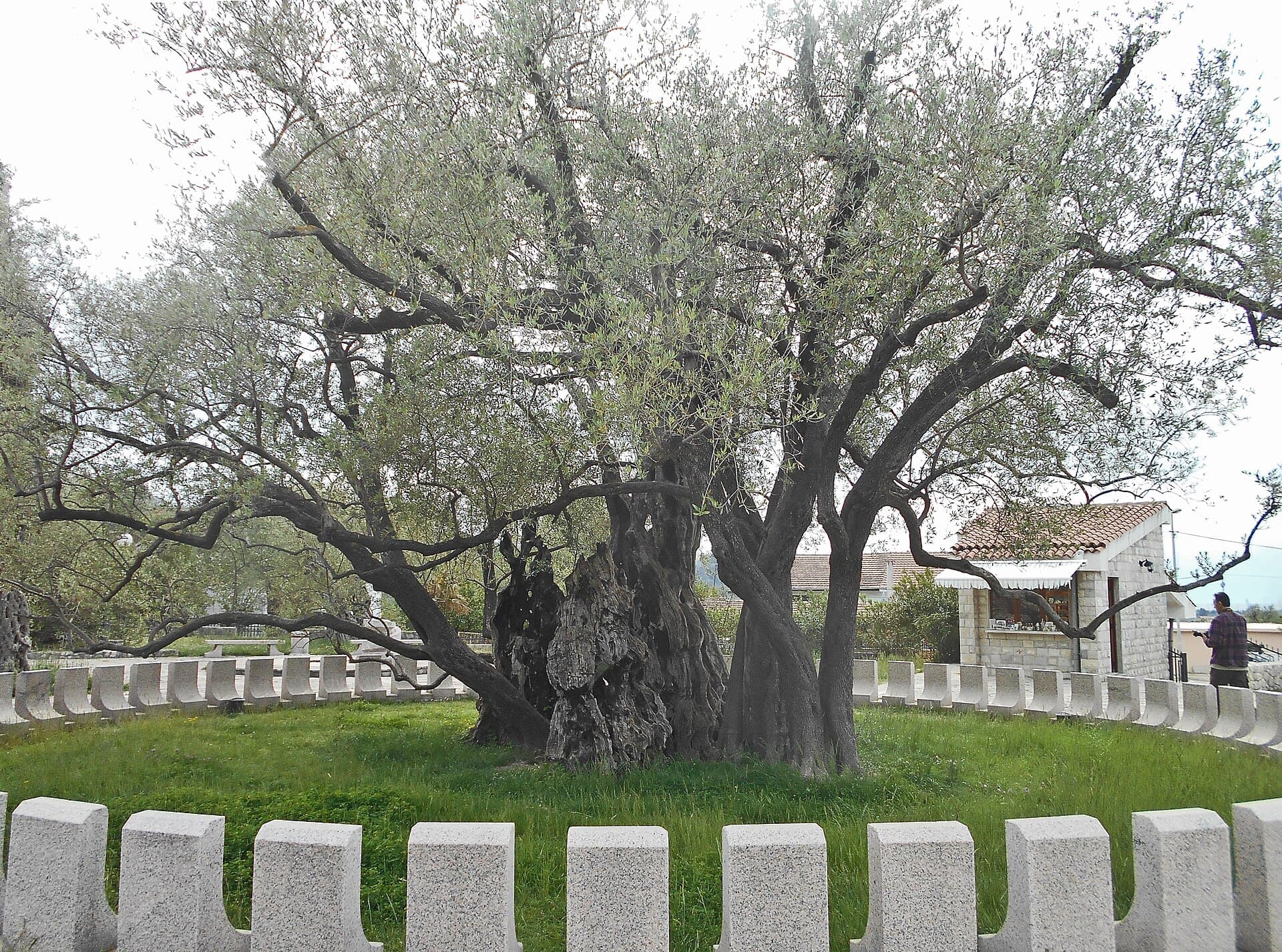
Stari Bar, or Old Bar, is the ruined walled town on a hill at the foot of Mount Rumija, about 4 km inland, where Bar stood until the late 19th century. Some 4.5 hectares inside its walls hold the remains of about 600 buildings; Montenegro's 2010 UNESCO Tentative List entry calls it the largest medieval archaeological site in the Balkans. The town is first named in 10th-century sources; its Latin name, Antibarium, is thought to mean opposite Bari, across the Adriatic. Venetian from 1443 and Ottoman from 1571, it fell in January 1878 after weeks of Montenegrin shelling. Its people moved down to the suburb below the walls and later to the coast, and the walled town has stood empty ever since. Paths climb from the main gate to the foundations of St George's Cathedral, later a mosque, destroyed in 1881 when gunpowder stored inside exploded. Nearby are the 13th-century Church of St Nicholas, a restored Ottoman hammam, the 1752 clock tower and an 18th-century powder store holding carved stones. The walls overlook olive groves, the sea and the 17-arched aqueduct, rebuilt after the 1979 earthquake. Below the gate, the old bazaar street has cafés and craft shops, and by the walls stands the Omerbašić Mosque, built in 1662 and still in use: keep shoulders and knees covered, women cover their hair, shoes come off, and avoid prayer times, especially Friday midday. A taxi from new Bar costs about EUR 5, per visitor guides. Allow one to two hours; Bar's Old Olive Tree lies 1.6 km south in a straight line.
Foundations of a cathedral turned mosque, wrecked in 1881.
Dated 1752, with the south gate at its foot.
Seventeen arches that brought spring water 3 km.
Top of the old bazaar street, Stari Bar, Bar
Not inside the walls, which have been empty since the late 19th century; the village of Stari Bar on their western and northern sides, home to the old bazaar street, had about 1,870 residents in the 2011 census.
The seat of the archbishops of Bar, built in the 12th century as a three-aisled basilica over an older church of St Theodore; King Grubeša of Zeta was buried there in 1125.