The oldest tombs
10th century.
Farkhod Sayd — CC0 · Daniel Rogalsky — Public domain · The original uploader was Uzgen at Uzbek Wikipedia. — CC BY-SA 1.0 · de:Benutzer:Lechhansl — CC BY-SA 3.0 · Panpanchik — CC BY-SA 4.0 · Panpanchik — CC BY-SA 4.0 · Panpanchik — CC BY-SA 4.0 · Panpanchik — CC BY-SA 4.0
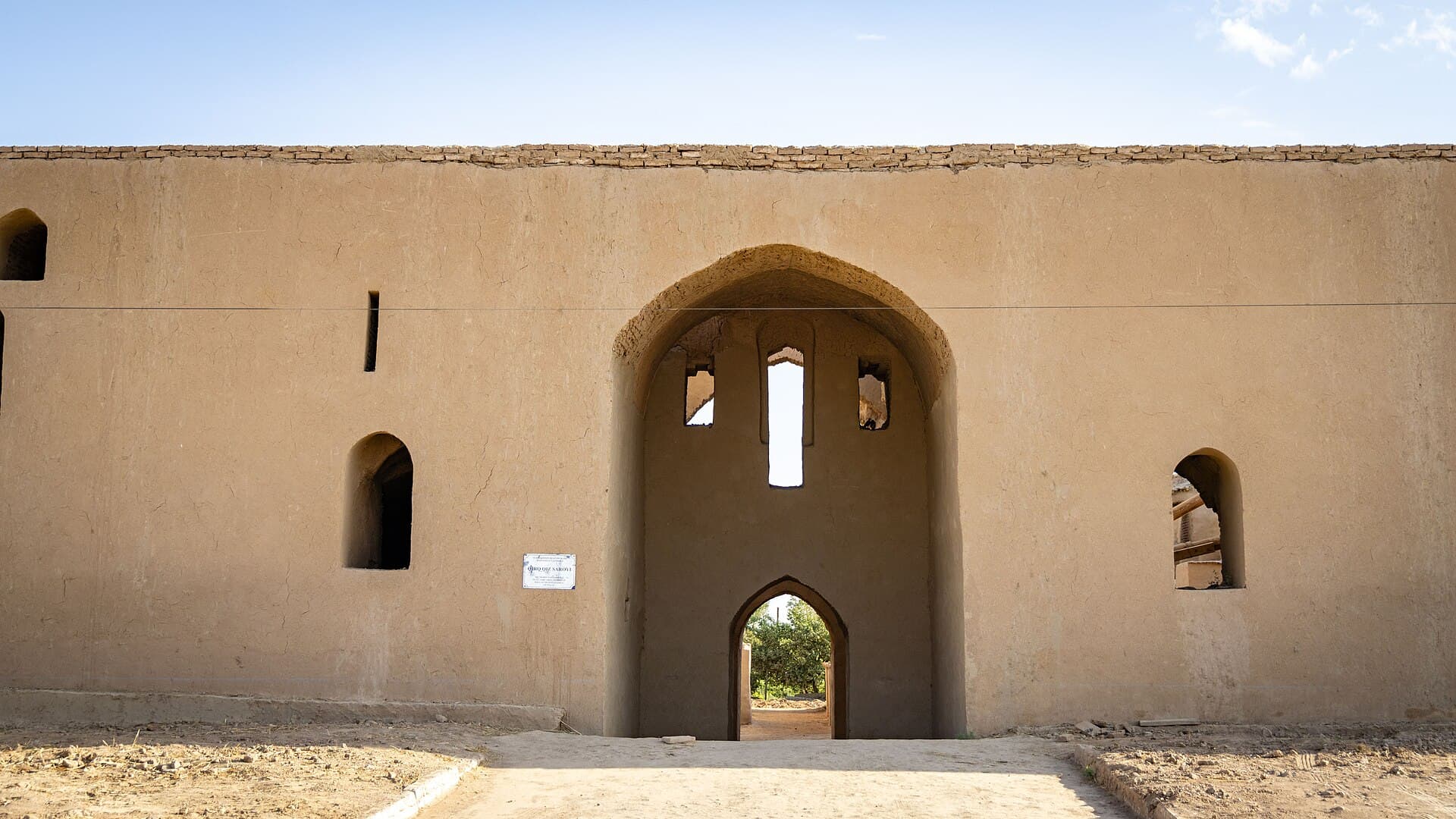
A complex of mausoleums, mosques and khanqahs on the edge of Termez, built up between the 10th and 17th centuries, holding the graves of the Sayyids of Termez, the family that traced its descent to the Prophet Muhammad through Husayn ibn Ali. Its founder is presumed to be Sayyid Hassan al-Amir. Another tradition holds that «Sultan Saodat», the «sultan of the Sayyids», was Sayyid Ali Akbar Termizi, known as Abu Muhammad, who probably died in the late 9th or early 10th century. The oldest buildings are two large square domed mausoleums of the 10th century, joined by a 15th-century iwan. New buildings rose in front of them, and between the 15th and 17th centuries rows of tombs grew along a central passage, turning the complex into a street of domes and portals, a few faced in blue tile, most in bare brick. It is a place of pilgrimage, so keep quiet and dress modestly; ask at the entrance about any fee. It lies east of the city, near the Kirk Kiz fortress.
10th century.
At the end of the passage.
In bare brick.
Eastern outskirts of Termez
The Sayyids of Termez, who traced their descent to the Prophet Muhammad through Husayn ibn Ali; its oldest tombs date from the 10th century.