
The six columns
An intact Corinthian front in a medieval square.
Berthold Werner — Public domain · Rippitippi — Public domain · trolvag — CC BY-SA 3.0 · Gary Todd from Xinzheng, China — CC0
**A complete Roman temple front of six columns, with a Baroque church behind it** — on Assisi's main square. Built in the **1st century BC** as a Roman temple, ⚠ **it was never demolished**: **it was converted into a church** in the 16th century — **so its front survives entire**, **with a Baroque interior built behind it**. ✅ **The result is strange and instructive**: **six Corinthian columns, a stair, a railing and a pediment** — **an intact pagan temple front** in the middle of a medieval town square, ⚠ **and behind the door a gilded 17th-century church interior with no relation to it**. ⚠ **Goethe admired it** in 1786 **and wrote that he went to see it before anything else in Assisi** — ✅ **ignoring the Basilica of Saint Francis entirely**. ✅ **Entry is free and quick.**
An intact Corinthian front in a medieval square.
The column bases below the modern square's surface.
An archaeological site beneath the square, visited for a small fee.
Piazza del Comune, 06081 Assisi, Italy
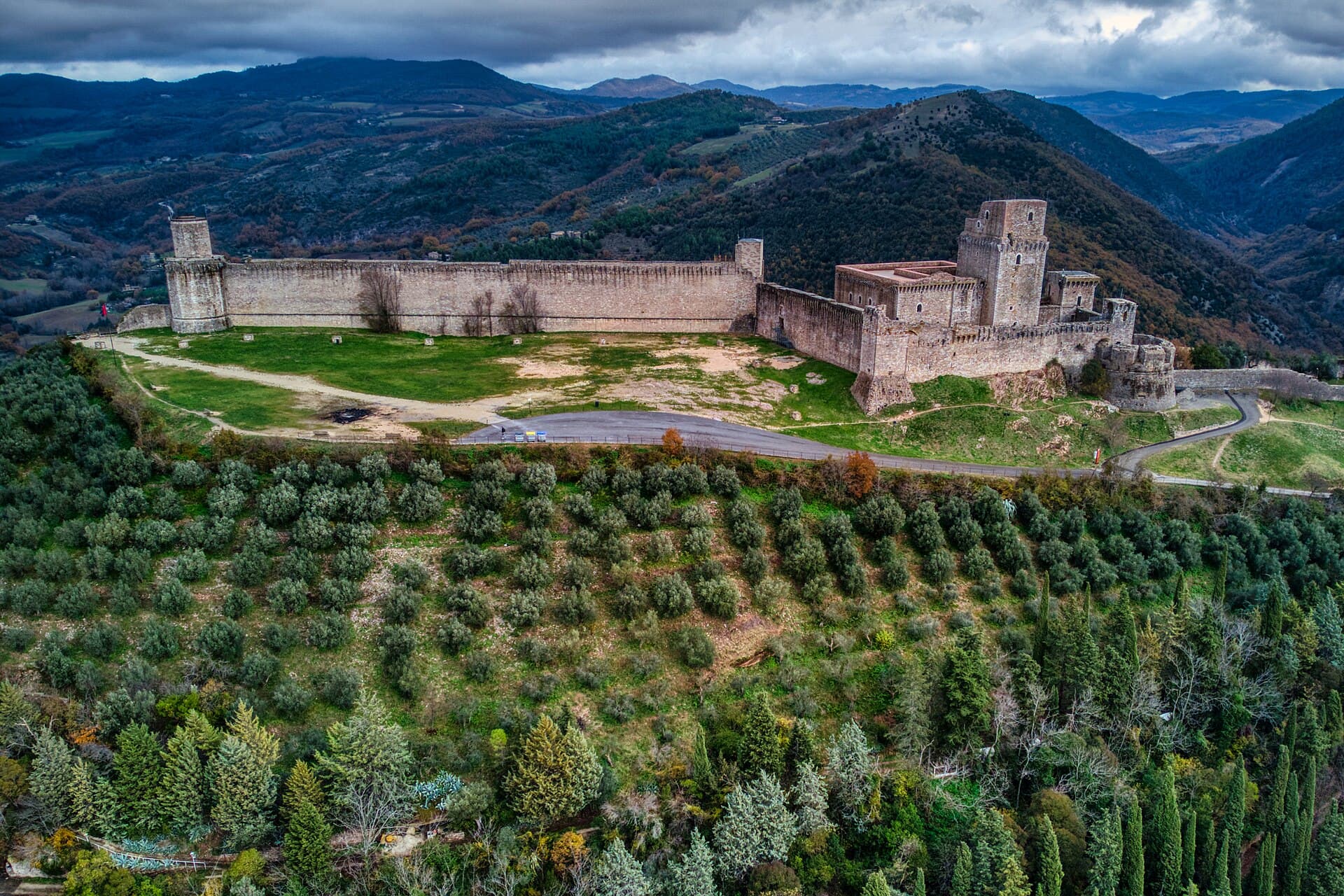 Rocca Maggiore**A fortress on the summit above Assisi — and the view from it is the picture of3 minutes walk4.6
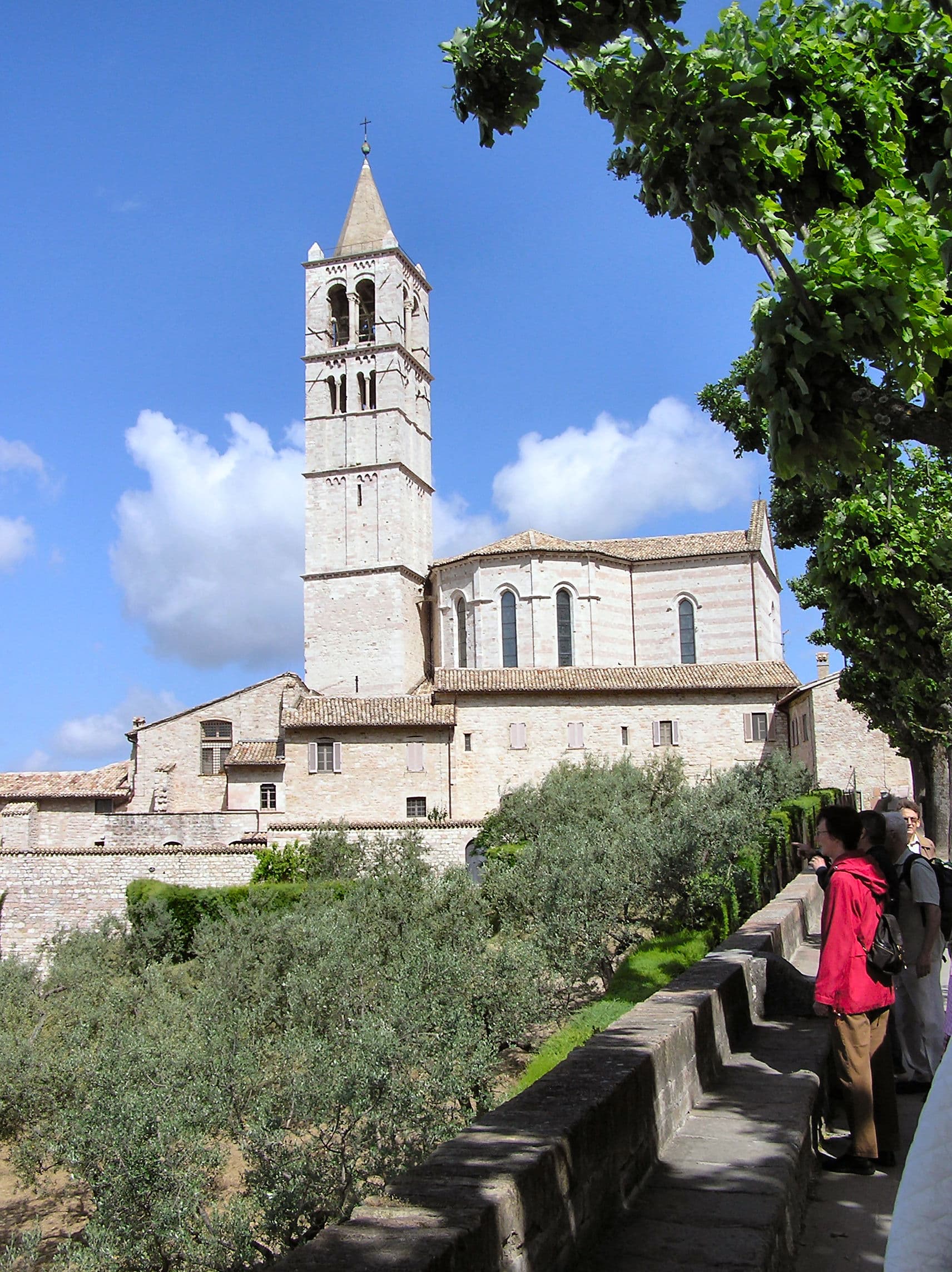 Basilica of Saint Clare**A pink-and-white striped church propped by three enormous flying buttresses — 4 minutes walk4.9
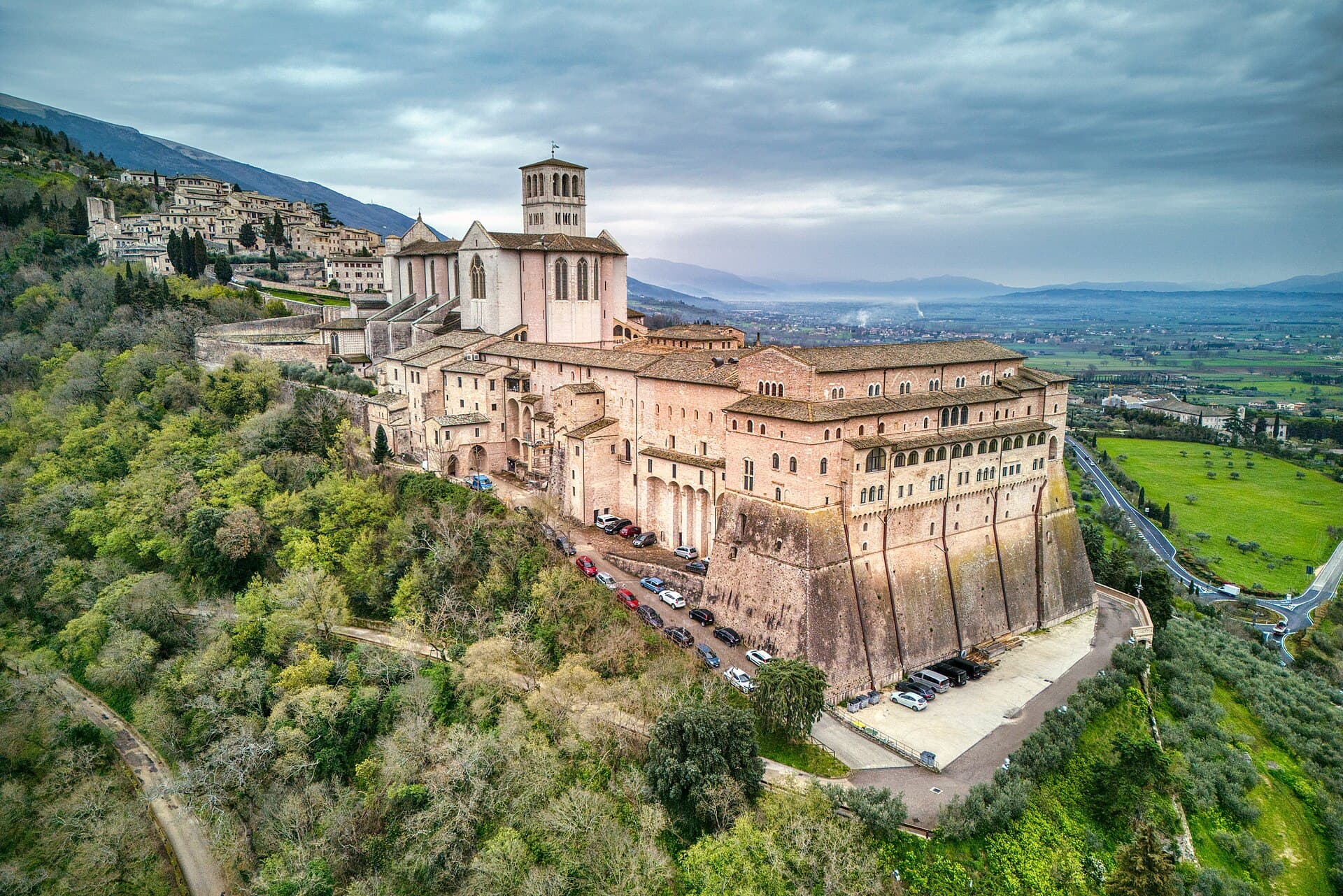 Basilica of Saint Francis**Two churches stacked on one another with a tomb beneath, and twenty-eight Giot10 minutes walk4.8
**Because it became a church — the most successful survival mechanism in Roman architectural history.** ✅ **The general rule**: **pagan temples after Christianity's triumph** met one of three fates: **demolition** (as a doctrinal act), **or conversion into a quarry** with their stone and columns looted for other buildings — ⚠ **which is what happened to most**. ✅ **The third fate — conversion**: **the building reused as a church**. ⚠ **And then it becomes protected**: **nobody demolishes a church**, **its stone is not looted**, **and it is maintained because it is in use**. ✅ **The famous example is the Pantheon in Rome** — **the best-preserved Roman building in the world**, ⚠ **surviving for the single reason that it became a church in 609**. ✅ **And here in Assisi**: **the temple became the church of Santa Maria sopra Minerva** — ⚠ **so the front was kept as it was**, being still handsome, imposing and serviceable, **while the interior was demolished and rebuilt in Baroque** to the taste of the age. ⚠ **So the survival was of the shell, not the building.** ✅ **The lesson is general**: **what finds a new use survives, and what does not becomes a quarry** — which explains the map of antiquities across all Italy.