The Zorn paintings
Sweden's foremost painter in one collection.
Arild Vågen — CC BY-SA 4.0 · Unknown authorUnknown author — Public domain · DimiTalen — CC0 · DimiTalen — Public domain
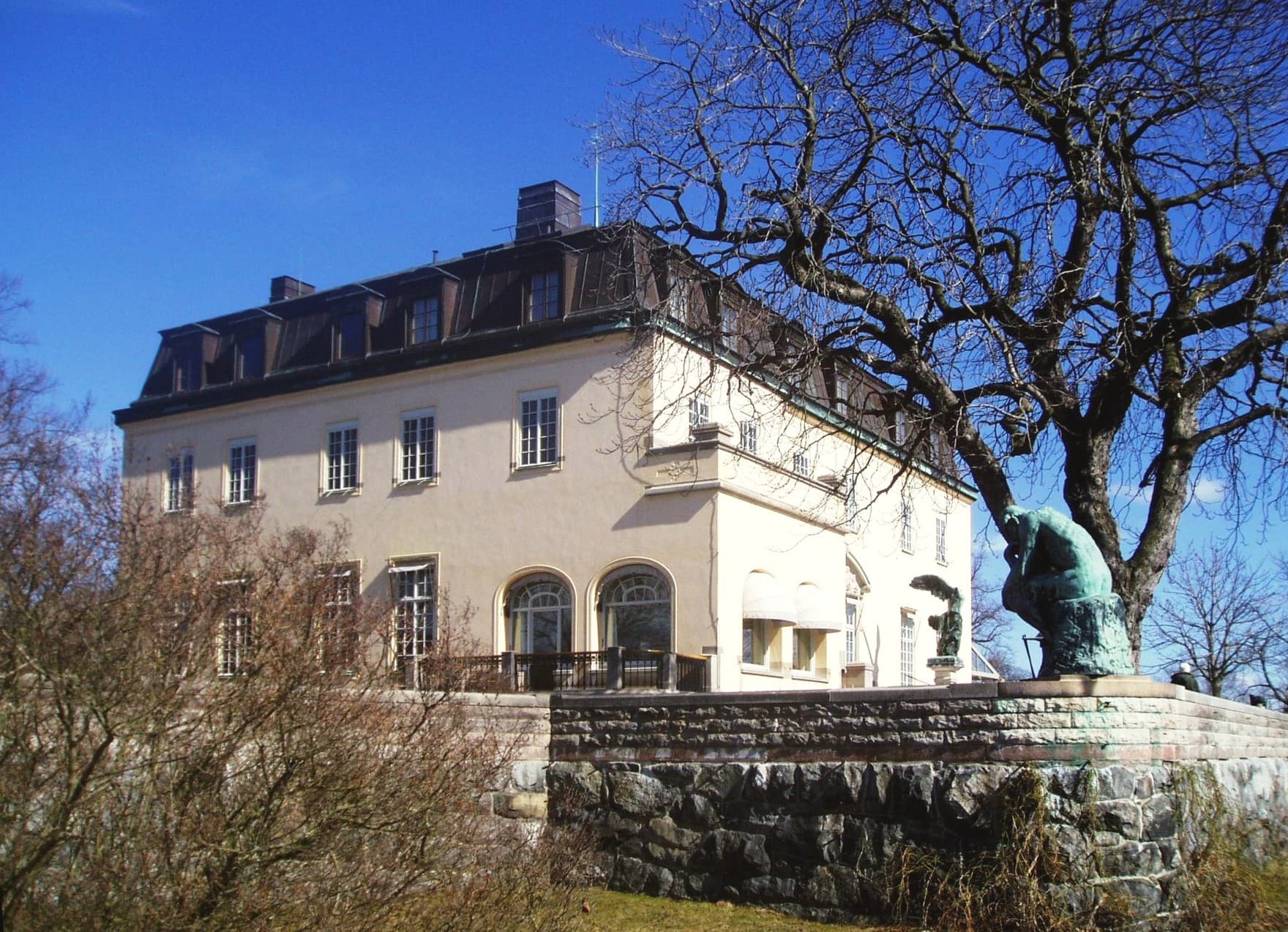
The Thiel Gallery stands at the far tip of Djurgården, and it is the quietest art museum in Stockholm and the most personal — and the least visited, though its collection is of the first rank. The banker **Ernest Thiel** built it between 1904 and 1907 as a house and gallery at once. He was the most important art collector in Sweden of his time and bought directly from living artists he was friends with. He then lost his fortune in the crisis of the 1920s, and the state bought house and collection together in 1924 and opened them as a museum. The collection holds major works by **Anders Zorn**, **Carl Larsson**, **Bruno Liljefors** and **Eugène Jansson**, and a number by **Edvard Munch** — whose friend and patron Thiel was, among them his portrait of Nietzsche. The building is in the Secession manner with a high central hall, set in a garden on the water. **It is relatively far out** at the island's tip, which is why it is quiet.
Sweden's foremost painter in one collection.
Secession style, full height under the roof.
Sjötullsbacken 8, Djurgården, Stockholm
Three you will see in every Swedish museum. **Anders Zorn** (1860-1920) is the best known internationally — portraits, rural scenes and watercolours, and he painted three American presidents. **Carl Larsson** (1853-1919) painted his own house and children in clear colour, in works that became the world's mental image of the Swedish home — his effect on Scandinavian interior design is direct. **Bruno Liljefors** painted wildlife: birds and foxes in northern landscapes. All three are shown here and in the National Museum.