Leaning pagoda
47 m tall.
Caitriana Nicholson from 北京 ~ Beijing, 中国 ~ China — CC BY-SA 2.0 · Jakub Hałun — CC BY-SA 4.0 · otheralex01 — CC BY-SA 4.0 · Gisling — CC BY-SA 3.0 · Rolfmueller — CC BY-SA 3.0 · Sirseanroy — CC BY-SA 4.0 · Another Believer — CC BY-SA 4.0 · stone wu — CC BY-SA 3.0
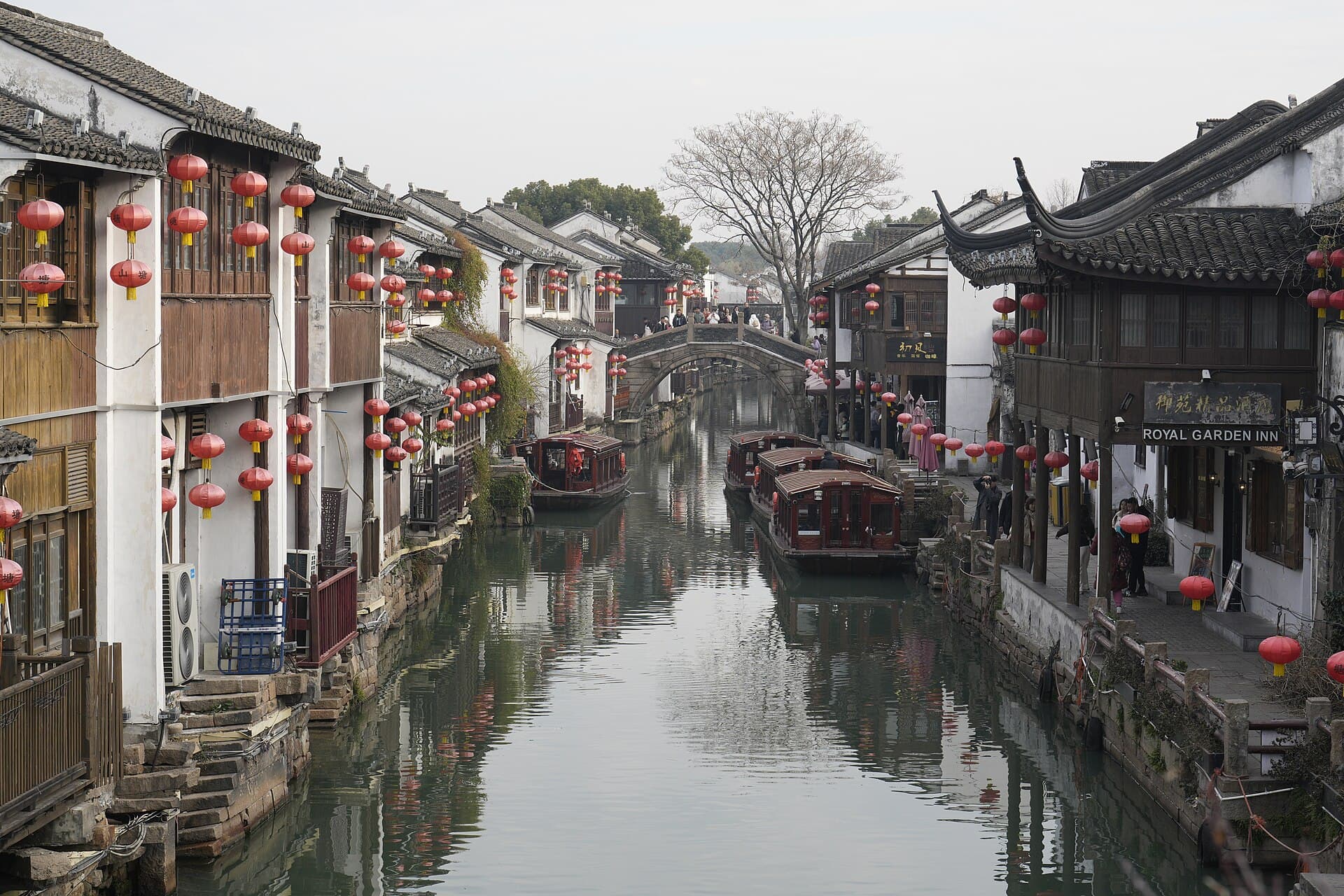
A small green hill northwest of Suzhou, one of the city's best-known sights for more than two thousand years; legend says it is the burial place of King Helü of the ancient state of Wu, and that a white tiger appeared on it after his burial to guard the tomb, hence the name. On its top stands the brick Yunyan Pagoda, begun in 907 and completed in 961, 47 m tall with seven octagonal storeys, which has tilted over time and earned the nickname «the Leaning Tower of China»; it is a symbol of Suzhou. The way up passes rocks and old carved inscriptions, the best known being Sword Pond, a narrow pool between two rock walls wrapped in legends of the buried king's treasures and swords, with gardens, pavilions and ponds around the hill. Tickets are about CNY 70 in season and 60 off-season, per visitor guides. You can arrive along historic Shantang Street by boat or on foot; spring and autumn are the best seasons.
47 m tall.
Between two cliffs.
Guarding the tomb.
Northwest of the old city, Suzhou
Completed in 961, it has slowly tilted over time as the ground beneath it shifted, earning the nickname «the Leaning Tower of China»; tickets are about CNY 70, per visitor guides.