
The Plateresque façade
Sandstone carved to complete density, with no empty ground.
Victoria Rachitzky — CC BY 2.0 · Nicolas Vollmer from Munich [Allemagne] — CC BY 2.0 · S. Hoya — CC BY-SA 2.0 · Joaquim Morelló — Public domain · Matthias Bethke — CC BY-SA 4.0
**The oldest university in the Spanish-speaking world, its façade carved like a piece of silverwork — with a hidden frog everyone hunts for** — in the heart of the old city. It was founded in **1218**, ⚠ **and is the fourth-oldest European university still operating** after Bologna, Oxford and Paris. ✅ **Its façade is among the greatest works of the *Plateresque***: **sandstone carved to complete density** — medallions, heraldry, foliage and creatures — **without a single empty space**. ⚠ **The name comes from *platero*, a silversmith**: **carving so fine it looks like silverwork enlarged**. ⚠ **Somewhere on that façade sits a small frog** on a skull — ✅ **and student tradition holds that whoever finds it unaided will pass their examinations**. ✅ **Inside is the historic Fray Luis lecture hall.**
Sandstone carved to complete density, with no empty ground.
A small frog on a skull — the visitors' and students' game.
A historic lecture room with its original wooden benches.
Patio de Escuelas 1, 37008 Salamanca, Spain
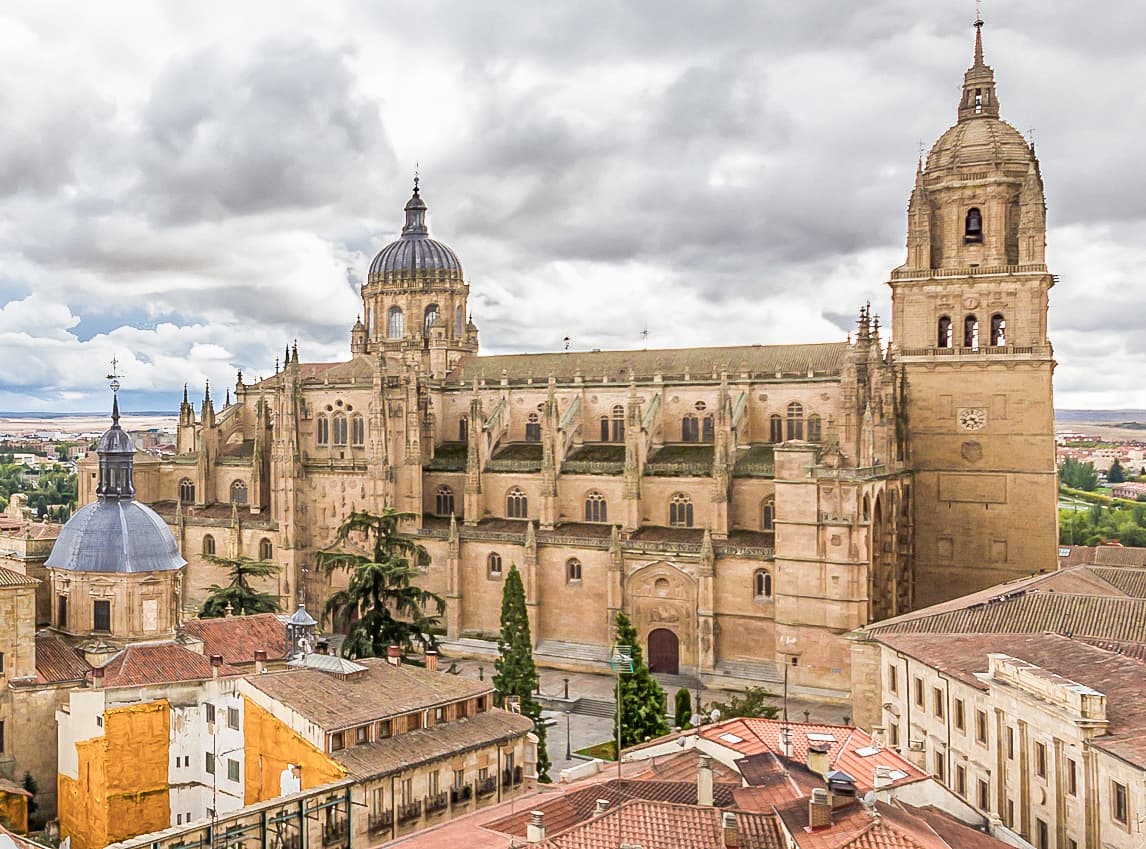 The Two Cathedrals of Salamanca**Two cathedrals joined along a shared wall — one Romanesque of the 12th century1 minute walk4.8
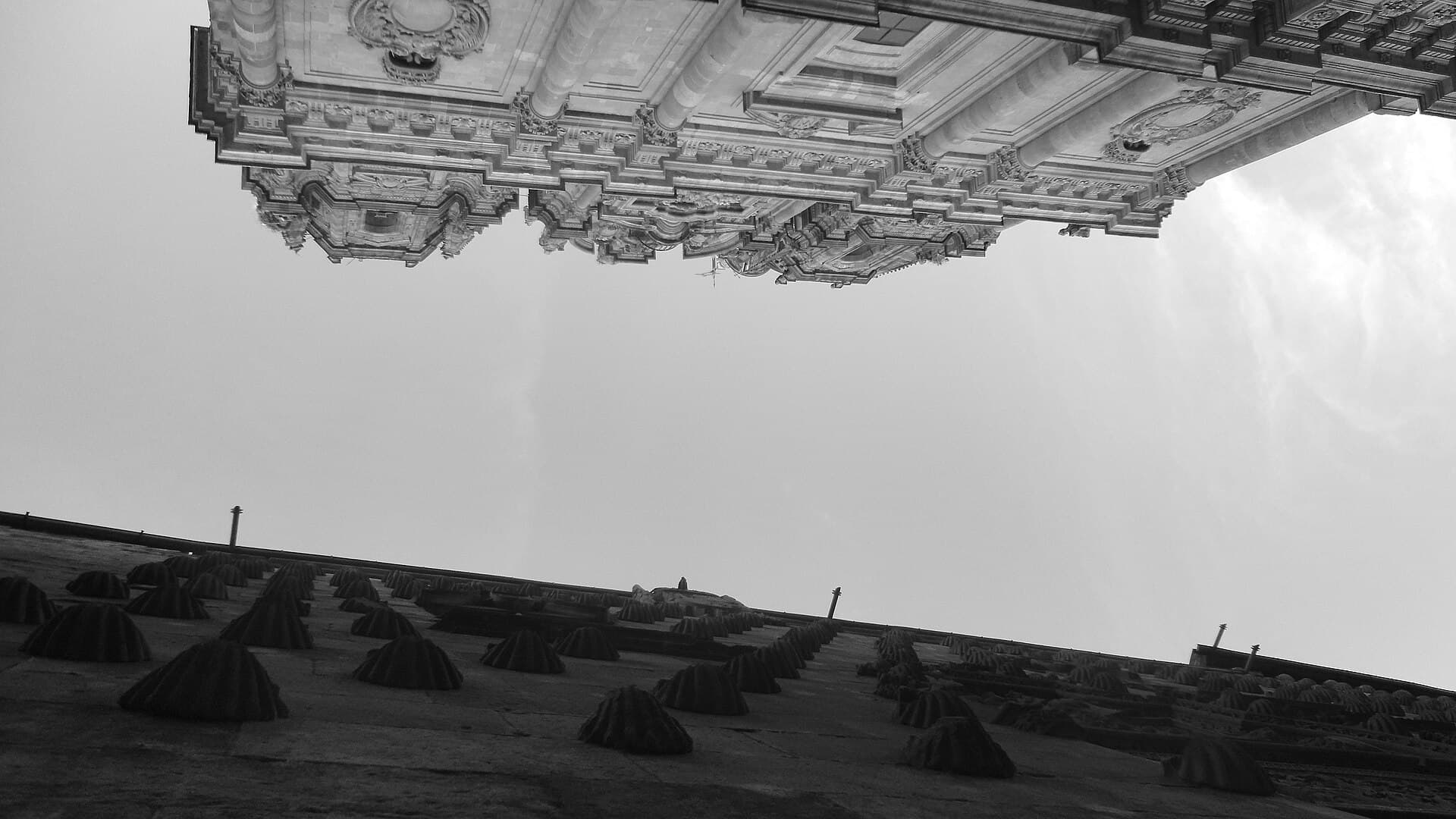 The House of Shells**A 15th-century palace whose front is studded with more than three hundred carv2 minutes walk4.5
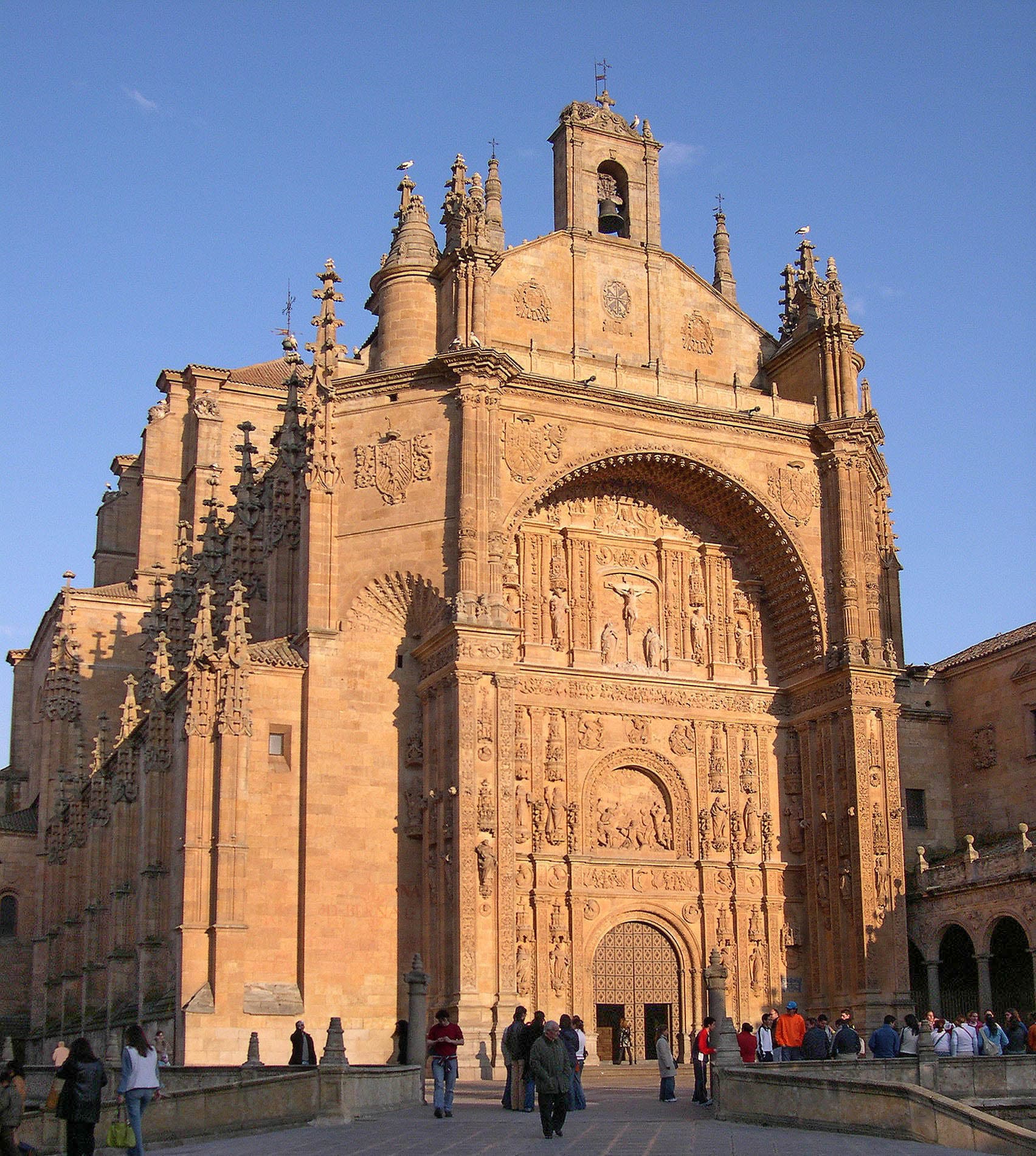 The Convent of San Esteban**A Dominican convent with an immense Plateresque front — and the friars who hou4 minutes walk4.6
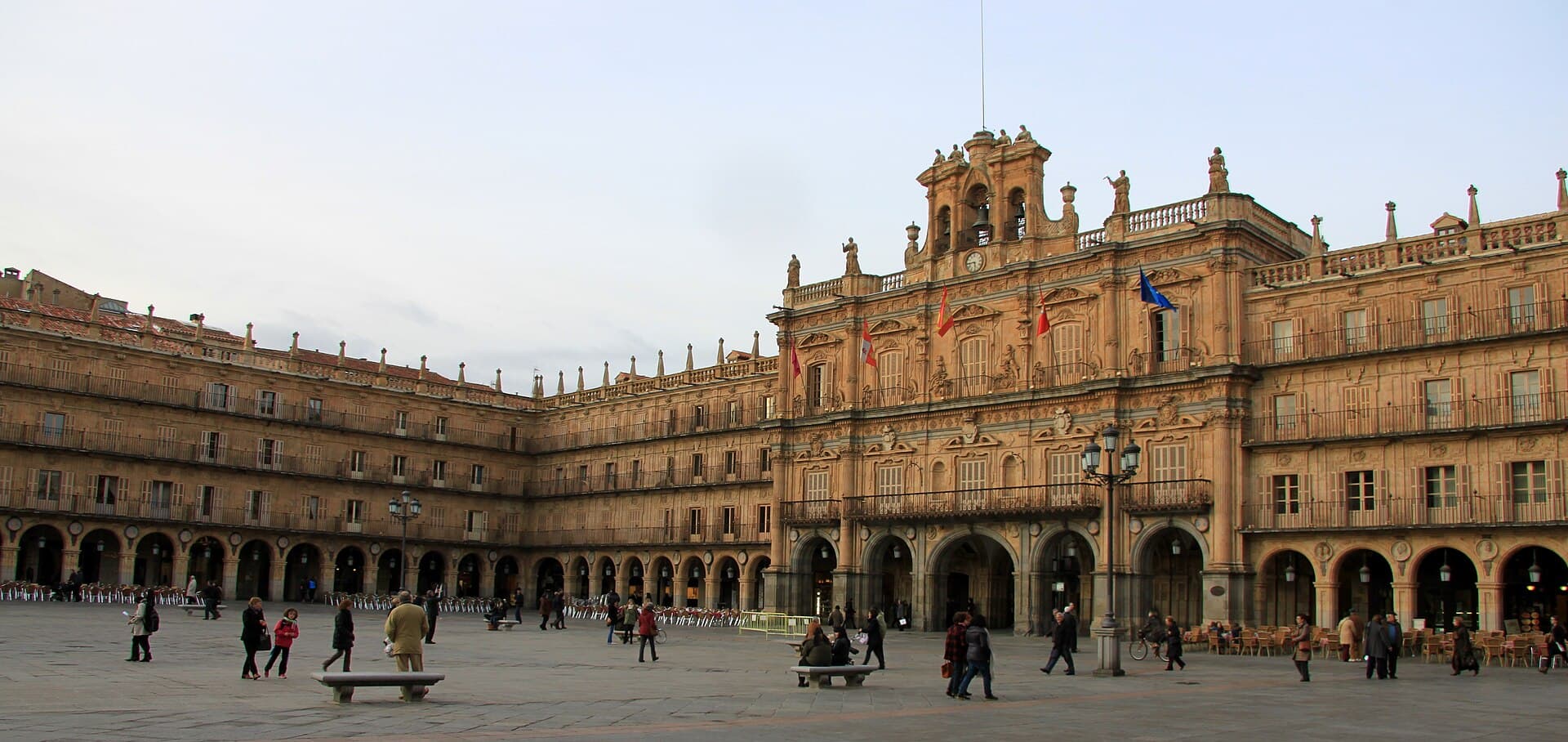 Plaza Mayor of Salamanca**A Baroque square entirely enclosed on four sides, regarded as the finest in Sp6 minutes walk3.5
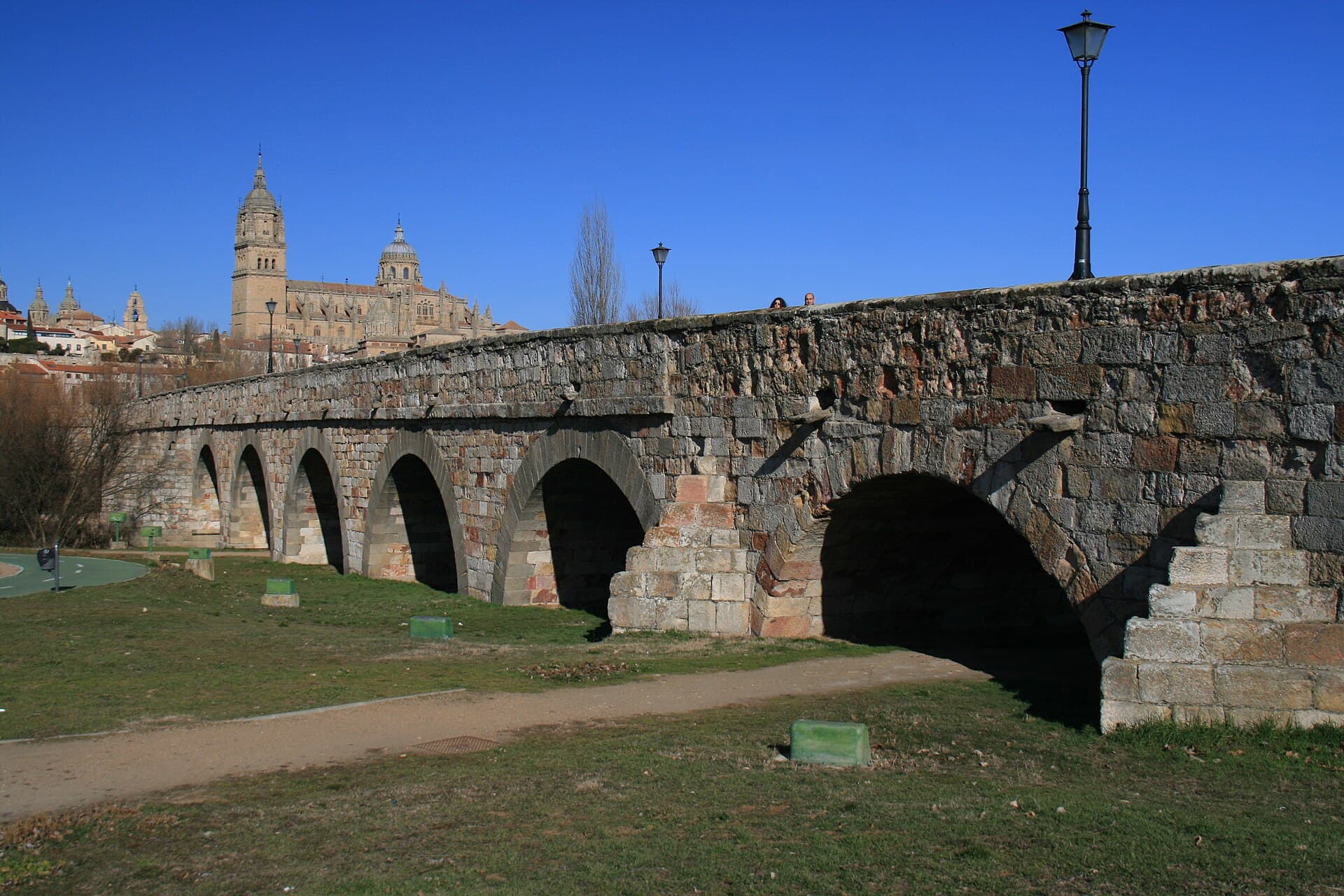 The Roman Bridge**A Roman bridge over the Tormes still walked on — and the best place to see bot6 minutes walk4.6
**Extremely dense Spanish Renaissance ornament on a still-Gothic structure — and the name comes from silversmithing.** ✅ **The name**: from ***platero***, **a silversmith** — **because the stone carving is so fine and interlaced that it resembles silverwork enlarged**. ✅ **What marks it**: **(1) density** — **the surface entirely covered** in medallions, foliage, fabulous creatures and heraldry; **no quiet ground**. **(2) Concentration** — ⚠ **the ornament gathers at particular points**: **the façade, the doorway, a window frame, a staircase** — **while the rest of the wall stays completely bare**; **and that contrast is its signature**. **(3) An Italian Renaissance vocabulary** — classical forms, medallions, heads — **but applied to a Gothic-planned building**. ✅ **The period**: **the late 15th and first half of the 16th century** — **between Isabelline Gothic before it and sober Renaissance after**. ✅ **Examples**: **the University of Salamanca façade** (the most famous), **the Colegio de San Esteban** here, **and façades in Alcalá and Valladolid**. ⚠ **The difference from Isabelline**: Isabelline **ornament is Gothic and its symbols royal**, **Plateresque vocabulary is Renaissance** — **the density is common to both**.
**Because it is where the rights of the peoples of the Americas were first argued — and modern international law grew from it.** ✅ **Its standing**: in the **15th and 16th centuries** Salamanca was **among the three or four leading universities in Europe**, ⚠ **and the great questions the court could not settle were referred to it**. ✅ **The famous case**: **after the Spanish reached the Americas**, **an enormous practical question arose**: **do the indigenous inhabitants have rights, and is war against them lawful?** ⚠ **The prevailing answer in practice was enslavement.** ✅ **What the «School of Salamanca» did**: the theologian **Francisco de Vitoria** argued in his lectures (around 1539) that **the peoples of the Americas were free human beings with sovereignty over their lands**, **that discovering an inhabited land conferred no title to it**, **and that difference of religion did not by itself justify war**. ⚠ **Radical ideas for their time, and directed against the crown's own interest.** ✅ **The consequence**: **these lectures are counted among the foundations of modern international law**, ✅ **and influenced the New Laws of the Indies of 1542**, which restricted enslavement. ⚠ **Enforcement was very incomplete** — but the principle was stated, and in these rooms.