The dome show
Durrës history on a brick dome.
Fluisa Ismailati — CC BY-SA 4.0 · Musli Berisha — CC BY-SA 4.0 · Avi1111 dr. avishai teicher — CC BY-SA 4.0 · Musli Berisha — CC BY-SA 4.0 · GentiBehramaj — CC BY-SA 4.0
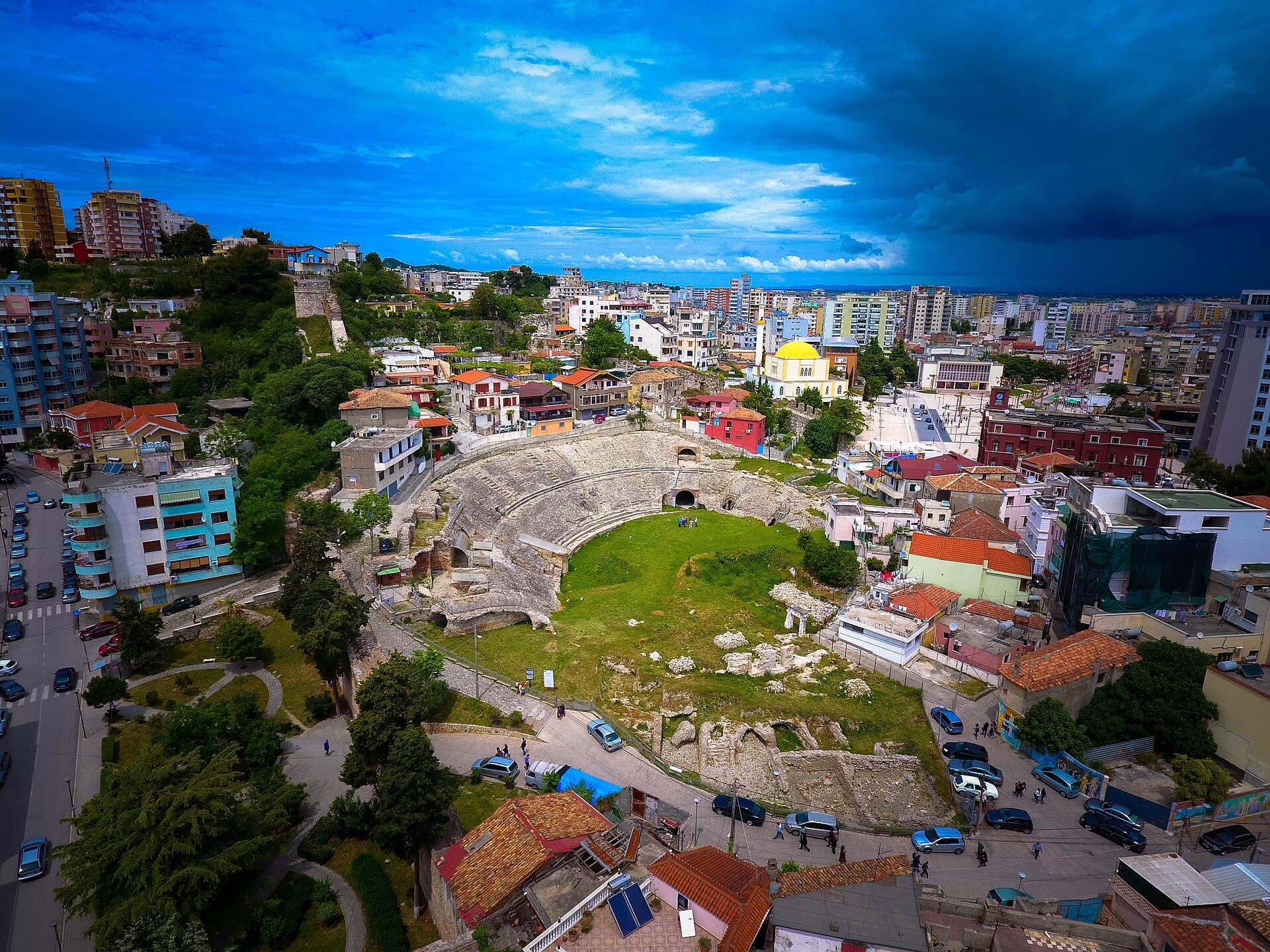
A low, round artillery tower at the southern corner of the old city walls of Durrës, near the port entrance, built to carry cannon against attack from the sea. It is about 16 metres across and 9 metres high, with five embrasures, a domed brick chamber inside and battlements around the roof. Damaged in the November 2019 earthquake and restored in 2022–2023 with EU funding, it now houses Albania's first heritage interpretation centre. It is usually dated to the 15th century, when Venice held Durrës (1392–1501), and stands on the remains of a tower in the Byzantine walls of Emperor Anastasius I. The Venetian label is disputed, though: in 2020 archaeologist Eduard Shehi, drawing on rescue excavations around it in 2017, argued that the Ottomans built it after Spanish galleys sacked the city in 1606. For years it was a café, with tables on its roof. Inside, the city's story is projected onto the brick dome, and virtual-reality headsets and audio guides take you back to ancient Durrës. A narrow, steep stair climbs to the roof terrace, where digital periscopes look out over the port, the sea and the old walls. The restoration stripped out the café's ceramic tiles and concrete and repaired cracked masonry. It makes an easy start or end to a walk around the old centre. The Fatih Mosque, under 200 metres away, and the Roman amphitheatre, about 300 metres, lie to the north-west, and a surviving stretch of Byzantine wall with several towers runs the same way. Allow 30 to 60 minutes.
Durrës history on a brick dome.
Headsets that take you to ancient Durrës.
Digital periscopes over port and sea.
Near the port entrance, central Durrës
In summer 2025, from 5 May to 31 October, it opened daily from 9:00 to 14:00 and again from 17:00 to 21:00, like the amphitheatre. Hours change from season to season and year to year, so check locally before you go.
In August 1606, 26 Spanish galleys from Brindisi landed some 3,600 soldiers at night; they took the castle, carried off hundreds of captives and 40 cannons, and blew up the powder stores as they left. Archaeologist Eduard Shehi links the Ottoman rebuilding of the sea-facing defences, round tower included, to fear of another such raid.