The 13 January memorial
Crosses naming those killed before the tanks.
Darius Smalskys — CC BY-SA 3.0 · Terminator216 — CC BY 4.0 · Jerzy Strzelecki — CC BY-SA 3.0 · Nenea hartia — CC BY-SA 4.0
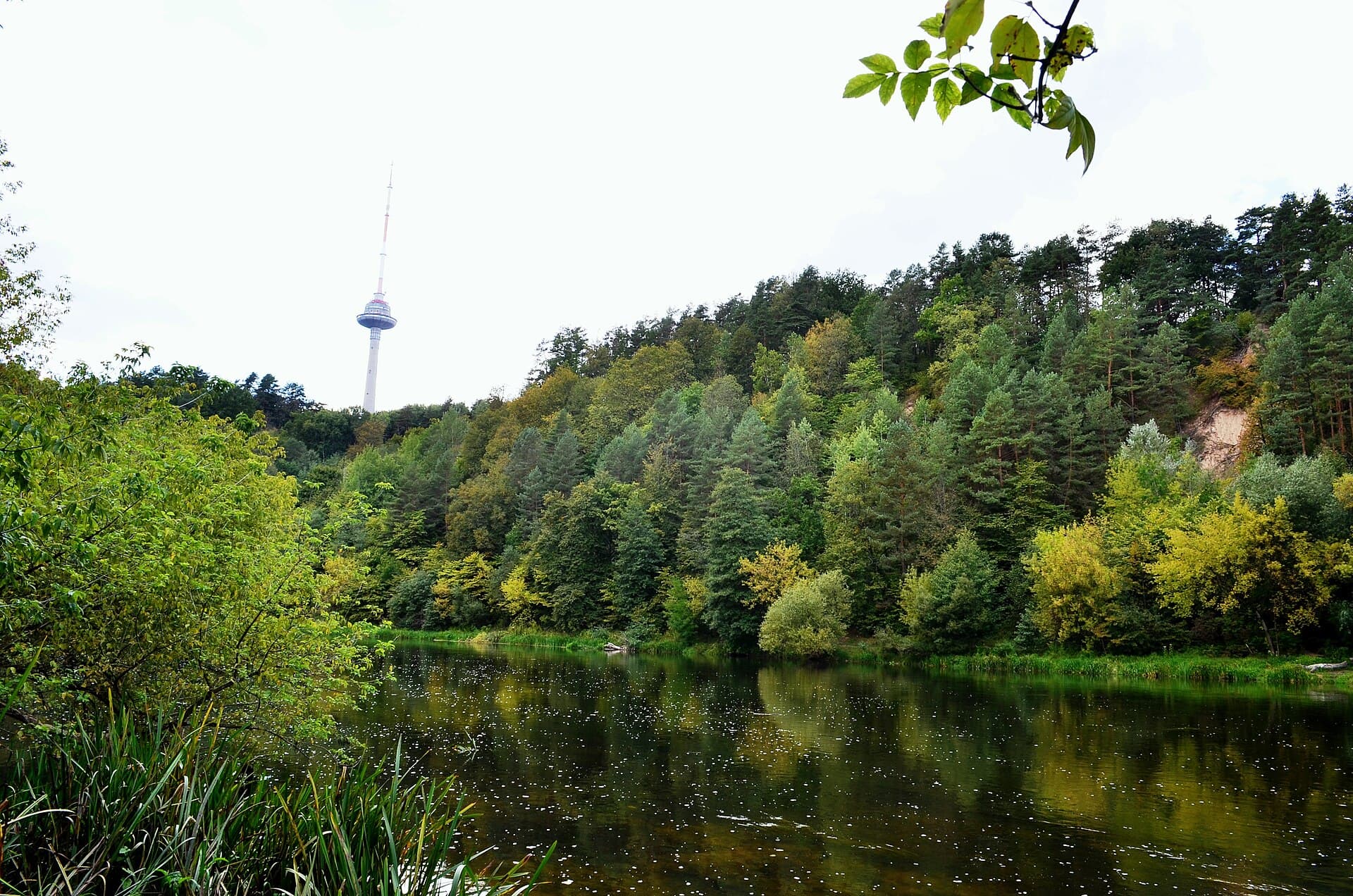
Lithuania's tallest structure and the site of a night that changed its history: the tower (1980) rises 326 metres in the Karoliniškės district, its revolving platform at 165 metres completing a turn in about fifty minutes with a café aboard — and the view takes in all Vilnius and the forests around it. On the night of 13 January 1991 the Soviet army surrounded the tower with tanks to silence Lithuanian broadcasting after the declaration of independence, and thousands of unarmed civilians stood before it — fourteen people were killed, some crushed by tanks, and the images went out to the world, collapsing Moscow's legitimacy in the Baltics. Crosses and memorials around the tower carry their names today, and the exhibition below documents that night. So the visit has two layers: a tourist view above and a site of national memory below. At Christmas the tower is lit as the world's largest Christmas tree, with lights strung from its summit.
Crosses naming those killed before the tanks.
The tower lit as the world's largest.
Sausio 13-osios g. 10, Vilnius
After Lithuania declared independence from the Soviet Union in March 1990, Moscow sent troops to seize the tower and the radio building; unarmed civilians faced them with their bare hands, fourteen were killed and hundreds injured — and the event hastened the Soviet Union's own collapse that same year.