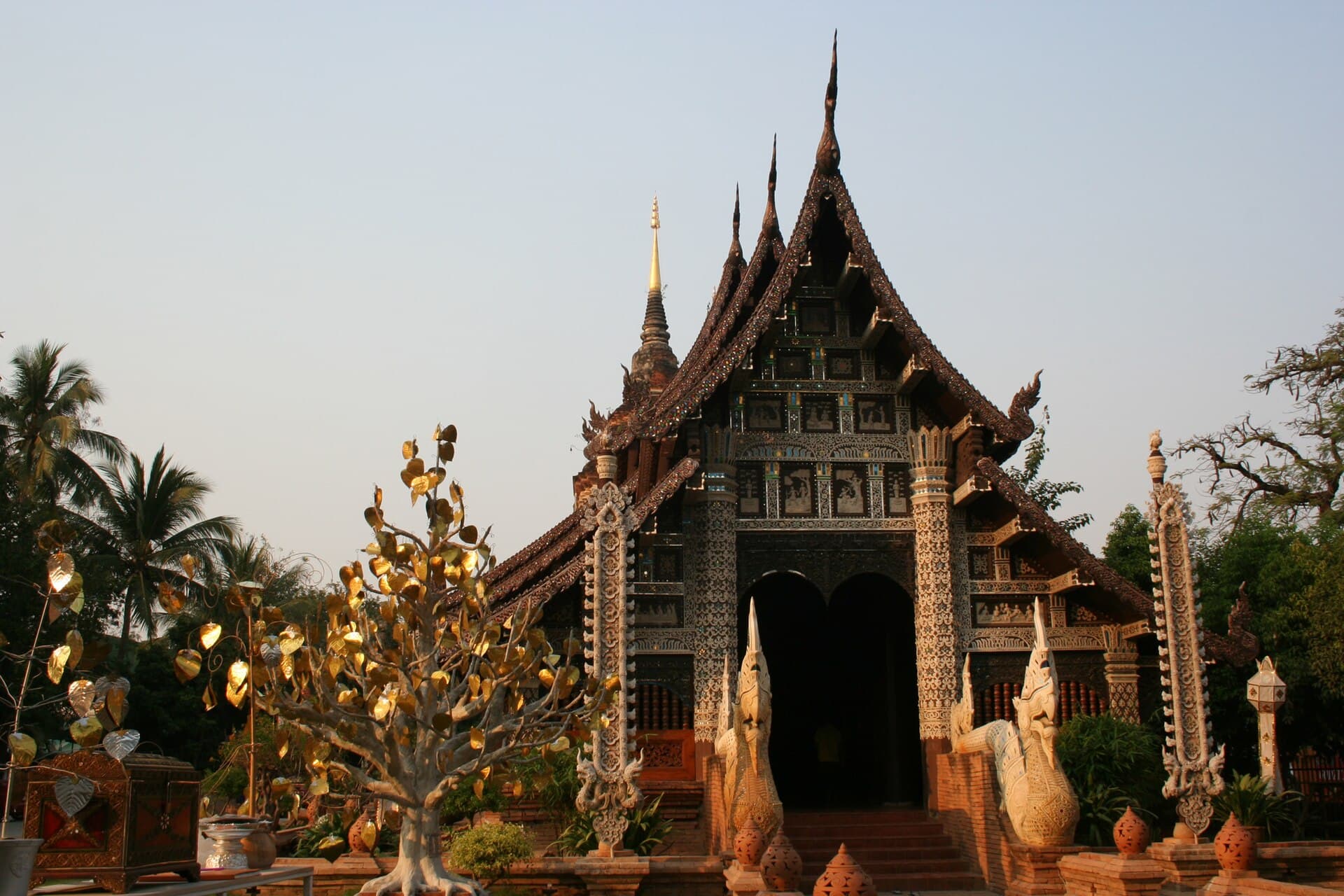
Seven spires
Modelled on Bodh Gaya.
กสิณธร ราชโอรส — CC BY-SA 4.0 · กสิณธร ราชโอรส — CC BY-SA 4.0 · กสิณธร ราชโอรส — CC BY-SA 4.0 · กสิณธร ราชโอรส — CC BY-SA 4.0 · กสิณธร ราชโอรส — CC BY-SA 4.0
A quiet temple north-west of the old city, founded by the Lanna king Tilokarat in 1455, whose name means Temple of the Seven Spires, after its square main hall crowned by seven small towers, built on the model of the Mahabodhi temple at Bodh Gaya in India, where the Buddha attained enlightenment. Its finest feature is the stucco on the hall's outer walls: rows of seated and standing celestial beings with delicate features, many still clear after more than five centuries, among the best surviving Lanna art. In 1477 the temple hosted the Eighth World Buddhist Council to revise the Buddhist scriptures, a major event in the history of Buddhism in South-East Asia. Entry is free and the grounds are shaded by big trees, with older stupas and a modern prayer hall. It is far less crowded than the old-city temples, so wander at ease. Modest dress is expected: shoulders and knees covered. The best months are November to February; March and April bring the smoke of agricultural burning over the city. It sits on the ring road near the Chiang Mai National Museum, so the two make a half day.
Modelled on Bodh Gaya.
Fifteenth-century celestials.
The Eighth World Buddhist Council.
Superhighway, north-west of the old city, Chiang Mai
Its seven-spired hall and old stucco reliefs, and its calm: it sees far fewer visitors.