The whisper of love
Nan's most famous mural.
กสิณธร ราชโอรส — CC BY-SA 4.0 · Manoonp — CC BY-SA 4.0 · Takeaway — CC BY-SA 3.0 · Manoonp — CC BY-SA 4.0 · Manoonp — CC BY-SA 4.0
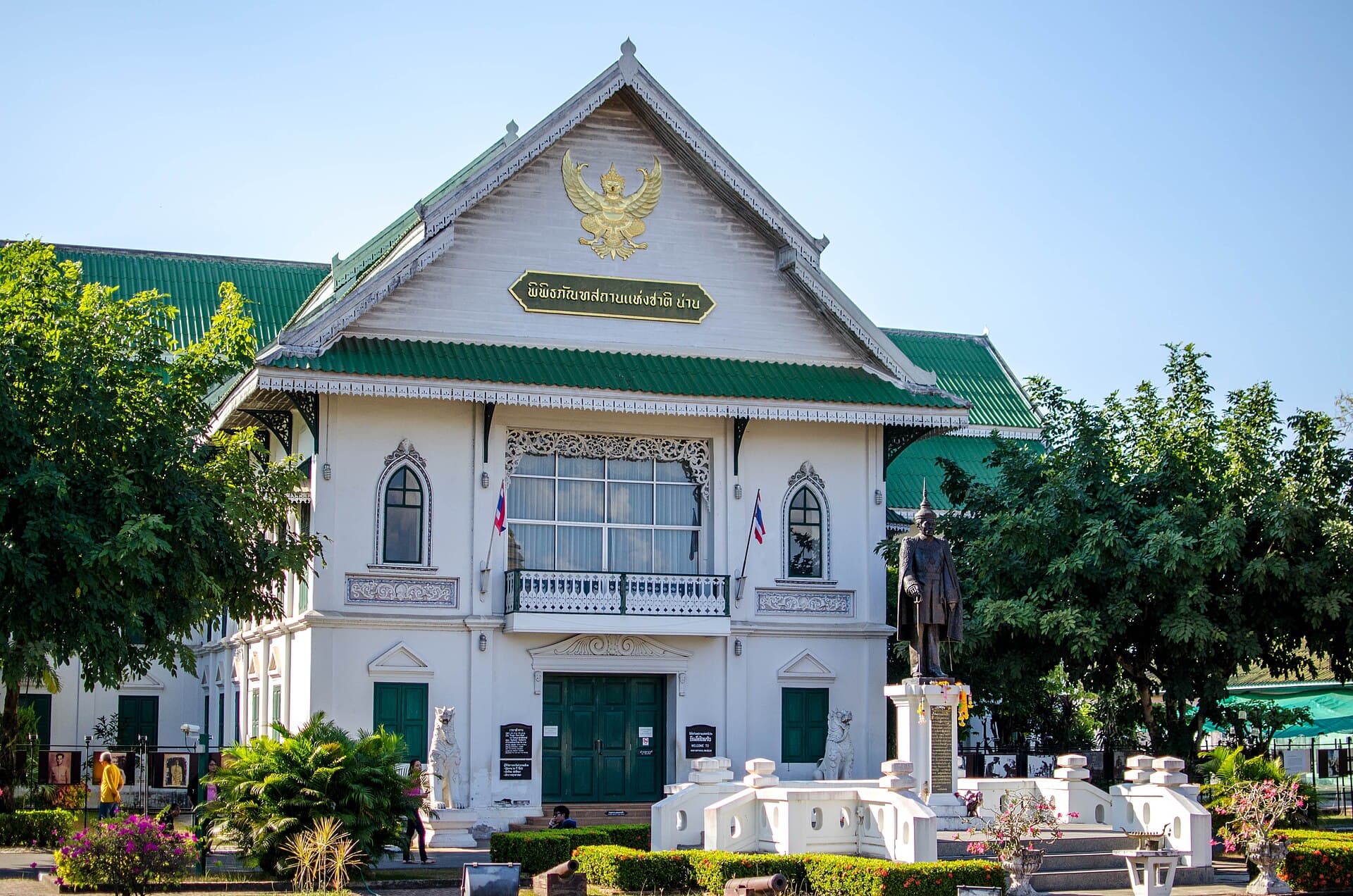
The symbol of Nan in northern Thailand and its best-known temple. Built in the late sixteenth century and restored in the nineteenth, it has a unique cross-shaped hall borne on the backs of two giant mythical serpents whose heads and tails stretch along the entrance steps. Inside, four Buddha images sit back to back, each facing one of the four doors. Its greatest treasure is the murals painted in the late nineteenth century by Thit Buaphan, a Tai Lue artist, showing Buddhist tales and Nan life of the time, with people's clothes, tattoos and markets, even European soldiers and ships. The most famous scene, the whisper of love, shows a man whispering into a woman's ear and has become an emblem of Nan, printed on cards and shirts everywhere. Entry is free and donations are welcome. Modest dress is expected: shoulders and knees covered, and shoes off inside the halls. Photography without flash is allowed inside the hall. In front of the temple a small weekend food market is held in the evenings in the cool season. It stands opposite the Nan National Museum, so the two make two hours. Nan is a small, calm town an hour's flight from Bangkok, far from the tourist crowds.
Nan's most famous mural.
Four doors, four Buddhas.
Nan life in the 1800s.
Phakong Road, centre of old Nan town, Nan province
A late nineteenth-century scene of a man whispering in a woman's ear, now an emblem of Nan.