The soaring monument
25 metres on the knoll, seen from the sea.
Osmar Valdebenito from Santiago, Chile — CC BY-SA 2.0 · Virtual-Pano — CC BY-SA 4.0 · Kancelaria Sejmu — CC BY 2.0 · Kancelaria Sejmu — CC BY 2.0
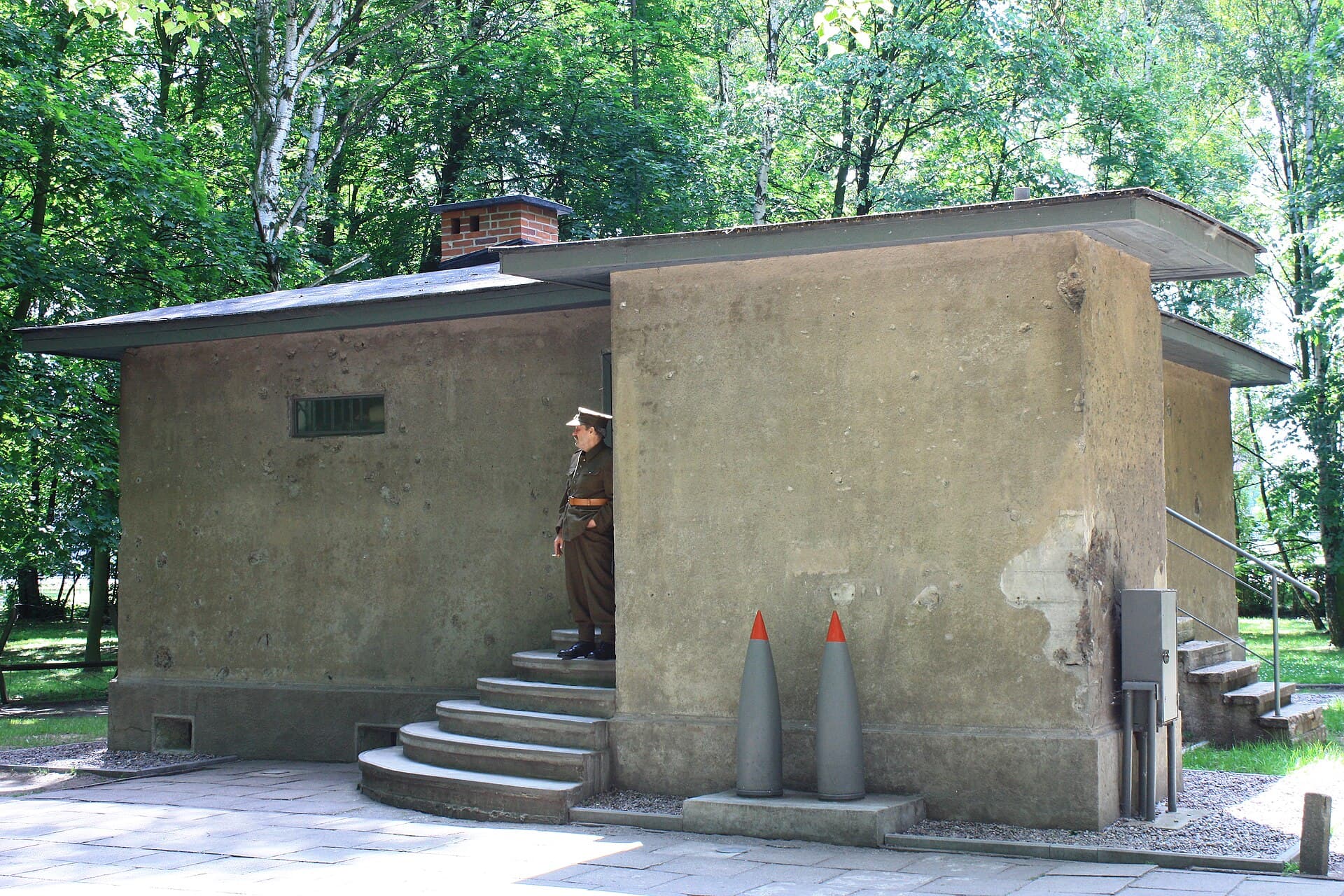
Westerplatte is the dawn of September the first: the peninsula at the harbour mouth where the battleship Schleswig-Holstein fired the Second World War's first shells (4:47 a.m., 1939) at the Polish transit depot — whose garrison of two hundred held seven full days against thousands by land, sea and air, until Westerplatte fights on became the national dignity's bulletin. The site today is an open memorial park: the soaring stone monument (25m) on its knoll seen from the sea, the shelled barracks ruins as left, Guardhouse No. 5, and route boards telling the seven days step by step — the walk itself quiet forest and sea, fitting the meaning. Arrival is half the experience: the Motława pirate galleon through the working port (the family favourite) or bus 106 — and pair it with the WWII Museum as one completed memory day.
25 metres on the knoll, seen from the sea.
Shelled as left, 1939.
Majora Sucharskiego, 80-541 Gdansk
The galleon is the experience: a river hour through the working port, its cranes and giant ships — a free lesson in Gdansk's sea geography with the ticket — but seasonal in timetable. Bus 106 is year-round practical at half an hour. The ideal set: galleon out, bus back — reversed for the budget-keeper.