The Taykazan
Cast in 1399.
Yuriy75 — CC BY-SA 3.0 · Davide Mauro — CC BY-SA 4.0 · t_y_l — CC BY-SA 2.0 · Xhancock at English Wikipedia — Public domain · Davide Mauro — CC BY-SA 4.0 · Davide Mauro — CC BY-SA 4.0 · Vyacheslav Kirillin — CC BY-SA 4.0 · Vyacheslav Kirillin — CC BY-SA 4.0
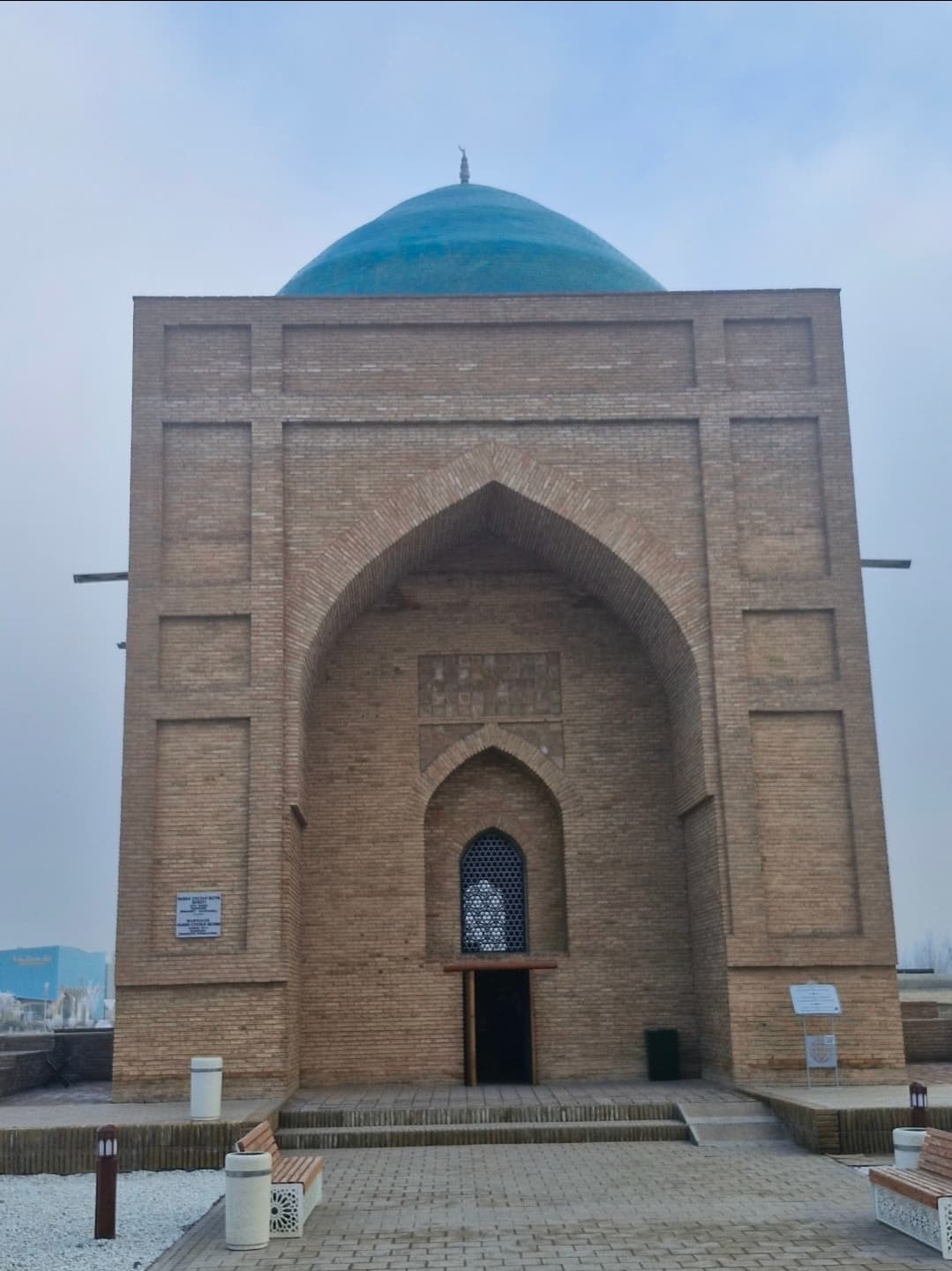
Kazakhstan's greatest monument and its first UNESCO World Heritage Site, inscribed in 2003. Timur ordered it in 1389 over the grave of the Turkic poet and Sufi Khoja Ahmed Yasawi (1093-1166), replacing a smaller 12th-century tomb. Work stopped when Timur died in 1405, so it was never finished, yet it is one of the best-preserved Timurid buildings. It marks the birth of the Timurid style: builders from Shiraz and Isfahan tried out new solutions for domes, vaults and glazed-tile decoration here, which then spread to Samarkand and beyond. You enter through a towering portal whose facing was never completed into the Kazandyk hall, under the largest surviving brick dome in Central Asia, 18.2 m across. In the middle of the hall stands the famous bronze cauldron, the Taykazan, cast on 25 June 1399 on Timur's orders from seven metals; it weighs two tonnes, holds 3,000 litres and carries Arabic inscriptions. It was taken to the Hermitage in 1935 and returned only in 1989. Yasawi's tomb lies at the far end under a double dome clad in green hexagonal tiles, and the building has more than 35 rooms, including a mosque and a library. Tickets for foreigners are about 500 tenge, per visitor guides. It is a shrine visited by pilgrims from across Central Asia, so keep quiet and dress modestly; women cover their hair.
Cast in 1399.
Left unfinished.
Over the tomb.
Northeast Turkistan, inside the Azret Sultan reserve
A bronze cauldron cast in 1399 on Timur's orders from seven metals, weighing two tonnes and holding 3,000 litres; it came back from the Hermitage in 1989.