
The muqarnas vaults
Stacked geometric forms.
عدنان السطاي — CC BY-SA 4.0 · Hekmat Al-Ayashi — CC BY-SA 4.0 · Zahraa raid — CC BY-SA 4.0 · طارق العساف — CC BY-SA 4.0 · Mohammed Harith Khalil — CC BY-SA 4.0
The Abbasid Palace is a late Abbasid brick complex near the east bank of the Tigris in Baghdad. It is known for its arches and muqarnas vaults, among the finest ornament surviving from that era in the city. Together with the Mustansiriya Madrasa, it is part of the little that remains of Abbasid Baghdad. It is usually dated to the late 12th or early 13th century. Scholars disagree about what it was, with some seeing a palace of Caliph al-Nasir and others the Sharabiyya Madrasa. It later fell into ruin, and large parts were rebuilt during the 20th century, so not every detail you see is original. You enter through a fortified gate into a courtyard ringed by two levels of arches, then move between iwans and long brick corridors. The best views are overhead, where muqarnas stack up in precise geometric forms, picked out by light from the courtyard. Take your time and look up. The palace is about 500 m in a straight line north of Al-Mutanabbi Street, and an easy walk through the old quarter. We found no confirmed hours, and the halls may be used for cultural events, so ask at the gate. The UK Foreign Office currently advises against all but essential travel to this area, so check official guidance before planning.
Stacked geometric forms.
Two levels of arches.
Long, in soft light.
Al-Maidan area, near the Tigris, Rusafa side, Baghdad, Iraq
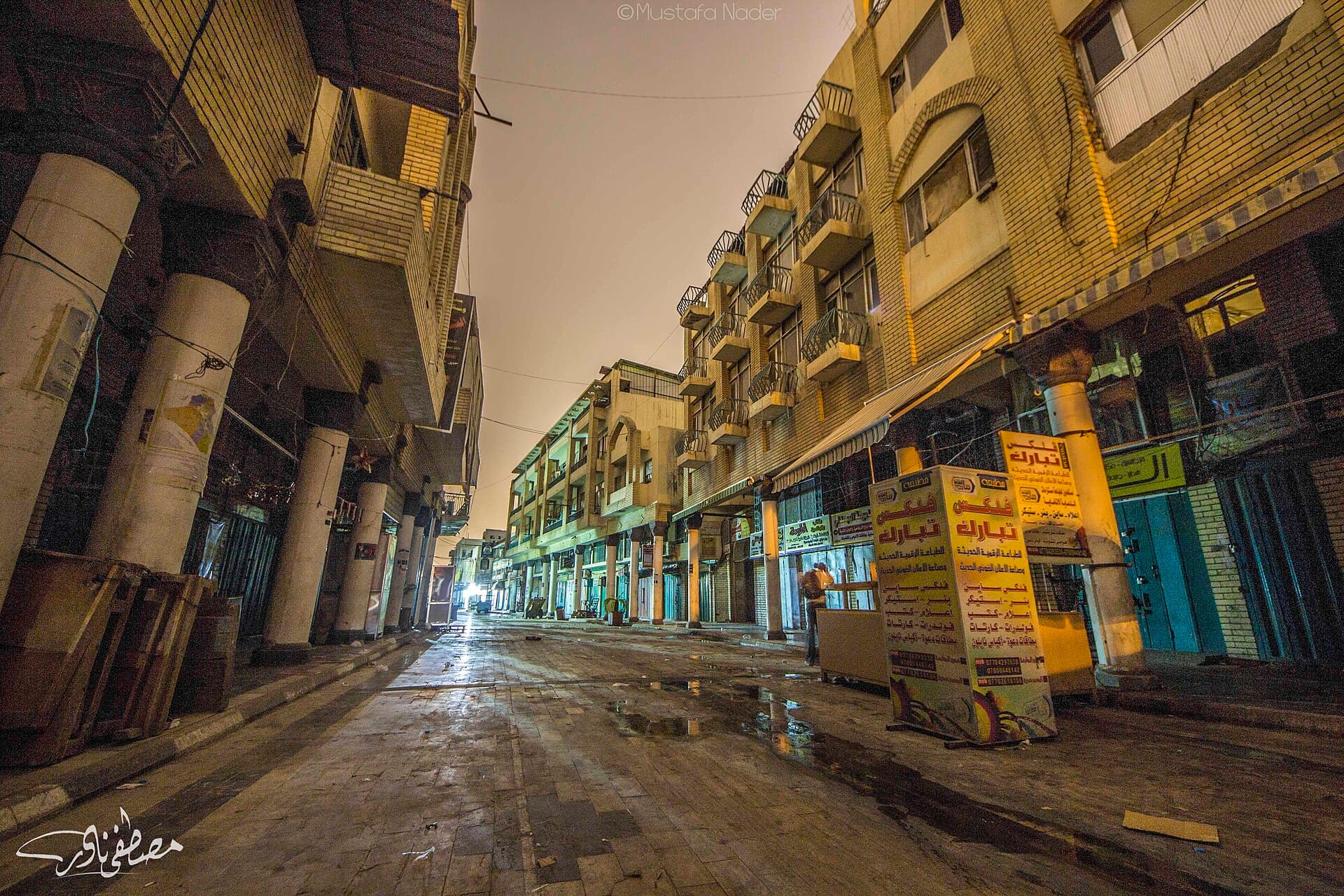 Al-Mutanabbi StreetAl-Mutanabbi Street is a narrow pedestrian street at the heart of old Baghdad ne7 minutes walk
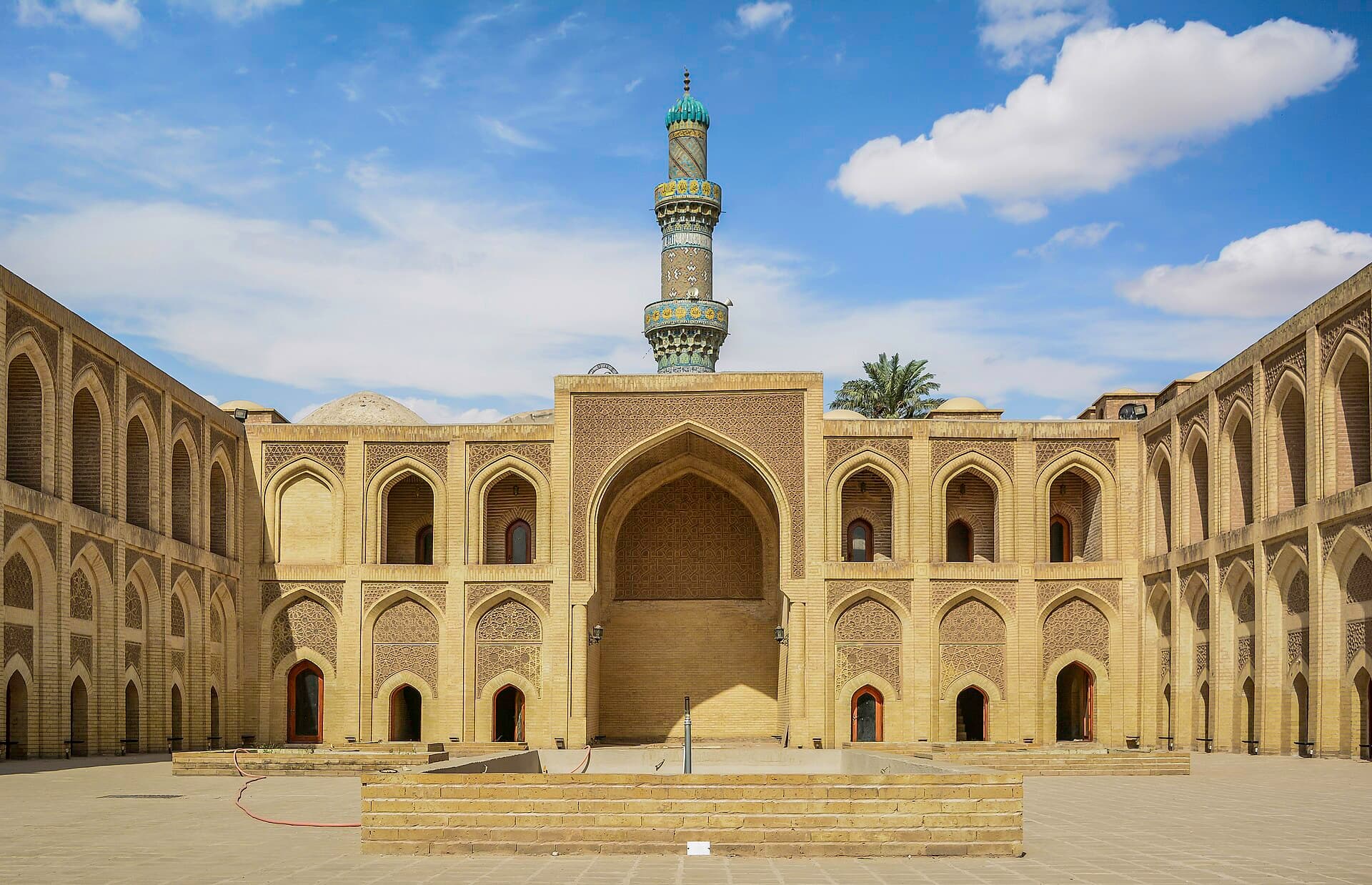 Mustansiriya MadrasaThe Mustansiriya Madrasa is an Abbasid seat of learning on the east bank of the 10 minutes walk
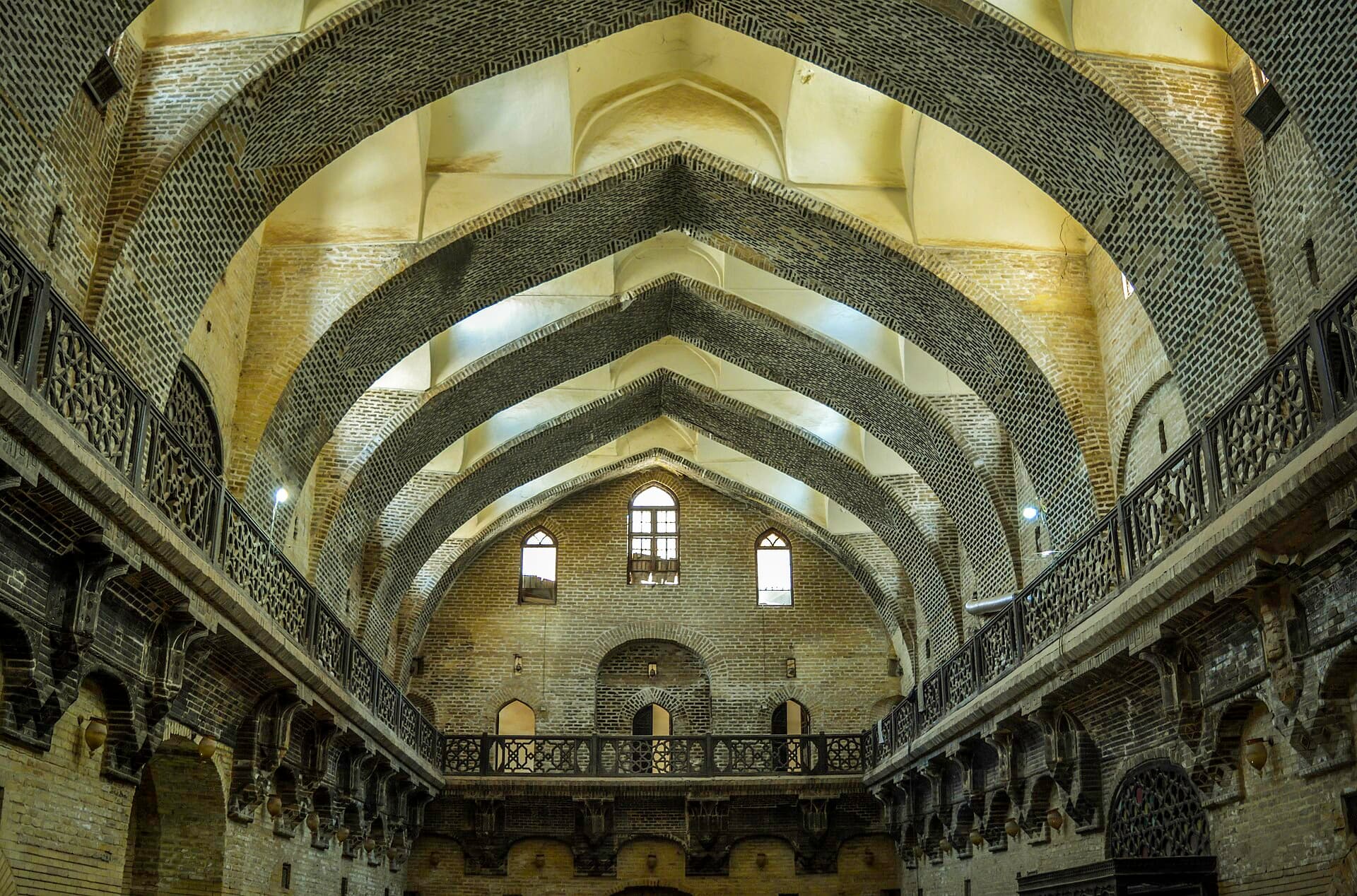 Khan MurjanKhan Murjan is a 14th-century building in the old souk of Baghdad, built by Amin12 minutes walk
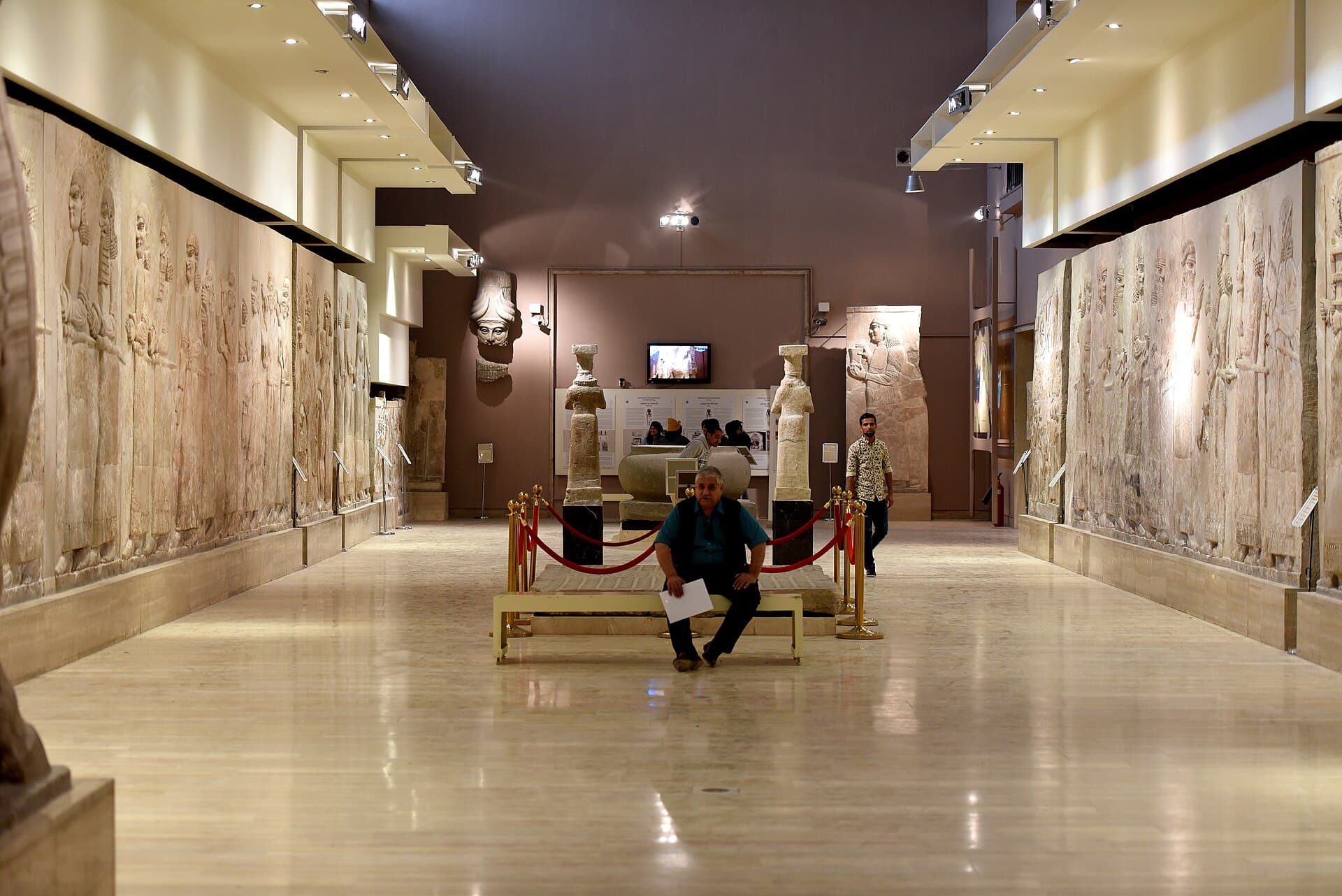 The Iraq MuseumThe Iraq Museum is the national museum of Iraq, on the Karkh side of Baghdad, wi21 minutes walk
This is not settled, as some scholars see it as a madrasa, but the common name has stuck.
No, large parts were rebuilt during the 20th century.