God, Country, King
Letters lit at night.
Abdeaitali — CC BY-SA 4.0 · Laminihasnaa — CC BY-SA 4.0 · Abdeaitali — CC BY-SA 4.0 · abdeaitali — CC BY-SA 3.0 · Gottfried Hoffmann -… — CC BY 3.0 · michiel1972 — CC BY-SA 3.0 · karel291 — CC BY 3.0 · karel291 — CC BY 3.0
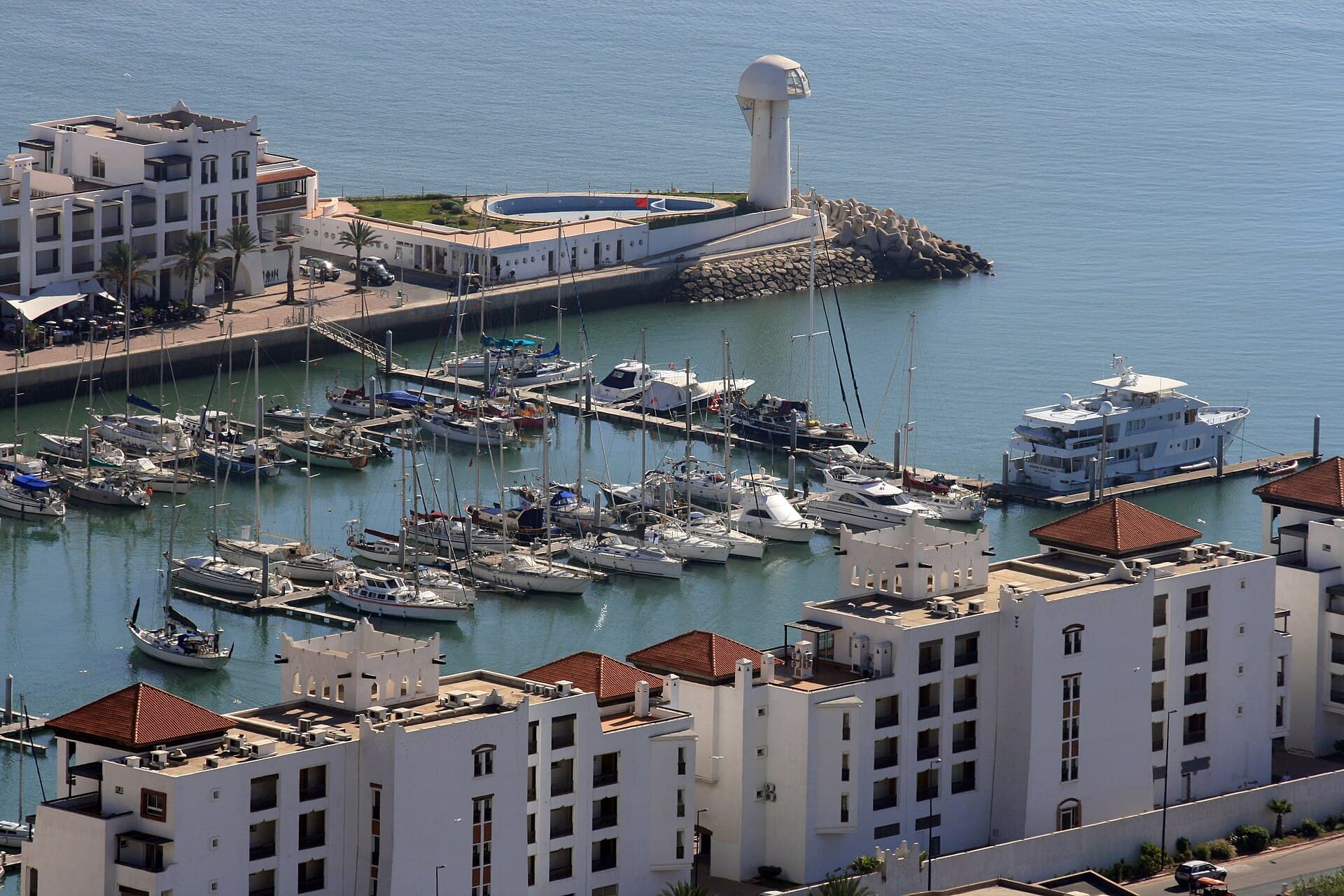
A historic fortress on a hilltop some two hundred and thirty-six metres above sea level north of Agadir, its Amazigh name meaning the fortress above. The Saadians fortified the summit in the sixteenth century against the Portuguese, who had built the fort of Santa Cruz at its foot in 1505, and drove them out in 1541. The kasbah held Agadir's old town until a devastating earthquake struck on the night of 29 February 1960, destroying most of its houses and killing thousands, leaving only parts of its walls. The walls have been restored in recent years using traditional building methods, with panels along the route telling the story of the kasbah and the earthquake. On the hillside, the words God, Country, King are spelled out in huge Arabic letters, lit at night and visible across the city. From the walls there is a panoramic view over Agadir bay, its long beach, the port and the marina, loveliest at sunset. Visitors come up by car or by the cable car from the foot of the hill. An international adult ticket costs ninety dirhams, children aged seven to seventeen sixty-five, under-sevens free, according to the official website. It opens from ten to seven in the evening, until eight in summer, with last entry half an hour before closing.
Letters lit at night.
And the quake's story.
Agadir panorama.
Hilltop north of the city, near the port, Agadir
By car or taxi up the hill road, or by the cable car from the foot of the hill, worth riding for its views.