
Medina's oldest cemetery
Since the Prophet's time.
Saleh Al Hussain — CC BY 4.0 · Indonesiagood — CC BY 4.0 · Indonesiagood — CC BY 4.0 · M sh شراونة محمد — CC BY-SA 4.0 · Nacizane — CC BY 2.0 · Najamuddin Shahwani — CC BY 3.0 · Mardetanha — CC BY-SA 3.0 · Indonesiagood — CC BY 4.0
The first and oldest Muslim cemetery in Medina, just south-east of the Prophet's Mosque, also known as Baqi al-Gharqad and Jannat al-Baqi. Many members of the Prophet's family, his companions and leading figures of early Islam are buried here, and it holds great meaning for both Sunni and Shia Muslims. The Prophet chose the site as the Muslims' cemetery after his migration to Medina. As'ad ibn Zurarah was the first of the Ansar to be buried here and Uthman ibn Maz'un the first of the Muhajirun, and the Prophet's daughter Ruqayyah was laid to rest here in 624. Today the graves are simple, marked by small stones, with modern walls around the cemetery and paved paths between its sections, and the minarets of the Prophet's Mosque rise to the north-west. The gates usually open for men after the dawn prayer for about three hours and after the afternoon prayer for about an hour, per visitor guides. Women are not allowed in but can look on from set places outside the wall. Times change in Ramadan and the Hajj season. Keep quiet and observe the etiquette of visiting graves.
Since the Prophet's time.
Buried across the site.
The minarets close by.
South-east of the Prophet's Mosque, Medina
 Al-Masjid an-Nabawi (Prophet's Mosque)Islam's second holiest mosque after the Grand Mosque in Mecca, built by the Prop3 minutes walk
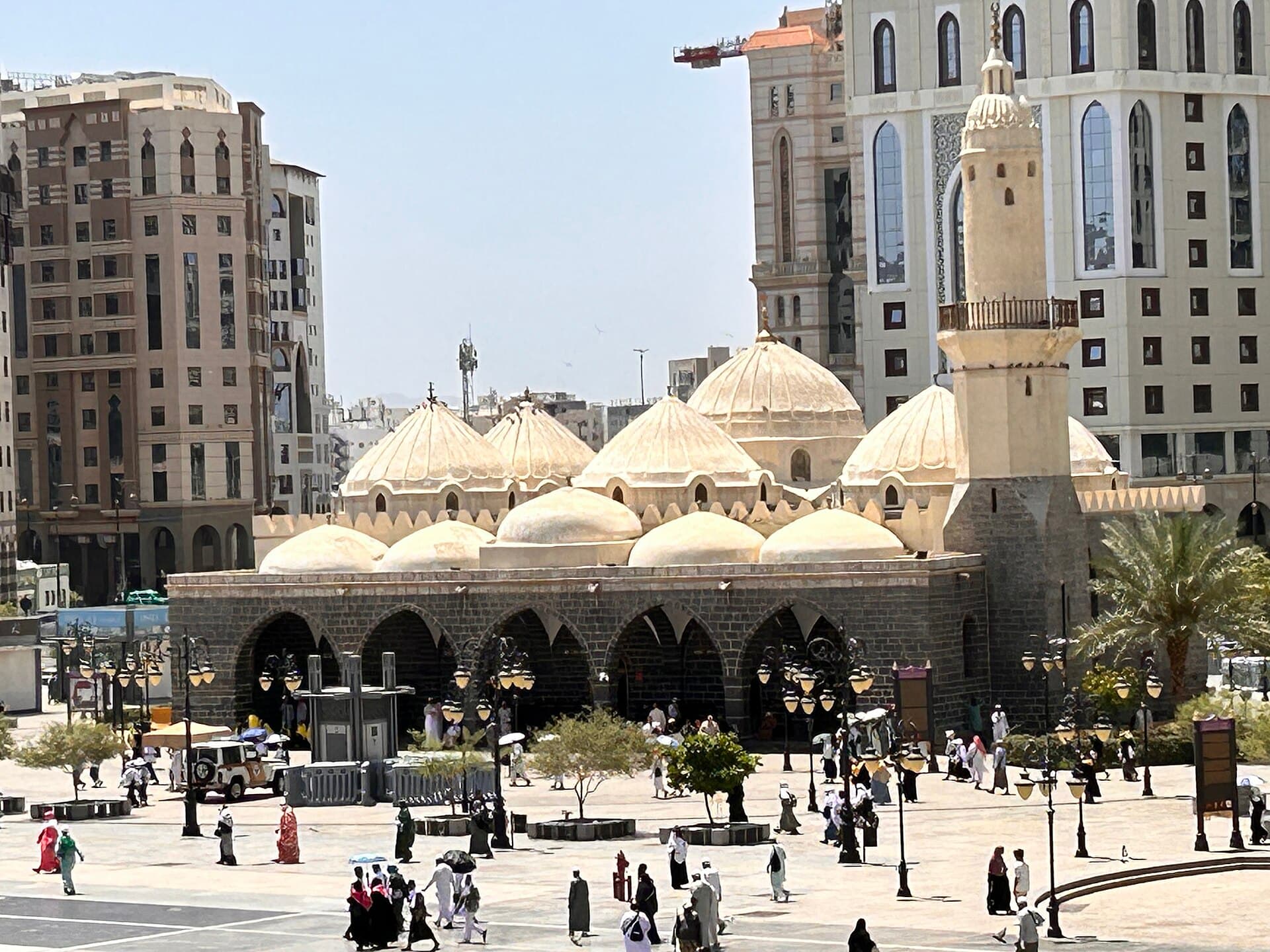 Mosque of Al-GhamamaOne of the oldest mosques in Medina, about 500 metres west of the Bab al-Salam g9 minutes walk
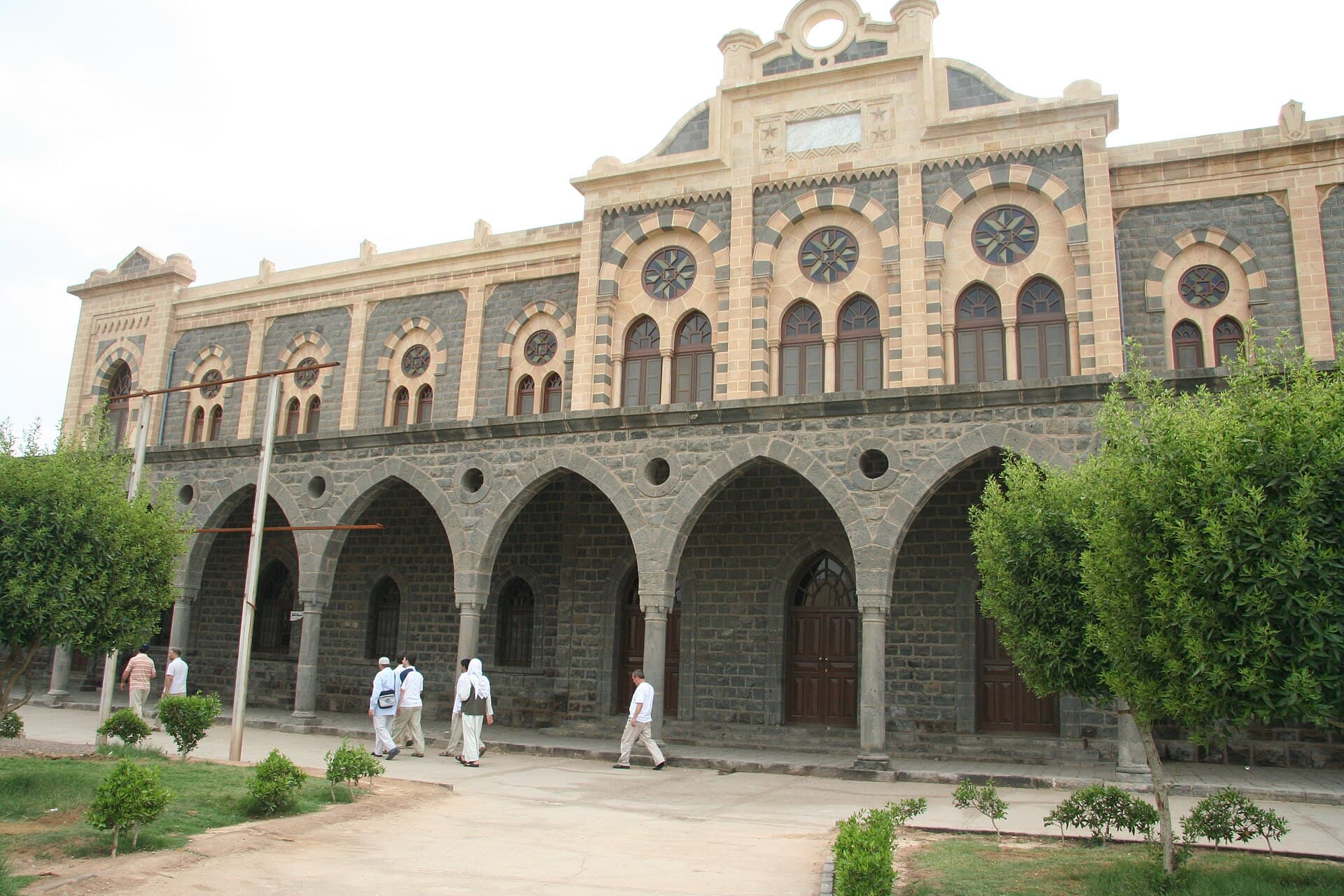 Hejaz Railway Station and Museum, MedinaThe last station of the Hejaz Railway, which the Ottoman Empire built from Damas18 minutes walk
For men, usually after the dawn prayer for about three hours and after the afternoon prayer for about an hour, per visitor guides; times change in Ramadan and Hajj, and women are not allowed in.