
The rose façade
Two storeys high.
Vyacheslav Argenberg — CC BY 4.0 · Dosseman — CC BY-SA 4.0 · Oblongo — CC BY-SA 4.0 · vivali — CC BY 3.0 · RicardoBrea — CC BY-SA 4.0 · Dosseman — CC BY-SA 4.0 · Kwz — CC BY-SA 3.0 · Bernard Gagnon — CC BY-SA 3.0
Petra's most famous monument and its most elaborate rock-cut tomb, carved by the Nabataeans into a sandstone cliff early in the first century AD, in the reign of King Aretas IV, and most likely built as a royal mausoleum. The two-storey façade is dressed with Corinthian columns and carved figures and topped by a stone urn. In the nineteenth century local Bedouin believed the urn hid treasure, hence the name «Treasury», and the bullet marks from their attempts to break it still show, though it is solid rock. The rose-coloured façade is at its best in the morning, when the sun reaches it. The inner chamber is closed to visitors, but the square in front is a place to rest before carrying on to the Street of Façades and the theatre. For a view from above, a trail climbs Jabal al-Khubtha opposite and looks down on the Treasury. On set evenings of the week the square is lit with candles for «Petra by Night», on a separate ticket.
Two storeys high.
And its legend.
From al-Khubtha.
End of the Siq, Petra
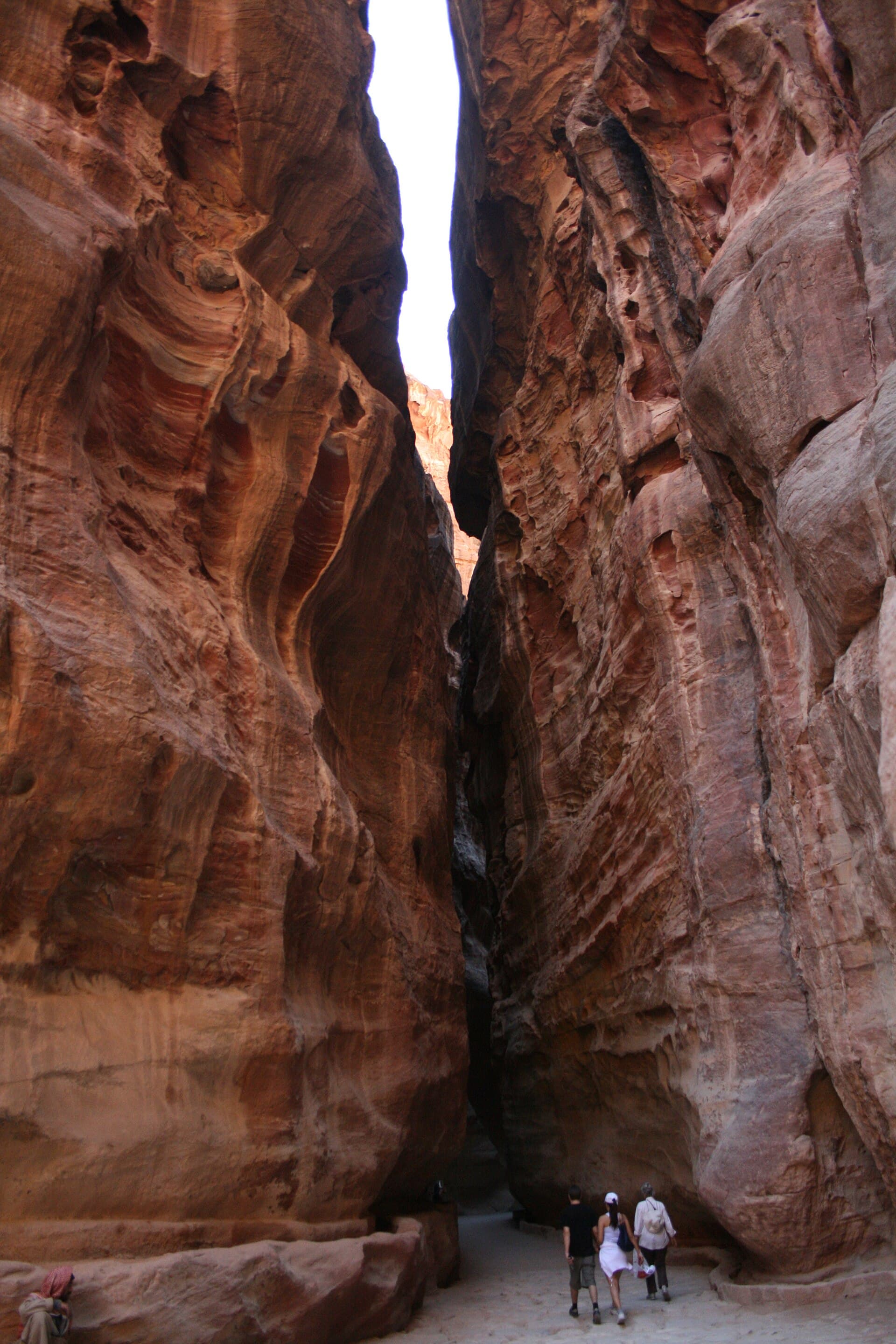 The SiqThe rock passage into the Nabataean city of Petra, winding about 1.2 km between 5 minutes walk4.9
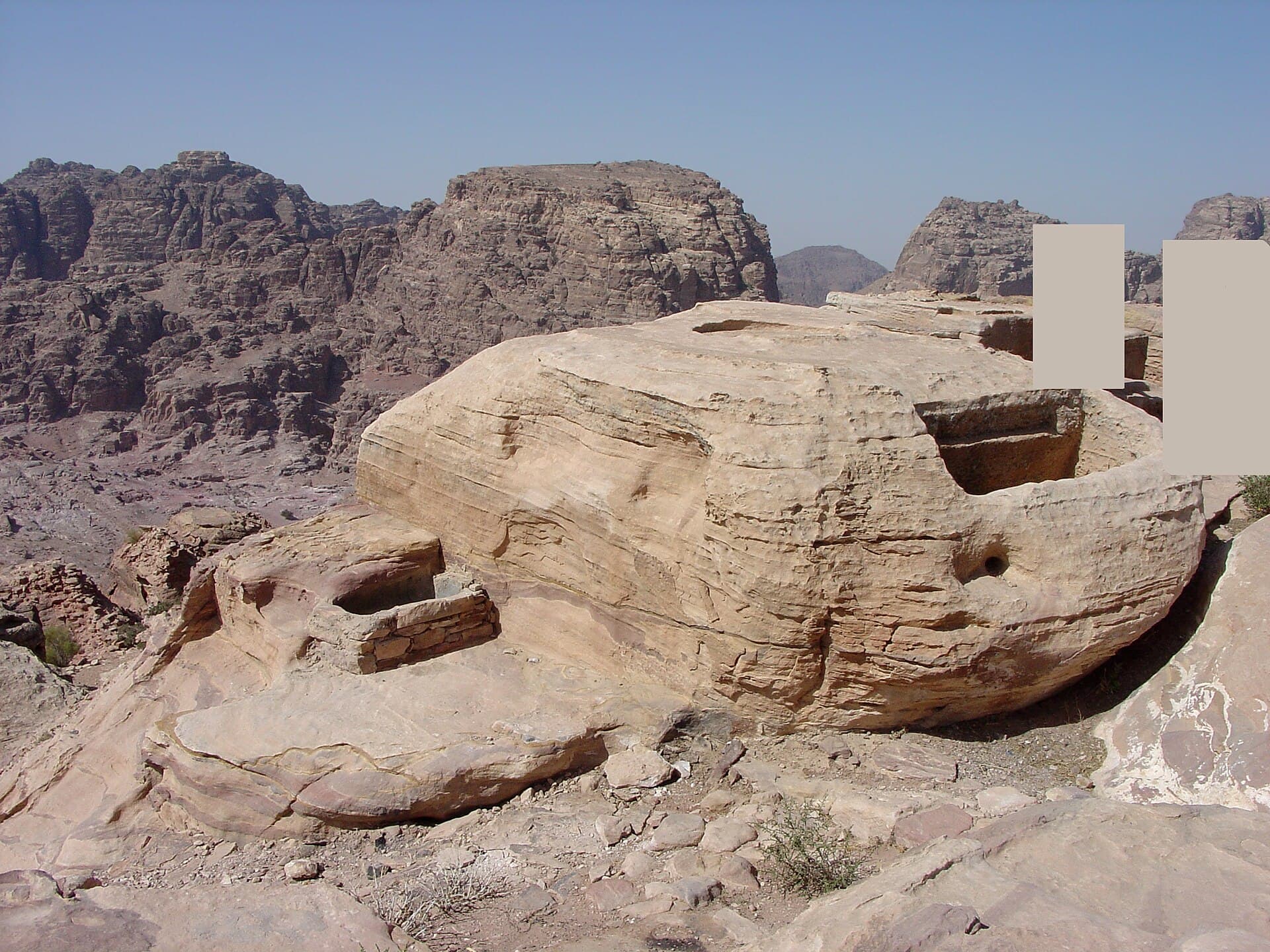 High Place of SacrificeA Nabataean ritual platform on the summit of Jabal al-Madhbah above central Petr6 minutes walk4.7
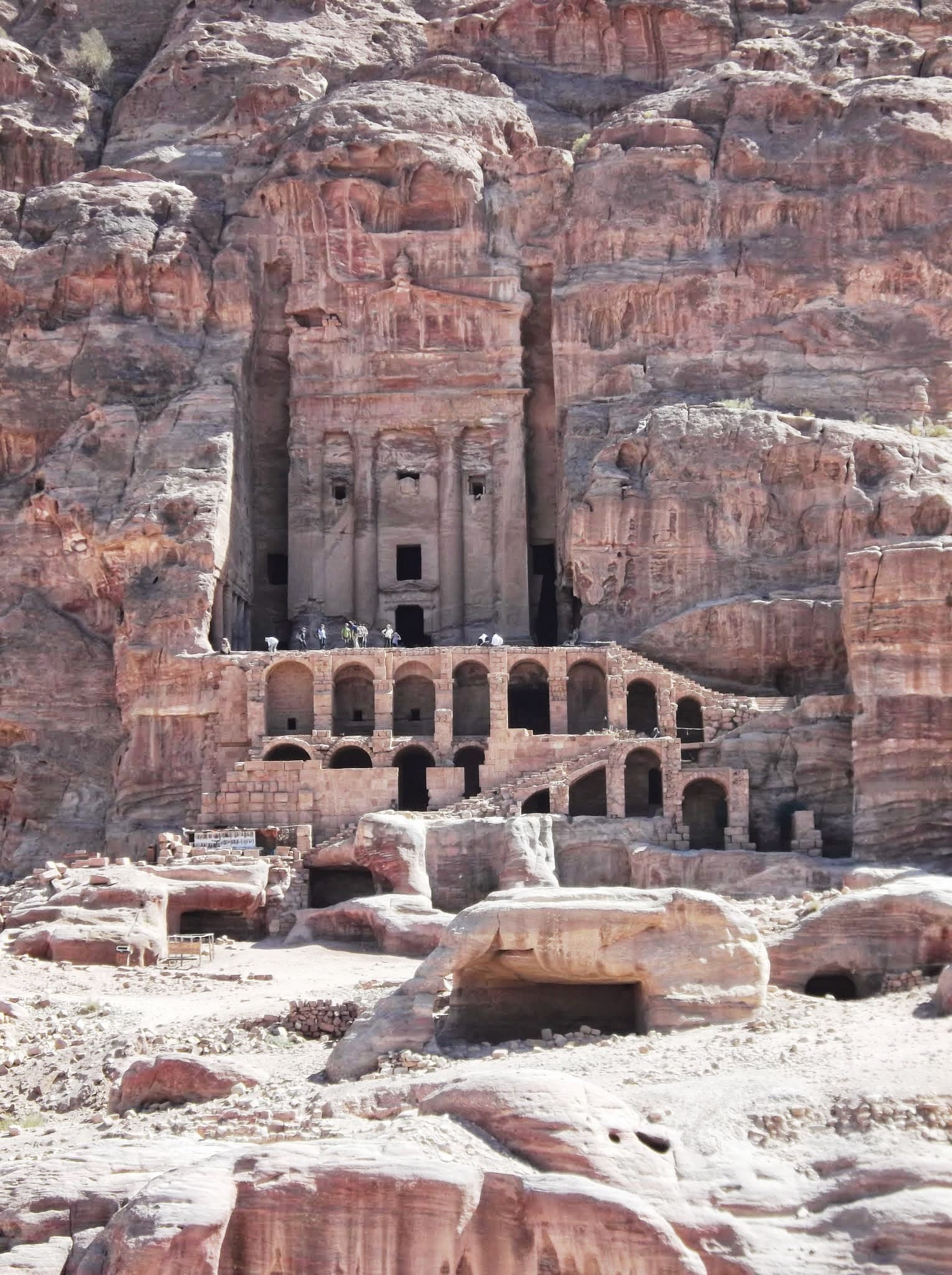 Royal Tombs of PetraA row of huge façades carved into the flank of Jabal al-Khubtha, looking over th9 minutes walk4.7
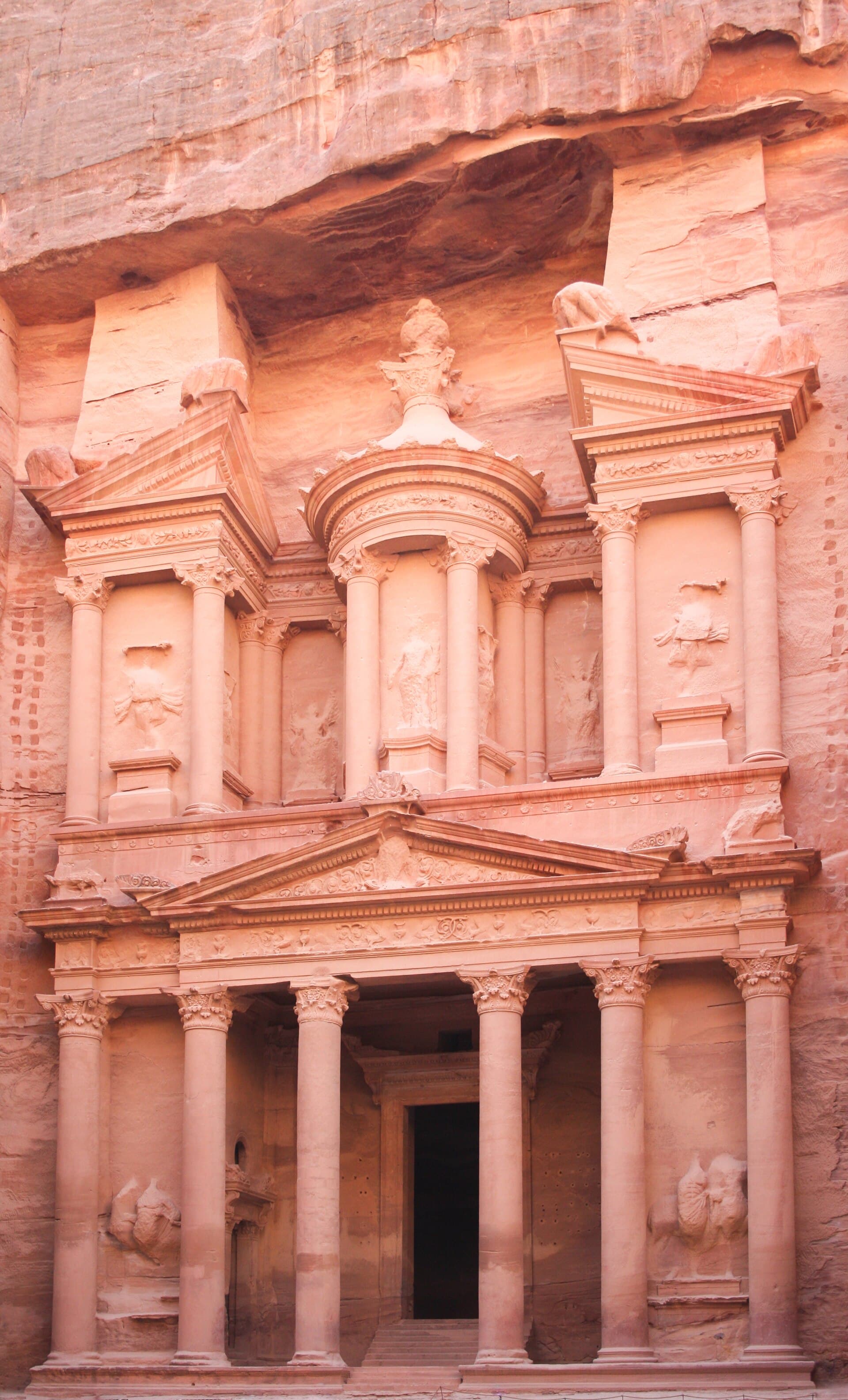 PetraThe Nabataean capital carved into rose sandstone in southern Jordan, and one of 12 minutes walk4.9
Local Bedouin believed the stone urn on top hid treasure and shot at it, though it is solid rock; the building was in fact a Nabataean royal tomb.